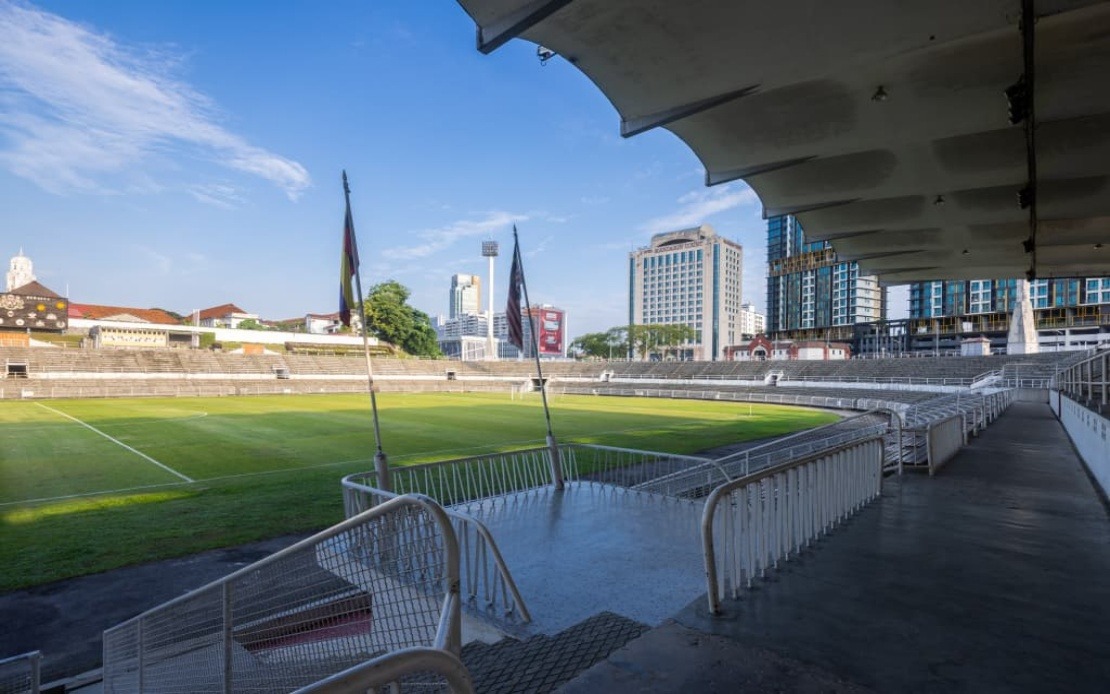
Nearly seven decades have passed since Tunku Abdul Rahman Putra Al-Haj proclaimed independence with seven resounding cries of 'Merdeka!' at Stadium Merdeka on August 31, 1957. That momentous declaration marked far more than the cessation of British colonial governance—it signified Malaysia's emergence as a sovereign nation with its own path to chart. Today, as the country approaches its 68th National Day, the spirit kindled in that historic venue continues to animate celebrations nationwide, though the physical locations hosting these commemorations have undergone significant transformation, reflecting Malaysia's own journey of development and modernisation.
The migration of National Day festivities from Stadium Merdeka to various venues, culminating in recent celebrations at Putrajaya, tells a compelling story about Malaysia's rapid evolution as a nation. What began as landmark ceremonies honouring the precise moment of independence has become a distributed phenomenon, taking place across multiple locations including Dataran Merdeka and the Federal administrative centre. This geographical shift carries profound implications for how contemporary Malaysians—particularly younger generations—experience and internalise the meaning of merdeka. The choice of venue is not merely logistical; it represents deliberate choices about national identity and how successive administrations wish to frame Malaysia's relationship with its own history.
Putrajaya itself embodies this narrative of transformation. Originally known as Prang Besar, the site was developed beginning in 1995 as Malaysia's purpose-built Federal administrative centre, representing a vision of modern, planned governance. When Putrajaya first hosted the national-level National Day celebration in 2003 under the theme 'Keranamu Malaysia', it marked a symbolic convergence between Malaysia's administrative present and its independence past. This year's celebration represents the tenth occasion on which Putrajaya has served as the primary venue, having hosted proceedings in 2003, 2005, 2018, 2019, 2020, 2021, 2023, 2024 and 2025. More significantly, the Cabinet determined in April 2025 to designate Putrajaya as the permanent host for national-level National Day celebrations for three consecutive years from 2025 to 2027, signalling a deliberate policy shift toward institutional consolidation and forward-looking commemoration.
Concerns about whether shifting celebration venues might erode historical consciousness among younger Malaysians prompted academic examination of this phenomenon. Prof Dr Sarjit Singh Gill, Chairman of the National Unity and Progressive Society Cluster at the Malaysian Professors Council and a Professor of Anthropology and Sociology at Universiti Putra Malaysia, offers a nuanced perspective on this generational challenge. Rather than viewing Stadium Merdeka and Putrajaya as competing symbols, Gill advocates for understanding them as complementary historical markers that together provide a more comprehensive narrative of Malaysian development. Stadium Merdeka, in his analysis, carries profound resonance for older generations—those aged 70 or 80 and beyond—evoking deep social nostalgia and tangible connection to independence struggles. Putrajaya, conversely, represents Malaysia's modern administrative ambitions, embodying the concept of a 'smart city in a garden' that demonstrates how independence has enabled progressive nation-building.
Gill's framework suggests that celebrating National Day at both locations serves crucial pedagogical functions for younger generations. By experiencing both the historical birthplace of independence and the institutional expression of Malaysia's contemporary aspirations, Malaysians gain fuller understanding of the trajectory connecting past struggle to present achievement. This dual-venue approach allows the nation to preserve historical memory whilst simultaneously demonstrating that independence remains a living, dynamic achievement rather than a fixed historical moment. The challenge lies in ensuring that celebrations at Putrajaya do not inadvertently diminish appreciation for Stadium Merdeka's unique historical weight or allow newer generations to forget the specific circumstances that made the August 31, 1957 proclamation so transformative.
To maintain patriotic commitment among postmodern-generation Malaysians, Gill emphasises preserving two essential historical elements within every National Day celebration, regardless of venue. First, celebrations must explicitly acknowledge and honour the sacrifices and strategic achievements of past leaders who secured independence through diplomatic negotiation and consensus-building rather than armed conflict—a distinctive characteristic of Malaysia's independence narrative. Second, celebrations must robustly celebrate Malaysia's defining feature: racial and religious diversity unified under the principle of 'unity in diversity'. These two elements, Gill argues, constitute the actual substance of what merdeka means for contemporary Malaysians. Without them, celebrations risk becoming aesthetically engaging but historically hollow performances. Gill's own participation in the 'Berjaya'-themed National Day parade in 1990 informs his conviction that meaningful patriotism emerges through active youth participation in commemoration, not passive spectatorship.
Beyond historical and educational considerations, practical administrative factors have influenced the continued selection of Putrajaya as the primary venue for national celebrations. The Event Management and Innovation Unit of the Management Services Division at the Ministry of Communications identified logistical advantages and modern facilities as key factors in this decision-making process. Putrajaya's integration with Malaysia's Mass Rapid Transit network, coupled with water taxi services and coordinated shuttle bus operations, provides alternatives to private vehicle transportation that facilitate smooth crowd management for massive gatherings. This infrastructure advantage becomes increasingly significant as National Day celebrations draw larger attendance numbers, requiring sophisticated mobility solutions. The transition from private-vehicle-dependent transportation to multimodal public transit systems reflects both Putrajaya's design philosophy and contemporary urban management requirements.
The thematic framing of Malaysia's National Day celebrations further illuminates the relationship between historical commemoration and future-oriented governance. The 2026 National Day and Malaysia Day celebration theme, 'Malaysia MADANI: Kesejahteraan Dinikmati', deliberately establishes a narrative arc connecting Malaysia's independence struggle to contemporary national development objectives. This thematic approach positions independence not as a terminus but as a foundational achievement enabling subsequent national progress and citizen welfare enhancement. By explicitly linking the merdeka moment to contemporary MADANI policies focused on distribution and enjoyment of prosperity across society, government narratives attempt to keep independence emotionally resonant for younger Malaysians by connecting it to present-day governance concerns rather than treating it as historical artifact.
Innovative programming strategies have emerged to engage younger audiences within the National Day celebration format. Creative and technological elements now feature prominently, including performances such as 'Gema Inovasi MADANI', a musical fusion production titled 'Rentak MADANI, Paluan Tradisi' blending contemporary and traditional musical elements, and elaborate 'Human Graphic' visual formations involving 1,500 schoolchildren whose organised presence creates large-scale imagery visible from elevated vantage points. These production elements serve dual purposes: they provide contemporary entertainment value appealing to younger spectators whilst simultaneously conveying nationalist messages through visual and auditory means. The integration of technology and contemporary performance aesthetics into National Day celebrations represents deliberate efforts to translate independence meaning into registers comprehensible and engaging for digital-native generations.
Grassroots participation narratives provide insights into how National Day celebrations actually function within individual Malaysian lives and consciousness. Muhammad Nasrul Nasir, a 30-year-old Administrative Assistant in the Federal Territories Department, exemplifies how National Day participation evolves across a person's lifespan. Having attended last year's celebration at Dataran Putrajaya with family and friends, experiencing the atmospheric density of collective national commemoration and captivating skydiving performances, Nasrul determined to deepen his involvement this year by transitioning from spectator to active participant through parade representation of his government agency. This personal progression from audience member to participant mirrors, at individual scale, Malaysia's broader narrative of active citizenship engagement with national institutions and commemorative practices. For Nasrul, the celebration functioned as what Gill emphasises: a moment for recognising past heroes' sacrifices whilst experiencing present community in shared patriotic expression.
The evolving geography of National Day celebration venues reflects deeper transformations within Malaysia's understanding of national identity and commemoration practices. What remains constant across the seven decades separating Stadium Merdeka's historic proclamation from contemporary Putrajaya gatherings is the central symbolic power of marking August 31 as the moment Malaysia claimed its own future. Whether celebrated at the venue where independence was declared or at administrative centres representing post-independence achievements, the essential meaning of merdeka—the capacity of Malaysians to determine their own national destiny—persists. The challenge for contemporary Malaysia involves ensuring that venue changes, whilst serving legitimate administrative and logistical purposes, do not obscure the specific historical circumstances and human struggles that rendered the merdeka moment transformative. By consciously maintaining connections between past and present, between historical sites and modern facilities, and between spectacular celebrations and substantive engagement with independence's meaning, Malaysia can preserve the spirit of merdeka whilst ensuring it remains vital and comprehensible for future generations navigating their own relationship with national identity.

