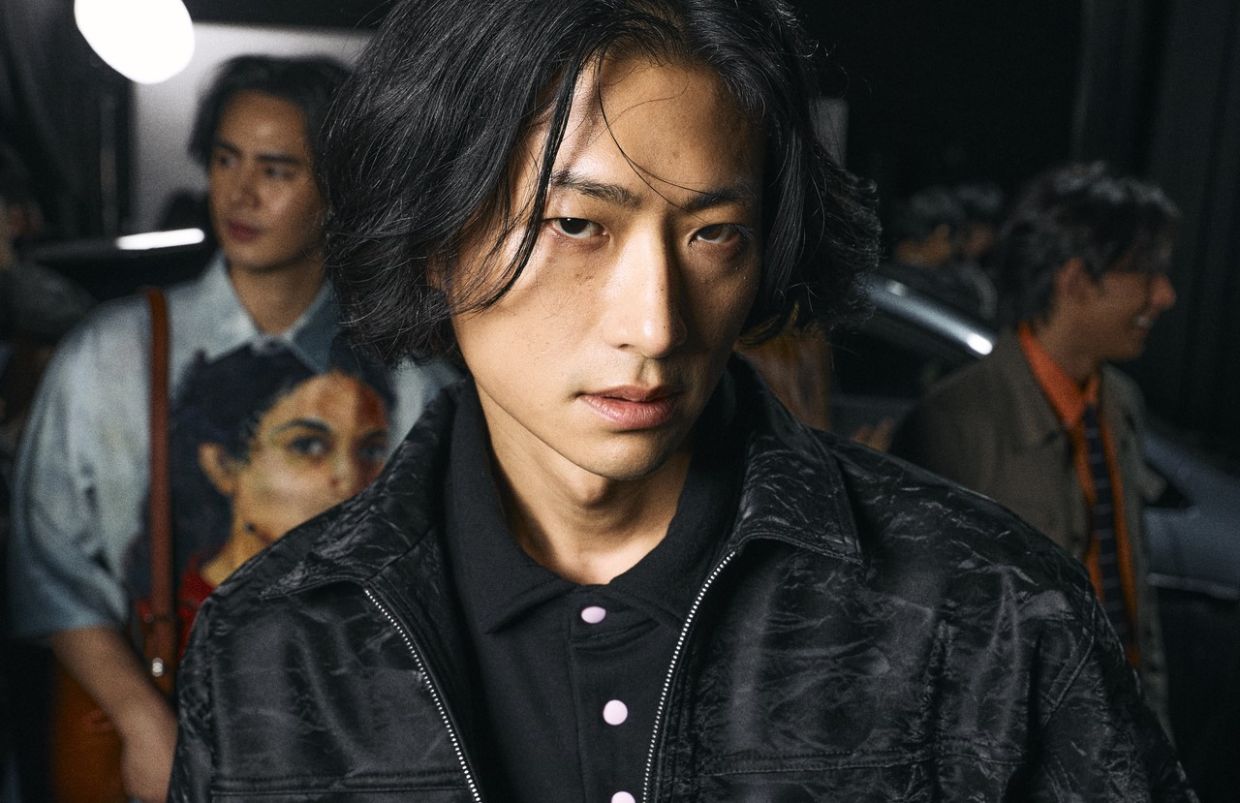
Career reinvention typically follows a blueprint—ambitious youth, steady progression, perhaps a midlife pivot. Heo Yong-jin's trajectory defies conventional wisdom. At 40, the South Korean former litigation support attorney at Kim & Chang, his nation's premier law firm, walked an exclusive Louis Vuitton trunk show in Bangkok last July, presenting menswear created by Pharrell Williams in collaboration with Japanese designer Nigo. The invitation marked a watershed moment for someone who had entered modelling just twelve months earlier, an industry where youth and early entry are considered prerequisite rather than coincidence.
The genesis of Heo's career switch lies not in grand ambition but casual domesticity. In early 2023, he and his wife relocated to Spain, where he intended to pursue studies in sports management and agency operations. Immersed among classmates with fitness enthusiasm, Heo gradually joined them in football and padel, the racket sport that has gained traction across Europe. Physical activity brought tangible results—weight loss that transformed his appearance. His wife, observing the change, made a suggestion that would alter the trajectory of his professional life: why not attempt modelling? At 188 centimeters, Heo possessed the physical stature that opened doors. More crucially, he recognised that after a decade navigating litigation complexities, he remained uncertain about his genuine professional calling.
With merely four months remaining on his Spanish visa, Heo committed to building a portfolio independently. He hired photographers, studied the industry's demands, and discovered that European agencies actively sought Asian male models. Rather than wait passively, he became an entrepreneur of his own image, reaching out to prospective clients and constructing his professional foundation from scratch. This methodical approach—treating modelling as he might a legal case requiring research and strategy—provided momentum. Yet when he returned to South Korea expecting to capitalise on his emerging European experience, domestic agencies proved indifferent. His age and lack of established credentials became insurmountable obstacles in a market skeptical of late-career entrants.
Rejection prompted geographic expansion. Heo systematically contacted agencies throughout China and Southeast Asia via email, submitting portfolios through websites. Persistence yielded results when a Thai agency responded positively. Operating between Thailand and South Korea, he began securing campaigns for local brands and appeared in commercial shoots. His Instagram documentation of this improbable career shift accumulated four million views, transforming his personal narrative into viral content that resonated with audiences fascinated by unconventional life choices. Yet Heo himself resists framing his journey as exceptional. He characterises his success as straightforward: weight loss followed by modelling pursuit. This humility reveals sophisticated self-awareness—he understands that visibility does not automatically translate to industry establishment.
The Louis Vuitton opportunity, despite its prestige, did not immediately catalyse consistent modelling work. Instead, it crystallised something more profound: awareness that uncertainty held value he had not previously recognised. During his decade at Kim & Chang, professional stability coexisted with existential ambiguity regarding purpose and satisfaction. Financial security, he now recognises, had not correlated with authentic contentment. Modelling introduced genuine anxiety about income stability, yet simultaneously provided genuine excitement about work itself. This paradox—that vulnerability and uncertainty can generate more meaningful engagement than material comfort—forms the philosophical centre of his transformation.
Confidence, Heo reflects, was previously performance. In legal practice, he projected professional assurance while internally experiencing doubt. Modelling catalysed authentic confidence by positioning him before cameras as the primary subject. He became not a supporting figure interpreting legal documents but a principal actor embodying brand vision. The psychological shift extended beyond professional context; it validated his capacity to reinvent himself substantially rather than incrementally adjusting existing trajectories. This realisation itself constitutes valuable commodity in increasingly fluid career landscapes where lateral moves and complete profession changes become normative rather than exceptional.
Current inquiries from South Korean brands suggest emerging momentum. Fashion lookbook opportunities have materialised, indicating that domestic market recognition follows international exposure. Each campaign request strikes him with residual disbelief—that brands actively seek his participation rather than his pursuing them represents inversion of expected hierarchies. This reversal symbolises his transition from outsider attempting entry to potential insider attracting interest. Yet Heo remains strategically focused. His immediate objective targets Milan and Paris fashion weeks scheduled for late September through early October, where major houses including Prada, Bottega Veneta, Saint Laurent, and Tom Ford will present collections. Securing representation for these events presents substantial challenges; agencies must vouch for his viability, and competition from younger, more established models remains formidable.
His pursuit confronts fundamental assumptions embedded in fashion industries across Asia and globally. Age discrimination in modelling remains institutional and largely unexamined. Heo's presence challenges the unspoken axiom that male models must commence careers in their late teens or early twenties. While his height and physical transformation provided necessary conditions, his perseverance supplied sufficient ones. The combination demonstrates that market barriers often reflect convention rather than inherent limitations. For Malaysian and Southeast Asian readers navigating competitive industries and contemplating career transitions, Heo's trajectory offers philosophical permission: conventional timing frameworks possess less authority than persistent effort and clarity regarding personal satisfaction. His journey suggests that the industries apparently closed to latecomers may simply require candidates willing to approach them unconventionally, building portfolios and reaching out directly rather than waiting for institutional gatekeepers to acknowledge eligibility.
The financial precariousness of modelling, particularly for someone without established client relationships, remains genuine concern. Heo acknowledges the fear accompanying income uncertainty. However, he contextualises this apprehension against the emotional poverty of stable but uninspiring work. This distinction resonates particularly in Asian professional cultures where job security frequently supersedes job satisfaction. His willingness to trade financial certainty for genuine engagement represents quiet rebellion against prevailing values. Whether modelling provides sustainable long-term livelihood remains undetermined; his Louis Vuitton appearance might represent career apex rather than foundation. Yet the experiment itself—the deliberate choice to pursue uncertainty over security—models a different relationship with professional identity.
Looking forward, Heo's prospects depend partly on factors beyond his control: market appetite for mature male models, agency willingness to invest in developing a non-traditional portfolio, and competition intensity at fashion weeks. Yet his agency extends beyond these structural variables. He has demonstrated capacity to research opportunities, build relationships independently, and persist through rejection. These capabilities transcend modelling specifically; they represent transferable professional competencies applicable across industries. Should his fashion career plateau, the confidence and self-knowledge he has acquired might facilitate additional transitions. This intellectual and emotional development—more valuable than any single campaign booking—constitutes perhaps his most significant acquisition.
For readers contemplating professional change, Heo's example offers concrete encouragement and honest assessment. He did not discover some hidden passion that had smouldered throughout his legal career; rather, he recognised that authentic engagement mattered more than prestigious titles or financial stability. His transition demonstrates that reinvention at 40 remains feasible, that industries seemingly closed to latecomers sometimes respond to determination and strategic thinking, and that the uncertainty accompanying career change can paradoxically provide deeper satisfaction than conventional security. Whether Milan and Paris fashion weeks materialise in his calendar remains uncertain. What seems clear is that Heo has already succeeded in his more fundamental objective: discovering work that allows him to lose himself, express himself authentically, and feel genuinely alive. In professional contexts increasingly characterised by meaningful work rather than mere employment, that accomplishment transcends any single catwalk appearance.

