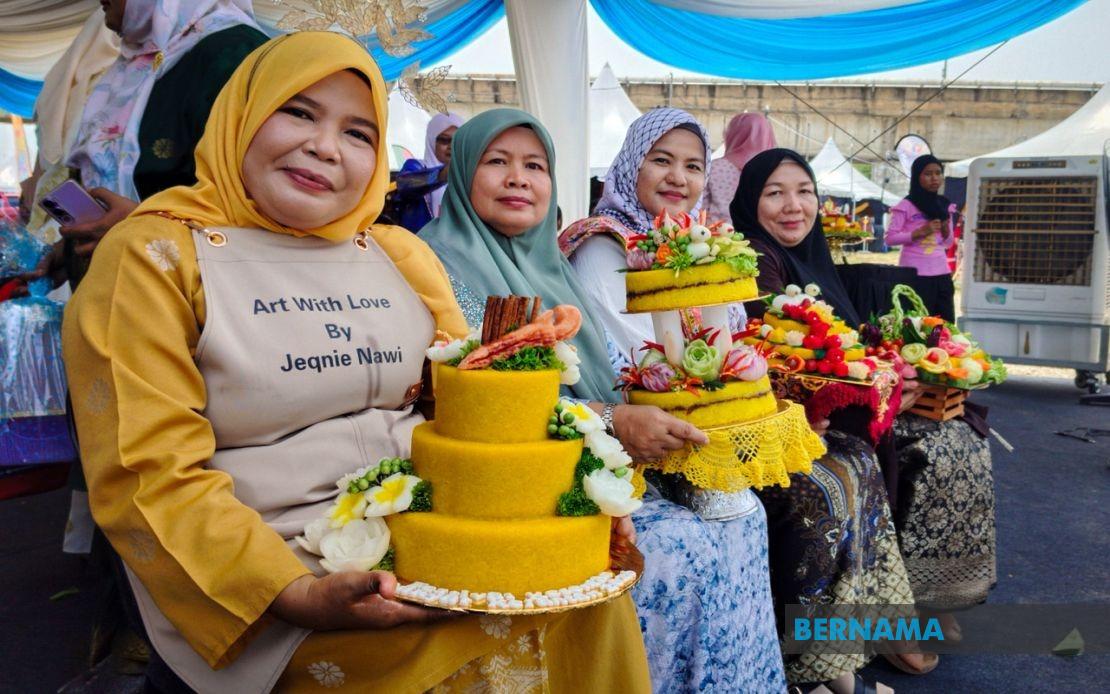
Nortiny Nawi's career pivot four years ago exemplifies the growing trend of Malaysians pursuing creative entrepreneurship rooted in traditional cuisine and cultural practices. The 46-year-old resident of Kampung Gong Cokoh in Pasir Puteh abandoned her position as a resort marketing officer to establish a home-based business specialising in decorative pulut kuning arrangements—a traditional dish of golden turmeric-infused glutinous rice that holds cultural significance across Malay communities. Today, her venture generates daily inquiries from across Kelantan, validating a business model that transforms culinary artistry into sustainable income.
The trajectory of Nortiny's entrepreneurial journey reveals how informal observation and genuine passion can evolve into commercial opportunity. During her years working in hospitality, she spent leisure hours watching kitchen operations and absorbing cooking techniques from professional chefs. Rather than remaining a dormant hobby, this interest crystallised into conviction, prompting her eventual departure from formal employment to pursue full-time what had captivated her imagination. This narrative resonates particularly in Malaysia's contemporary economy, where salaried positions increasingly compete with flexible, skill-based ventures that align with personal fulfilment and cultural identity.
Her recent victory at the Kelantan Folk Arts Festival (FKRK) in Tok Bali underscored both the artistic merit and competitive viability of her craft. The winning entry—an eight-kilogramme pulut kuning arrangement featuring intricate white radish carvings—demonstrated technical mastery alongside aesthetic sophistication. Recognition at established cultural festivals elevates her standing within local creative communities and serves as third-party validation for potential clients seeking authenticity and quality in traditional arrangements.
The commercial model Nortiny operates reflects demand patterns rooted in Malay social rituals and celebrations. Her clientele spans individuals marking personal milestones, educational institutions, and government departments requiring catering for formal events. Bridal table dinners, or makan beradab, represent a particularly robust market segment, as these ceremonies demand visually striking centrepieces that complement elaborate dining presentations. Thanksgiving feasts and birthday celebrations similarly necessitate the kind of decorative, culturally-resonant presentation her work provides. This diversified customer base insulates the business against seasonal fluctuations affecting single-occasion markets.
Pricing between RM100 and RM280 per arrangement reflects the labour intensity and material considerations embedded in production. Unlike baked goods that can be prepared in advance and refrigerated, pulut kuning requires same-day preparation beginning in the early hours before dawn. Nortiny commences work at 3 am, steaming glutinous rice, kneading the cooked product to achieve proper texture, cooling it to workable temperature, and sculpting designs according to client specifications. This labour-intensive process demands precision timing and physical stamina, constraining daily output capacity despite growing demand. Her ability to accommodate up to six orders daily represents a meaningful ceiling on expansion without operational restructuring.
The operational constraints faced by Nortiny highlight broader challenges confronting home-based artisanal food businesses in Malaysia. Regulatory frameworks governing food production, while intended to ensure safety, often impose compliance burdens that disproportionately affect small operators. Additionally, the perishability of her product and the requirement for fresh preparation eliminate cost-reduction strategies available to businesses operating on larger scales or with longer shelf-life products. These factors position pricing as both a reflection of genuine production costs and a mechanism for managing sustainable demand levels that align with single-operator capacity.
Nortiny's aspiration to relocate to larger premises signals recognition of latent growth potential constrained by current infrastructure. Expansion beyond a domestic kitchen would permit larger batch preparation, potentially enabling higher daily order fulfilment. Commercial space equipped with industrial refrigeration and multiple preparation stations could accommodate apprentices or additional workers, thereby multiplying productive capacity. Such scaling would address the evident market appetite whilst allowing the founder to focus on design innovation and quality control rather than routine production.
The success of her venture carries implications beyond individual entrepreneurship, reflecting broader patterns in Southeast Asian economies where cultural preservation increasingly intersects with economic activity. As younger generations migrate toward urban centres and service-sector employment, traditional culinary skills risk erosion. Entrepreneurs like Nortiny demonstrate that these cultural practices remain economically viable when positioned as premium products serving communities that value authenticity and cultural continuity. Her business model transforms pulut kuning from subsistence cuisine into artisanal product, generating income whilst anchoring traditional knowledge within contemporary economic systems.
Customer testimonials emphasising personal appreciation and encouragement sustain Nortiny's motivation despite the physical demands of early-morning production schedules. This emotional dimension of entrepreneurship—the intrinsic satisfaction derived from customer appreciation—often sustains small business operators through periods of lower profitability or operational stress. Her willingness to customise designs and accommodate complex requests reflects customer-centric values that foster loyalty and repeat patronage, particularly valuable in markets where word-of-mouth referral remains primary marketing mechanism.
The trajectory from resort marketing professional to pulut kuning artisan demonstrates that career reinvention remains accessible to mid-career professionals in Malaysia, particularly when grounded in genuine expertise and cultural positioning. Nortiny's transition involved financial risk and departure from formal employment benefits, yet generated income stability exceeding early projections. For other Malaysians considering similar pivots toward cultural entrepreneurship, her experience suggests that markets exist for traditions presented as premium offerings to communities that remain emotionally invested in cultural practice.
Looking forward, Nortiny's expansion plans reflect confidence in sustained demand and confidence in her product's market position. As Kelantan continues developing tourism and cultural industries, opportunities may emerge for institutional partnerships—hotels, event venues, and cultural centres requiring authentic traditional catering for guests. Such relationships could provide consistent orders whilst elevating visibility beyond individual referral networks. Her business represents precisely the kind of grassroots cultural entrepreneurship that strengthens regional economies whilst preserving traditional knowledge within living, economically-engaged communities rather than consigning cultural practices to museum displays or nostalgic memory.

