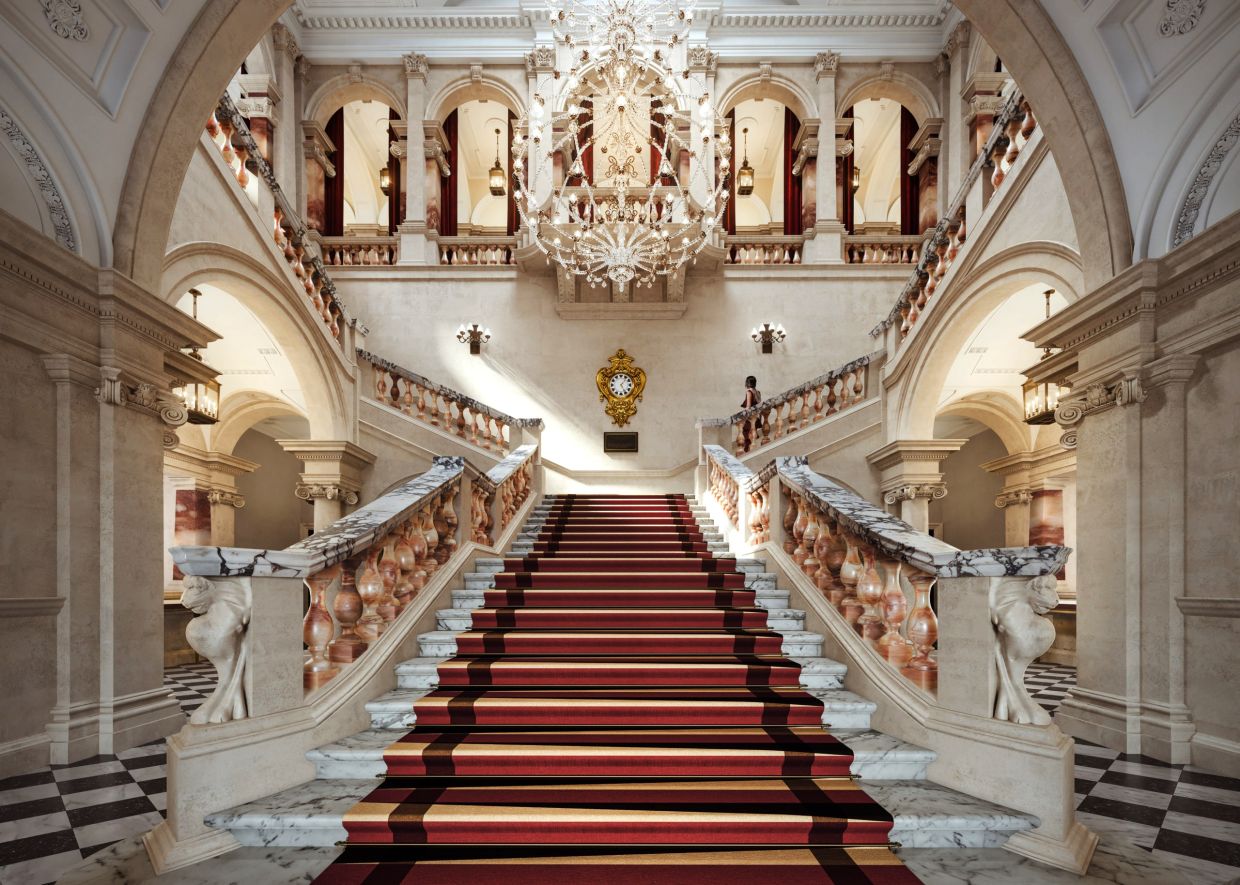
London's luxury hotel sector is undergoing a remarkable transformation as some of Britain's most historically significant government buildings find fresh purpose as five-star establishments. Raffles London at the OWO invites guests to sip martinis in a basement that once sheltered British intelligence officers within the Old War Office's secure chambers. Meanwhile, the NoMad London operates from a former magistrates court in Covent Garden, where visitors can explore cells where Oscar Wilde famously awaited trial. In Grosvenor Square, the Chancery Rosewood now occupies the building that served as the United States Embassy, one of the world's most prestigious diplomatic postings. These conversions represent far more than architectural salvage—they represent a fundamental shift in how London's most valuable real estate is valued and experienced by the affluent international travellers willing to pay premium rates exceeding £1,000 per night for the privilege of inhabiting spaces once closed to all but the nation's elite.
This trend of repurposing historic government buildings reflects a broader European pattern, though London's concentration of conversions remains unmatched. Paris and Lisbon have seen former ministries transformed into hotels, and Rome's former central bank headquarters has likewise been reimagined. The driving force behind these conversions stems from pragmatic government considerations: maintenance costs for aging civic buildings have become prohibitively expensive, and modern office requirements have shifted dramatically. Governments increasingly prefer purpose-built contemporary workspaces that offer flexibility and efficiency. Yet London's particular concentration of recent conversions owes much to the scale and architectural significance of Britain's government estate, combined with the aggressive property disposals undertaken by successive administrations seeking to reduce the public sector footprint.
John O'Ceallaigh, an associate director at hospitality consultancy PRCO, articulates the distinctive appeal of these converted properties. He characterises such buildings as "a gift" to hoteliers, offering architectural gifts that new construction simply cannot replicate. The imposing facades, soaring ceilings, and period detailing represent decades of craftsmanship and historical layering already embedded in the structures themselves. This authenticity proves impossible to manufacture in conventional contemporary hotel developments. Where standard luxury properties risk becoming interchangeable—another marble spa, another sleek atrium—these historic conversions guarantee memorable guest experiences. O'Ceallaigh notes that contemporary visitors possess what he terms a "strangely subversive" attraction to inhabiting spaces that previously represented impenetrable centres of authority. Given widespread public disillusionment with modern politics, there exists an almost transgressive appeal in being granted access to the inner sanctums of power itself.
Admiralty Arch represents the next major addition to this category. This neoclassical masterpiece and Edwardian gateway will reopen later this year as a Waldorf Astoria property. The building's previous occupants included luminaries such as Louis Mountbatten, Winston Churchill, and Ian Fleming during its century-long service as a naval and government administrative hub. Positioned dramatically between Trafalgar Square and Buckingham Palace, Admiralty Arch stands at the heart of London's most historically significant ceremonial landscape, the route traversed during Trooping the Colour and royal processions. Jamie Reuben, principal at Reuben Brothers, frames the conversion as an opportunity to restore this national monument to the public consciousness, making it accessible not merely to government officials but to both Londoners and international visitors. The symbolic reopening of such iconic structures represents a democratisation of access, albeit one extended primarily to those with substantial disposable income.
The practical imperatives driving these conversions reveal much about contemporary British governance and work patterns. While London's office market has partially recovered from pandemic-induced contractions, occupiers have become exceptionally discerning. Modern employers prioritise highly efficient buildings incorporating contemporary services, robust environmental credentials, and workplace amenities capable of luring staff back from remote work arrangements. Government buildings, regardless of their historical prestige, often conceal substantial infrastructure deficiencies behind their handsome exteriors. Aging mechanical systems, outdated electrical installations, deteriorating plumbing, and cellular office layouts designed for mid-twentieth-century workflows render them increasingly uncompetitive. The rigid compartmentalisation suitable for bureaucratic hierarchies proves fundamentally incompatible with twenty-first-century open-plan, collaborative workplace requirements.
Hotel operators possess substantially greater design flexibility in adapting these properties. The brightest perimeter rooms along historic facades naturally become premium guest suites commanding the highest nightly rates. Darker interior spaces, originally designed as corridors and administrative zones, can be repositioned as kitchens, spas, storage facilities, staff quarters, and service infrastructure. Geoff Hull, a director at EPR architects overseeing the Raffles redesign, emphasises that Britain's governmental space requirements have fundamentally contracted over two decades. Hybrid working arrangements and a numerically smaller civil service have substantially reduced demand for large consolidated office complexes. This structural realignment has created a supply of architecturally significant buildings for which government purposes have become economically untenable, yet which possess immense value to private developers capable of managing the complexity and expense of sensitive restoration.
The financial resources required for such conversions exceed the capacity of most hospitality operators. The Hinduja Group's renovation of the Old War Office required an extraordinary £1.4 billion investment following its acquisition for £350 million in 2016. This renovation encompassed not merely aesthetic restoration but comprehensive infrastructural modernisation: three new storeys added above the existing structure, six basement levels excavated beneath it, and extensive mechanical, electrical, and plumbing systems upgraded throughout. The Reuben Brothers' acquisition of Admiralty Arch for approximately £60 million in 2012 similarly involves substantial redevelopment costs. These financial commitments remain feasible only for major developers with access to substantial capital and the willingness to endure lengthy development timelines. The eight-year renovation timeline for the Old War Office illustrates the regulatory and logistical complexities inherent in such projects.
Historic preservation requirements substantially complicate the conversion process. Because these buildings carry protected status, even seemingly minor modifications require approval from local planning authorities in consultation with Historic England. Creating new doorways demands bureaucratic review and justification. The architects persuaded Historic England to permit additional entrances at the Old War Office, fundamentally transforming the building's fortress-like character into a hospitality venue that spills publicly onto Whitehall through restaurants, bars, and accessible spaces. This intervention represents a delicate negotiation between preservation principles and functional contemporary requirements, requiring compromise on both sides. Fire regulations, structural integrity concerns, water ingress prevention, and integration of modern climate control systems all demanded accommodation and approval. The renovation process tested architects' ingenuity repeatedly, balancing historical authenticity with regulatory compliance and operational functionality.
These conversions have not proceeded without public controversy. An influential Guardian editorial from 2015 characterised the Old War Office sale as "public theft," reflecting broader anxieties about privatising nationally significant assets. The strategic location of these buildings—adjacent to Parliament, in diplomatic quarters, overlooking ceremonial routes—invests them with symbolic significance that transcends commercial property considerations. David Brock, head of Historic England's government historic estates unit, acknowledges the risks inherent in disposing of strategically positioned government buildings. However, he contends that hotel conversion often represents a preferable alternative to permitting landmark structures to deteriorate through vacancy. The civil service's continuing contraction means government simply requires fewer buildings than historically. Accepting private stewardship, even by foreign-owned luxury hotel operators, appears preferable to institutional abandonment and gradual decay.
The marketing strategies employed by these converted properties actively capitalise on their historical pedigrees. Hoteliers have recognised that contemporary luxury travellers increasingly resist standardised accommodation. The generic sleek hotel room no longer suffices for affluent consumers seeking distinctive experiences that reinforce their travel narratives and social status. NoMad London houses the Bow Street Museum of Crime & Justice, narrating the history of London's pioneering law enforcement service. Raffles provides guided heritage tours detailing the building's wartime roles, recounting how Boy Scouts once cycled through its corridors carrying dispatches during the Second World War. Guests can sip cocktails in the Spy Bar, located in the basement where MI5 officers once exchanged intelligence, and retire to bedrooms formerly occupied by spies and prime ministers. Guest reviews consistently emphasise these historical dimensions, with reviewers frequently highlighting heritage tours and the distinctive atmospheric qualities that differentiate these properties from international chain hotels.
London's position as one of the world's most robust luxury hotel markets continues strengthening, with heritage conversions substantially enhancing competitive positioning. Despite geopolitical uncertainties and the loss of tax-free shopping following Brexit in 2021, the city's luxury sector has demonstrated remarkable resilience. Average daily rates and revenue per available room metrics in the luxury segment have both increased throughout the current year, reflecting sustained demand from affluent international visitors. The concentration of rooms priced above £1,000 nightly underscores London's continued appeal to ultra-high-net-worth travellers. Cristina Balekjian, director of hospitality analytics at CoStar, observes that heritage buildings possess inherent advantages within the luxury market segment precisely because of their distinctiveness. These properties cannot be replicated through conventional development. Their architectural singularity, historical narratives, and atmospheric qualities provide differentiation that justifies premium pricing and attracts international clientele seeking experiences that transcend standard luxury amenities.
The transformation of London's government buildings into luxury hotels reflects deeper shifts in how cities utilise their heritage assets and how the wealthy consume urban space. These conversions simultaneously represent pragmatic adaptation to reduced governmental space requirements, entrepreneurial recognition of commercial opportunity, and a broader cultural appetite for historical authenticity as a luxury commodity. The buildings themselves remain architecturally unchanged—their facades continue presenting the imposing authority they projected for decades. Yet their internal purpose has inverted: spaces designed to exclude and restrict now operate to attract and welcome those capable of affording premium access. This paradox captures something essential about contemporary luxury hospitality—the commodification of exclusivity, the packaging of historical significance as an amenity, the transformation of power centres into consumer experiences. As more British government buildings face surplus status, this trend will likely accelerate, further remaking London's landscape as private capital refashions civic architecture according to market imperatives.

