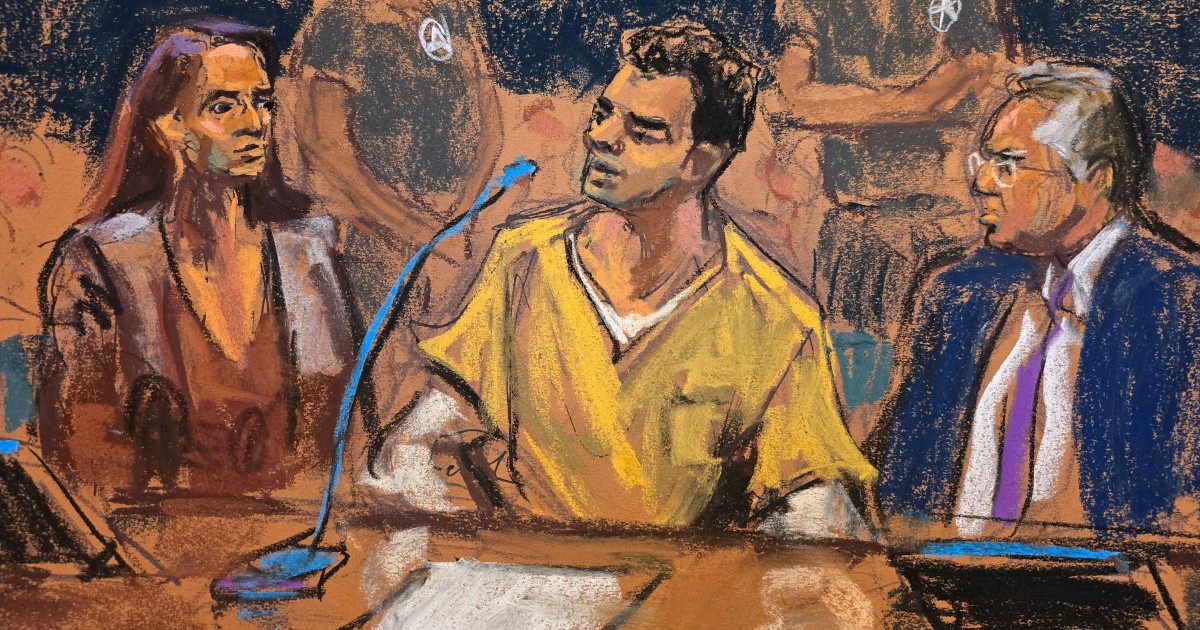
A man accused of fatally shooting a prominent American health insurance executive mounted an extraordinary courtroom defense this week, attributing his alleged violence to a chronic back injury and framing his actions as a targeted assault against an industry he views as fundamentally corrupt. The defendant's public statements have painted a portrait of someone transformed from an ordinary existence into someone willing to resort to lethal force, claiming his motivations stemmed from deep frustration with how insurance companies deny necessary medical care to patients.
The case has captivated attention across the United States, particularly within healthcare policy circles and among those tracking the escalating tensions between patients and the insurance industry. What began as a high-profile corporate assassination has evolved into a broader cultural reckoning with the American healthcare system's accessibility problems and the personal toll such restrictions exact on individuals. The defendant's courtroom appearance represented his first major public platform to articulate grievances he claims motivated the killing.
According to the accused's account, a serious back injury left him unable to access treatment he believed necessary, creating the psychological foundation for his criminal act. Rather than presenting conventional courtroom arguments, he seized the opportunity to deliver what amounted to a manifesto criticizing health insurance practices and denial protocols. This approach suggests a defendant less concerned with conventional legal strategy than with using the justice system as a megaphone for his anti-corporate message.
The victim, an executive at a major US health insurance corporation, represented precisely the institutional structure the accused claims warrants violent opposition. Health insurance executives occupy a peculiar position in American society—simultaneously powerful and genuinely despised across significant portions of the political spectrum. Surveys consistently show that insurance industry professionals rank among the least trusted corporate figures, with public anger over denied claims and administrative burden creating a reservoir of genuine resentment.
For Malaysian readers accustomed to government-subsidized healthcare systems like the public sector's financing model, the American context requires explanation. The United States operates primarily through private insurance, where coverage decisions fundamentally determine access to medical treatment. When insurance companies deny coverage for procedures—whether based on cost-benefit analyses, pre-existing condition exclusions, or other criteria—patients often lack affordable alternatives. This structural reality creates individual tragedies that accumulate across the population.
The defendant's personal journey from normalcy to alleged violence represents what social analysts term "radicalization through personal grievance." Rather than developing extremist ideology through online exposure or organizational recruitment, this case suggests someone whose lived experience of institutional indifference gradually transformed into willingness to commit murder. The back injury served as the concrete trigger, the specific instance where the healthcare system's failures became personal rather than abstract.
Court proceedings have revealed details suggesting careful planning rather than spontaneous violence. This distinction matters significantly for understanding whether the accused harbored genuinely held political convictions about healthcare reform or whether personal bitterness simply required an ideological framework. His courtroom statements claiming he sought to improve healthcare systems for everyone simultaneously acknowledges the severity of his alleged actions while attempting to elevate them beyond simple criminality into something approaching political violence.
The American health insurance industry has faced increasing scrutiny regarding denial practices, administrative costs, and whether the system adequately serves patients versus corporate shareholders. Studies regularly document cases where patients forgo necessary treatments due to insurance barriers, and medical bankruptcy remains a distinctly American phenomenon. While such systemic critiques emerge from mainstream policy circles, the defendant apparently concluded that corporate executives bore direct personal responsibility warranting violence.
Southeast Asian observers might reflect on this case as vindicating healthcare models that prioritize access over privatized decision-making. Malaysia's own healthcare challenges—including growing wait times and capacity constraints—exist within a framework assuming healthcare constitutes a public good rather than consumer product. When insurance executives make coverage decisions affecting life-and-death medical questions, they accumulate the kind of concentrated power that can generate extraordinary rage in those denied necessary care.
The courtroom drama continues developing, with legal proceedings likely to explore whether the defendant's stated motivations genuinely reflect his psychological state or represent retrospective justification for violence rooted in personal disturbance. What remains clear is that someone with no apparent criminal history transformed into someone accused of assassination, and he explicitly attributes this transformation to healthcare system failures. Whether courts ultimately accept this narrative or attribute his actions to individual pathology, the case illuminates genuine fractures within American medical institutions.
The broader significance extends beyond this single case toward systemic questions about whether healthcare systems that deny treatment based on financial calculations inevitably generate periodic explosions of violence. American policymakers continue debating insurance reform without apparently registering that the current system may be producing individuals driven to lethal desperation. This accused killer, whether judged a principled dissident or dangerous lunatic, embodied frustrations genuinely widespread throughout the American patient population, particularly among those facing chronic conditions requiring expensive ongoing care.

