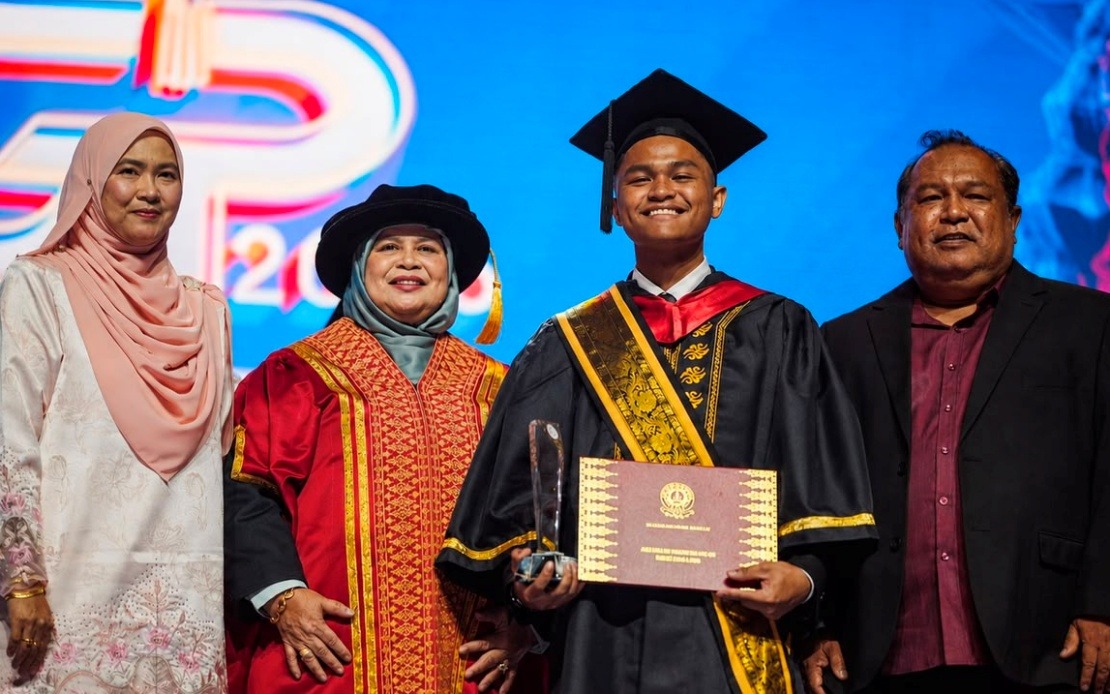
Muhammad Aaqif Dino Faezal's educational trajectory represents a significant success story for Malaysia's meritocratic scholarship system. The 19-year-old Selangor native, who began his secondary education at MARA Science Junior College (MRSM) Tun Ghafar Baba in Melaka, has now secured a place at Imperial College London to study geology from September, following his stellar completion of the International Baccalaureate Diploma Programme (IBDP) at Kolej MARA Banting (KMB). His path underscores how targeted government investment in youth development can unlock talent that might otherwise remain constrained by financial circumstances.
The Young Talent Development Programme (YTP), which provided Muhammad Aaqif with sponsorship for his final two years of secondary education, addresses a persistent challenge in Malaysian education: identifying promising students early and removing economic barriers to their advancement. By financing not only tuition but also living costs at an international-standard institution, MARA's initiative tackles the most daunting obstacle facing talented but disadvantaged Malaysians who aspire to world-class tertiary education. Muhammad Aaqif's candid acknowledgement that his family could not otherwise afford the expense of studying abroad highlights why such programmes remain essential infrastructure for social mobility in the Malaysian context.
His academic performance demonstrates the calibre of student recruited through these initiatives. Achieving 44 out of 45 points in the IBDP examination represents elite-level performance in a globally recognized qualification. This exceptional result distinguishes him among thousands of IBDP candidates worldwide and validates Imperial College's admission decision. The breadth of his achievement—excelling simultaneously in rigorous academics—speaks to a carefully constructed educational model at KMB that balances intellectual rigour with development of the whole person.
Beyond the examination hall, Muhammad Aaqif's leadership credentials proved equally commanding. His tenure as president of the Students' Representative Council (MPP) offered practical experience in institutional navigation, stakeholder management, and organizational responsibility. This role placed him at the intersection of student interests and college administration, requiring diplomatic skills and emotional intelligence alongside intellectual capability. The additional recognition he received through the KMB Best Graduate Award and Co-curricular Icon Award reflects institutional acknowledgement of his multifaceted contributions, suggesting that KMB's assessment extends beyond raw academic metrics to encompass character, resilience, and interpersonal effectiveness.
The 2026 MARA College Graduate Icon Award, which recognized Muhammad Aaqif among all Best Graduate Award recipients, represents the pinnacle of achievement within the MARA college system. The selection criteria—outstanding academic achievement, leadership qualities, contributions to society, and potential to become a MARA graduate icon—deliberately emphasize candidates who embody the aspirational qualities MARA seeks to cultivate. This holistic evaluation framework suggests that Malaysian scholarship programmes increasingly recognise that national development requires not merely technical competence but also ethical formation, civic consciousness, and capacity to inspire others.
Kolej MARA Banting's director, Arfaseela Amir, contextualised Muhammad Aaqif's success within the institution's broader mission to develop human capital that is both intellectually sophisticated and morally grounded. Her remarks indicate that KMB deliberately structures its educational experience to cultivate collaborative leadership and teamwork rather than isolated academic achievement. By positioning Muhammad Aaqif as having fostered genuine team spirit and served as an effective bridge between management and student body, Arfaseela emphasized that institutional leadership valued his ability to build consensus and facilitate institutional functioning—skills that transcend disciplinary knowledge and prove invaluable in international academic environments where cross-cultural collaboration is routine.
Muhammad Aaqif's declared intention to deploy his Imperial College expertise toward Malaysia's oil, gas, and energy sectors illustrates an important dimension of MARA's strategic thinking. By sponsoring students in fields critical to national economic development, MARA constructs a pipeline of talent aimed at addressing skills gaps in strategic industries. Geology expertise, coupled with Imperial College's global standing, positions him to contribute meaningfully to resource management and energy security conversations affecting Malaysia's economic future. This alignment between individual aspiration and national capacity-building suggests that MARA scholarship decisions reflect strategic consideration of Malaysia's competitive positioning in resource-dependent sectors.
The emotional dimension of Muhammad Aaqif's recognition experience—his reflection on challenges, sacrifices, and collective support—reveals how scholarship recipients understand their achievements as embedded within relational networks rather than individual accomplishment. His explicit tribute to family, teachers, friends, KMB, and MARA acknowledges that educational advancement operates through accumulated institutional and interpersonal investments. This relational understanding contrasts sharply with narratives of meritocracy that emphasize sole individual effort, instead recognizing how privilege and disadvantage accumulate through systems, not merely individual characteristics. For Malaysian readers, this perspective carries particular resonance given the national conversation around equitable access to quality education.
The trajectory from MRSM to KMB to Imperial College illustrates the potential of a coherent educational pathway designed to nurture advanced talent. MRSM's role as an entry point for academically gifted students, coupled with KMB's cultivation of international-standard preparation, creates a system where talented Malaysians can access world-leading institutions without requiring wealthy parents or expatriate connections. This sequential sponsorship model, where MARA extends support across multiple educational transitions, demonstrates more sophisticated intervention design than single-stage scholarships that may leave students inadequately prepared for elite international environments.
For Southeast Asian context, Muhammad Aaqif's story illuminates broader questions about regional education systems and global competitiveness. Malaysia's sustained investment in preparing students for international universities—evidenced through MRSM, MARA colleges, and strategic scholarship targeting—reflects strategic thinking about human capital. As regional economies compete for talent and innovation capacity, nations that systematically identify and develop gifted students from all socioeconomic backgrounds may derive competitive advantages through human capital quality and diversity of perspective. Muhammad Aaqif's readiness for Imperial College suggests Malaysia's educational infrastructure, at least for elite pathways, successfully prepares students for world-class rigour.
Looking forward, Muhammad Aaqif's cohort represents potential future leaders in Malaysian science, engineering, and policy domains. The MARA College Graduate Icon award carries implicit expectation that recipients will become exemplars and mentors within their professional communities, potentially inspiring younger Malaysians and demonstrating what determined effort combined with institutional support can achieve. Whether through direct contribution to energy sectors or through mentorship of subsequent generations of MARA scholars, his trajectory anticipates ripple effects extending beyond personal accomplishment. For MARA as an institution, Muhammad Aaqif exemplifies the human outcomes that justify continued investment in youth development programmes—outcomes measured not merely in credentials but in individuals poised to contribute meaningfully to national challenges and global knowledge communities.

