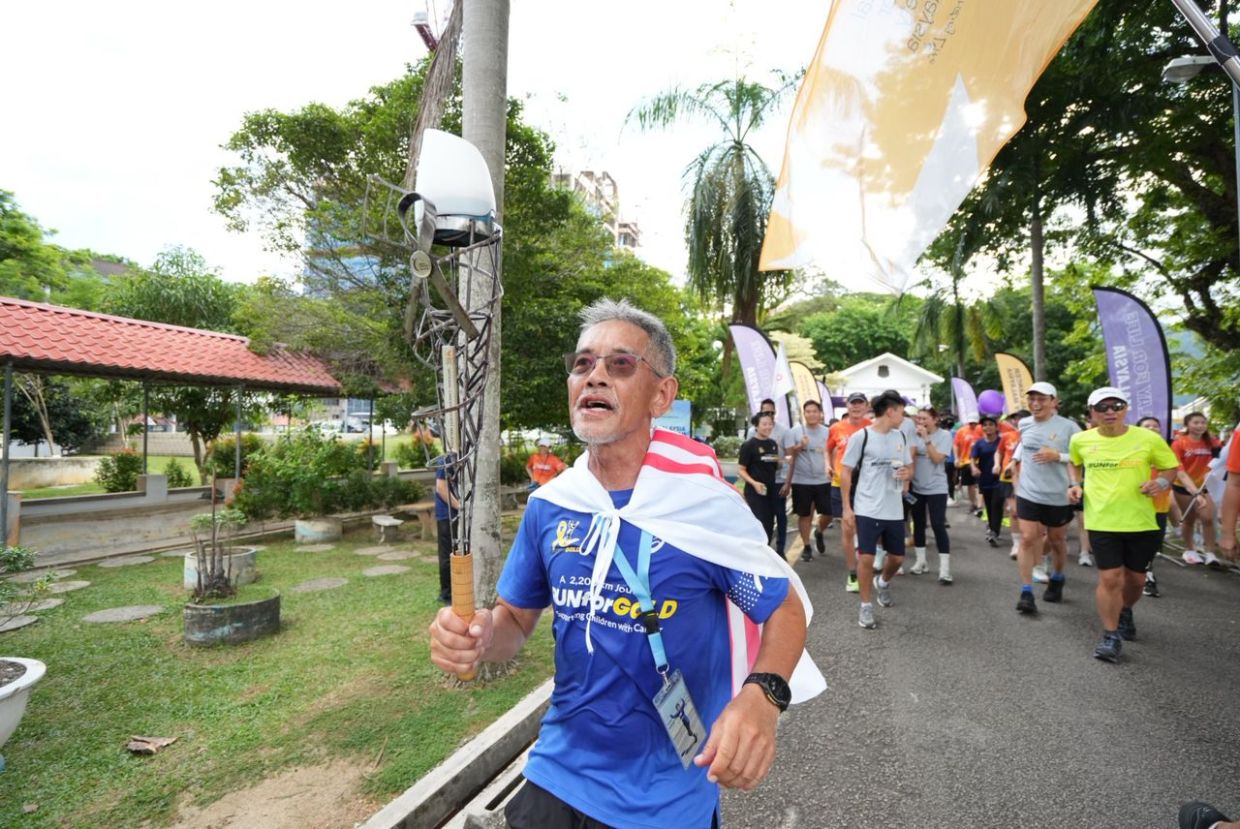
When SG Lim retired as a civil engineer in Penang, he faced not the leisurely life many anticipate but rather an unexpected struggle with profound loss. The 66-year-old distance runner found himself navigating a world fundamentally altered by his wife Goh Joo Lee's death from cancer in 2024 at age 63. Rather than succumbing to the stillness that grief often demands, Lim chose movement—physically traversing multiple continents to process his sorrow while searching for renewed meaning. His peripatetic existence in the months following her passing, alternating between Australia with his two children, Malaysia with family and friends, and Hong Kong for solitude, reflected the disorientation of bereavement.
Lim's characterization of his late wife required only two words: loving and caring. Yet those simple descriptors masked a depth of compassion that had profoundly shaped their decades together. Goh possessed an empathetic nature that extended even to strangers—during her own hospital battle with cancer, she remained preoccupied with the wellbeing of others rather than her own deteriorating condition. One memory crystallizes this quality: observing his wife request flowers for a woman in the adjacent hospital ward, someone she had never met but whose suffering moved her to generous action. That moment, witnessing another patient's joy and her husband's gratitude, exemplified the quiet dignity with which Goh had lived. Beyond her compassion, Lim cherished her artistic sensibility; her drawings, paintings, and creative pop-up installations, still visible across her social media accounts, serve as enduring testaments to her imagination and skill.
The transformative shift from grief toward purposeful action arrived through an unexpected catalyst. Inspired by a book authored by Laurence Carter, Lim conceived an audacious idea: to traverse Peninsular Malaysia entirely on foot, combining his passion for distance running with a mission to honor his wife's memory. He consulted directly with Carter, seeking guidance on executing this ambitious vision. This conversation crystallized his commitment, and with backing from the National Cancer Society Malaysia (NCSM), the initiative acquired its defining name: "Run For Gold." The campaign explicitly targeted dual objectives—raising public consciousness about childhood cancer while generating financial support for affected children—making Lim's personal journey a vehicle for collective social impact.
Preparing for such an undertaking demanded rigorous physical and mental conditioning. After completing the Sydney Marathon in August, Lim systematically expanded his training regimen. He established a disciplined routine of pre-dawn 5am starts, deliberately ran during sweltering mid-morning hours to acclimate to tropical heat, incorporated strength training sessions, and even developed video editing proficiency to document his expedition on social media platforms. This meticulous preparation transformed what might have remained a romantic ideal into a logistically achievable reality. The technical and physical groundwork reflected not merely athletic ambition but a deeper commitment to honoring his wife through excellence and dedication.
The human encounters during his nearly three-month, 2,200-kilometer odyssey across eleven states and federal territories fundamentally reinforced his conviction in the undertaking's significance. His maiden visit to a children's oncology ward, coordinated through NCSM, proved particularly poignant. Witnessing fragile young patients and their visibly exhausted parents crystallized the stakes of his endeavor—these were not abstract statistics but vulnerable human beings whose suffering demanded witnessed compassion and concrete support. The visceral recognition that his exertion could tangibly improve children's lives and alleviate parental anguish provided spiritual fuel more sustaining than physical endurance alone could supply.
Yet beyond the formal beneficiaries of his campaign, Lim discovered unexpected kindred spirits who embodied the same generosity that had defined his late wife. Running through Pekan, Pahang, he encountered a retired schoolteacher and his spouse who, despite lacking financial capacity to contribute substantially, offered something equally valuable: their physical presence and advocacy. This couple accompanied him across multiple stages through Johor, Melaka, and Penang, with the husband matching Lim's pace while his wife provided ground support. Their steadfast commitment transformed sections of the journey into collaborative testimony. More significantly, their tender relationship—the affection and attentiveness they demonstrated toward one another—stirred memories of his own marital bond, simultaneously rekindling both his loss and his sense of connection to the love that had defined his years with Goh.
The couple's unwavering presence exemplified a broader pattern Lim encountered throughout his expedition: strangers becoming champions of the cause. This phenomenon revealed how personal grief, when channeled into public service, possesses capacity to mobilize entire communities. Each interaction reinforced that his wife's compassionate legacy could proliferate through others, that her spirit of caring transcended her individual life and could inspire collective action across the peninsula. In this dynamic, Lim discovered a pathway through grief that avoided both denial and permanent sorrow—instead constructing meaning through contribution.
When Lim finally crossed the finish line in George Town, Penang after completing the final 80-kilometer stretch, his emotional state crystallized into words that revealed the journey's true destination. "Darling, we made it," he declared—his first coherent thought addressing his deceased wife directly. Those words captured the essential paradox of his expedition: it was simultaneously a personal pilgrimage through bereavement and a public service benefiting hundreds of strangers. The metaphorical partnership persisted even in her physical absence, suggesting that grief need not terminate connection but rather transform it into new channels of expression and purpose.
The scenes awaiting him at the finish line demonstrated that his solo athletic achievement had become a collective phenomenon. Family members, lifelong friends, former classmates, and complete strangers had gathered to celebrate his arrival, their presence testifying that a journey conceived in private sorrow had rippled outward to touch numerous lives. This convergence represented validation not merely of his physical perseverance but of his choice to metabolize grief into compassion. The "Run For Gold" campaign ultimately transcended its stated purpose of raising cancer awareness and funds, becoming instead a living monument to how one person's deliberate choice to honor loss through service can transform that loss into unexpected connection and meaning. For Malaysian society grappling with the ubiquity of cancer and the individual tragedies it wreaks, Lim's example offers a counternarrative—not one of defeat, but of transcendence through determination and love.

