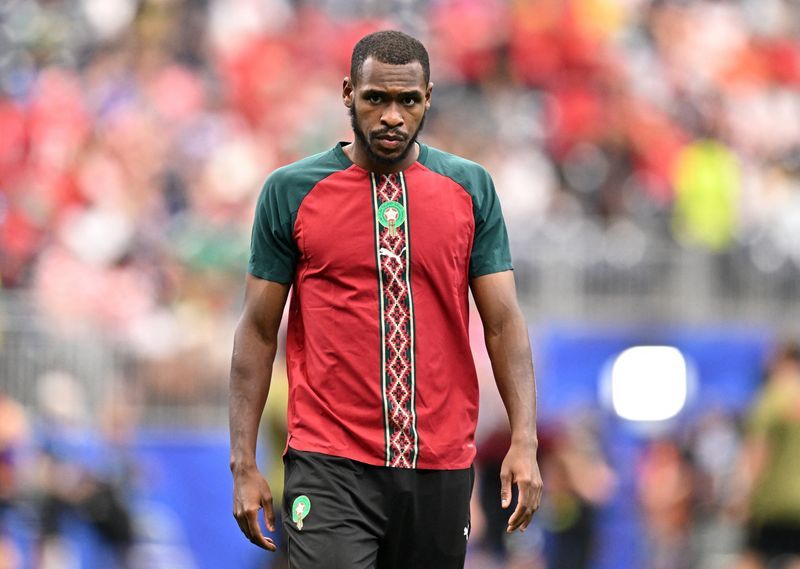
The symmetry of sporting fate rarely plays out with such theatrical precision. On Thursday, when Morocco and France collide in the World Cup quarter-final, centre-back Issa Diop will find himself tasked with containing one of the tournament's most lethal attacking talents—a scenario that would have seemed unimaginable just months earlier, given his explicit and repeated declarations that he would never represent the North African nation.
The 29-year-old's journey to this moment represents one of international football's more complicated personal narratives. Born in Toulouse to a Senegalese father and Moroccan mother, Diop spent years publicly insisting that his allegiance lay solely with France, the country of his birth. Speaking to Canal Plus seven years ago while representing France's Under-21 programme, he articulated his position with unmistakable clarity: joining another national team, he suggested, would constitute betrayal and opportunism, a hollow choice made only because opportunities with Les Bleus had dried up. His words at the time generated substantial online backlash when his intentions eventually shifted, as commentators questioned the sincerity of his earlier convictions.
Yet football's unpredictability often reshapes even the firmest convictions. In March of this year, Diop reversed course and committed to Morocco, marking a significant shift that would not have materialised without specific circumstances. The Moroccan coaching staff, led by Mohamed Ouahbi, had identified pressing defensive vulnerabilities heading into the World Cup. Captain Romain Saiss's departure following the Africa Cup of Nations in January created a leadership void in the centre of defence, while injury to fellow defender Nayef Aguerd further compromised Morocco's backline options. Ouahbi pursued Diop systematically, recognising that the West Ham United player possessed not merely technical capability but genuine connections to Moroccan culture and heritage. The coach publicly emphasised that Diop demonstrated authentic commitment to Moroccan traditions, frequently visiting the country and maintaining substantive ties beyond mere sporting convenience.
Diop's continental debut for Morocco came against Ecuador in a friendly fixture, positioning him alongside Crystal Palace's Chadi Riad in central defence. The pairing quickly established itself as Morocco's primary defensive axis, providing stability that had been sorely lacking. Eight seasons of Premier League experience with West Ham United and Fulham had honed his defensive positioning and physical presence, qualities that proved immediately valuable for a team navigating World Cup pressures. His performances generated sufficient confidence that Ouahbi retained him consistently, demonstrating faith that transcended the controversy surrounding his recent change of allegiance.
However, Diop's true vindication arrived not through anonymous defensive performances but through an unexpected moment of attacking brilliance. Against the Netherlands in the round of 32, Morocco appeared to be sliding toward elimination, the match drifting toward full-time with no goals separating the teams. In the ninety-first minute, Diop—operating well outside his primary defensive remit—rose to meet a cross from Chemsdine Talbi and powered a header into the corner. His goal forced extra time, and Morocco ultimately prevailed on penalties, a dramatic rescue that suddenly transformed perceptions of his value to the squad beyond purely defensive considerations. The moment seemed to erase the earlier hostility surrounding his selection, replacing controversy with gratitude.
Reflecting afterwards on the improbable finish, Diop provided a characteristically understated account of his positioning during the decisive moment. He described himself as disoriented by his own presence in the Dutch penalty area so late in proceedings, suggesting he had drifted forward almost accidentally rather than through calculated design. This modesty contrasted sharply with the significance of his intervention, which rescued Morocco from what would have represented tournament elimination.
Coach Ouahbi has publicly resisted dwelling on Diop's earlier rejection of Morocco, preferring instead to emphasise the defender's current commitment and attitude. The coach highlighted that what ultimately matters is performance on the pitch rather than historical grievances, framing the partnership as looking forward rather than backward. This pragmatic stance reflects football's fundamental philosophy: results supersede narrative complexity. Whether Diop's initial resistance to playing for Morocco represented genuine ideological conviction or youthful misguided patriotism has become largely irrelevant to the present moment.
Thursday's quarter-final against France will demand that Diop concentrate entirely on defensive responsibilities. Kylian Mbappe's pace and technical excellence represent among the tournament's most formidable attacking challenges, requiring absolute focus and no mental distractions whatsoever. The scenario carries obvious resonance given Diop's former aspirations to represent France at the highest level. Had his earlier preferences prevailed, he might conceivably have found himself in the French squad, a prospect that now exists only in counterfactual speculation.
For Morocco broadly, Diop's participation represents more than merely adding defensive depth to the squad. His selection and eventual adaptation symbolises the national team's capacity to evolve and adapt tactical approaches based on pragmatic requirements rather than stubborn adherence to established patterns. The team's advancement to the quarter-final stage itself represents significant achievement, building on their surprising semi-final appearance at the previous World Cup in Qatar. A victory over France would represent a watershed moment not merely for Moroccan football but for African football more broadly, challenging the established hierarchy of continental representation on the world stage.
The narrative surrounding Diop ultimately transcends individual player biography. His trajectory from reluctant recruit to match-winning performer encapsulates broader themes within international football regarding identity, loyalty, and the pragmatic compromises that characterise modern sporting careers. Whether his commitment to Morocco proves enduring or represents a tactical accommodation remains uncertain, but his performances thus far suggest genuine investment in the national project. Thursday's encounter will test not merely his defensive capabilities but the authenticity of his transformation.

