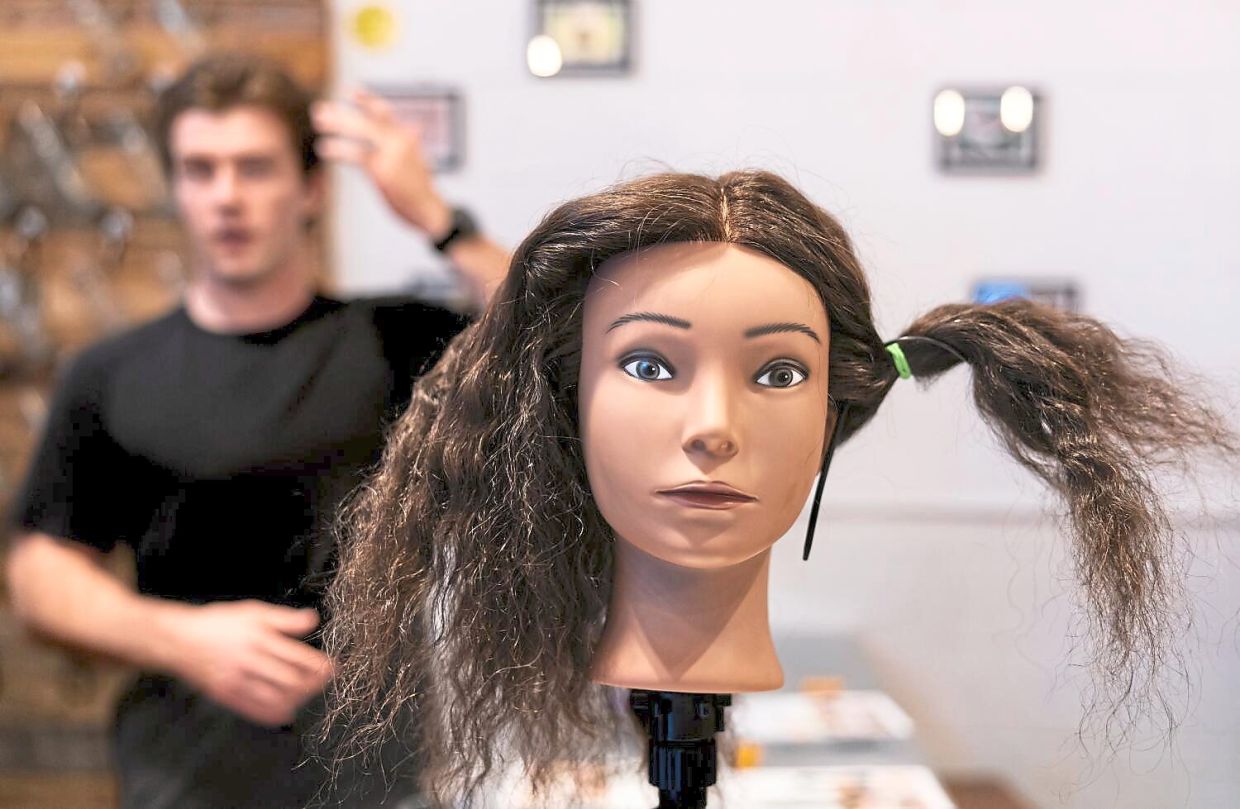
When Austin Nieves organized a "Pints and Ponytails" evening at Captain Fatty's Brewery in Santa Barbara County in May, fifteen men aged thirty to sixty gathered for an unexpected activity: learning to braid hair from professional hairstylists using mannequin heads in a relaxed bar environment. What began as an unconventional training session blossomed into something far more significant—a monthly gathering place where fathers could share experiences, build friendships, and develop practical parenting skills in an atmosphere designed specifically for them. The event sold out, revealing an undeniable appetite among male parents for structured community and belonging during a life transition that research shows often leaves them isolated and uncertain.
Nieves, who relocated to Santa Barbara from Pasadena in April 2025, discovered the gap in support networks for fathers firsthand. When his wife gave birth to their son Hudson, now three years old, she quickly joined multiple mothers groups and formal parenting classes that provided guidance, practical advice, and genuine friendship. As a first-time father, Nieves found himself relying almost exclusively on his brothers who had already navigated parenthood, a stark contrast to the comprehensive support ecosystem available to mothers. This disparity prompted him to recognize a systemic imbalance in how parental communities are structured and supported.
Academic research validates what Nieves observed anecdotally. In 2006, researchers Chris Knoester and David J. Eggebeen published findings in the Journal of Family Issues demonstrating that active fatherhood correlates with measurable declines in well-being and social participation as men gradually withdraw from their existing friendship circles. Clinical psychologists Hillary Halpern and Maureen Perry-Jenkins documented that the transition from single life to fatherhood produces emotional turbulence comparable to a roller coaster, with fathers experiencing confusion, doubt, and occasional depression. More recently, a 2021 study from Stockholm's Karolinska Institute specifically highlighted that fathers navigating their transition to parenthood benefit significantly from structured peer support, with research indicating that organized fathers groups positively influence relationship satisfaction with partners, strengthen bonds with children, boost self-confidence, and measurably reduce loneliness.
Before establishing the Santa Barbara group, Nieves had already pioneered the Orange County Dads club in October 2023 while living in Costa Mesa with his wife Katie. The original chapter organized casual coffee shop meetups, zoo outings, holiday jam sessions, and even CPR training classes—a deliberate mix of social connection and practical skill development. The club's growth relied partially on husbands discovering the group through wives and partners sharing Nieves's social media content, suggesting that even in male-centered spaces, family networks play crucial roles in spreading awareness and driving participation. Mikhail Alfon, founder of Blue Light Media, attended multiple Orange County events with his son Santos and recognized immediately that finding peers navigating identical life stages offered invaluable reassurance during such a transformative period.
The challenge of geographic relocation tested Nieves's commitment to building community. When he and his family purchased a Santa Barbara home in April 2025, the distance from Orange County threatened to sever his established network. Rather than accepting this loss, he replicated the model in his new location, launching the Santa Barbara chapter within a month and establishing a consistent monthly gathering schedule beginning in May 2025. This expansion demonstrated that the underlying need transcended geographic boundaries and that fathers across different regions recognized the same deficit in peer support infrastructure.
Austin Jones, a Santa Barbara real estate agent and investor, discovered the Santa Barbara Dads group through Instagram and immediately grasped its significance. Jones articulated a challenge facing many modern fathers: juggling multiple demanding roles—husband, parent, professional—while receiving minimal institutional encouragement or structured support for any of these identities. The compartmentalization of male life leaves fathers isolated within each role, lacking the integrated community that might acknowledge and validate the complexity of their experiences. Jones found the prospect of shared struggle and mutual understanding particularly compelling, describing the group as a space where men could gather "in the trenches" with others facing identical pressures.
Jones proved especially receptive to the Pints and Ponytails event because he had struggled personally with a concrete, recurring challenge: managing his two-and-a-half-year-old daughter Noa's textured, curly hair. Many fathers encounter similar practical obstacles that exceed their existing skill sets but rarely receive formal instruction or encouragement to develop competence. The brewery setting transformed what might otherwise be a source of parental anxiety or inadequacy into a lighthearted learning opportunity embedded within a supportive peer context. After gaining sufficient confidence with the mannequin heads, Jones committed to applying his new skills with Noa, progressing from his previous limited ability of simply fastening headbands.
Nieves observed that initial awkwardness among participants dissolved rapidly once the social dynamics shifted. When the first men arrived at the Santa Barbara event, many positioned themselves around the bar's perimeter, maintaining physical and emotional distance—a posture reflecting cultural conditioning that discourages male vulnerability and emotional expression. After consuming their first drink, the social atmosphere transformed, with previously reserved fathers voluntarily moving toward the training mannequins and attempting hairstyling techniques with increasing enthusiasm and self-deprecating humor. This behavioral arc illustrates how physical environments, structured activities, and peer presence can effectively lower psychological barriers that typically prevent men from seeking support or admitting skill deficits.
The mothers group comparison that Nieves emphasized reveals fundamental asymmetries in how parenting is culturally supported and valued. Institutional resources, social normalization, and community acceptance facilitate mothers' gathering and seeking help, while fathers remain largely left to navigate parenting individually or rely on ad hoc advice from family members. Even as contemporary fathers increasingly embrace active parenting roles, matching or exceeding previous generations' involvement in childcare and emotional labor, the social infrastructure supporting their transition lags significantly. This gap represents a missed opportunity for strengthening family systems, since research confirms that supported fathers demonstrate improved relationship quality with partners and children while experiencing greater psychological well-being themselves.
Beyond specific skill development, the fathers groups Nieves has built address a deeper cultural need: normalizing male parenting as worthy of attention, investment, and community celebration. By creating spaces where fathers can openly discuss challenges, admit uncertainties, learn new skills, and experience belonging without performative masculinity, these groups potentially reshape how men understand fatherhood itself. The consistency of monthly gatherings signals commitment and stability, transforming occasional social contact into genuine community with the potential for deeper friendships and mentorship relationships. For many participants like Jones, this represents their first experience with peer support specifically designed for their identity as fathers rather than fathers being incidental members of family-oriented activities.
The expansion from Orange County to Santa Barbara demonstrates that Nieves has identified and begun addressing a market failure in American parenting culture: organized support for men during perhaps the most profound identity transformation of their adult lives. As more fathers recognize that their emotional experiences, practical challenges, and social needs deserve the same institutional attention and peer acknowledgment long extended to mothers, similar groups will likely proliferate across other communities. The movement suggests that contemporary masculinity is gradually accommodating space for vulnerability, interdependence, and openly acknowledged need—a cultural shift with implications extending far beyond parenting itself into how men construct identity and community throughout their lives.

