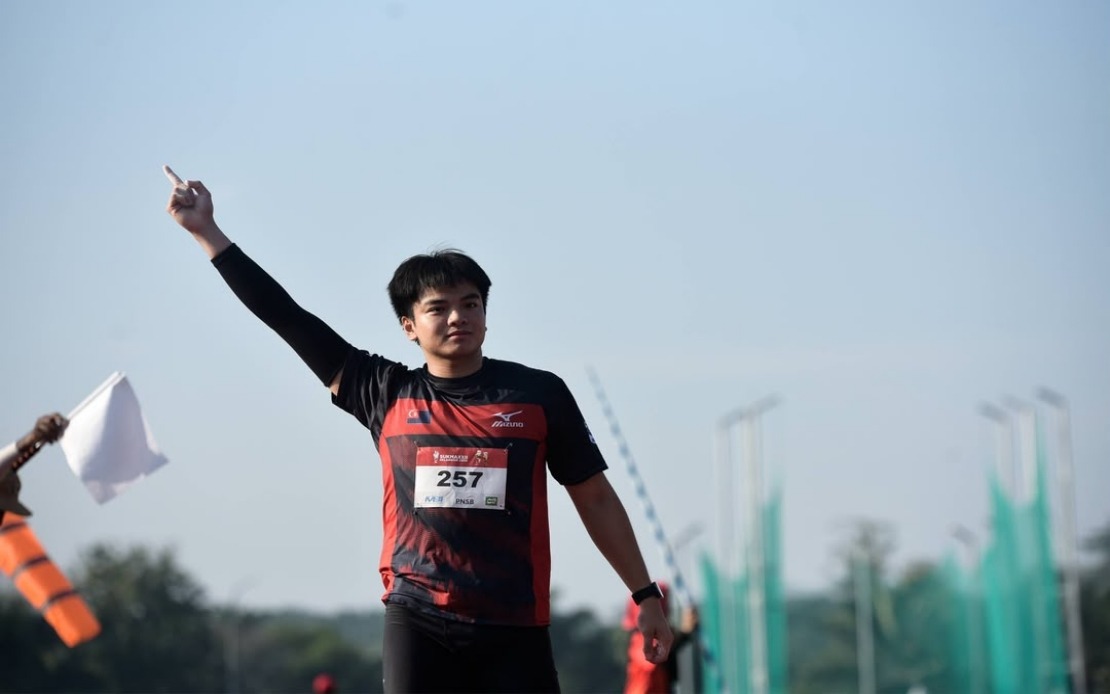
At just eighteen years old, Johor's Chai Kai Le has already etched his name into Malaysian sporting folklore by demolishing a quarter-century-old javelin record at the Selangor 2026 Malaysia Games. The Bukit Jalil Sports School student unleashed a throw of 64.44 metres during his second attempt at the Universiti Putra Malaysia Sports Centre, surpassing the 62.33-metre mark that had stood unchallenged since Sarawak's Kho Mei Kuan set it at the 2000 edition in Penang. This breakthrough moment represents far more than a single competition victory; it underscores the unpredictable pathways that lead talented young athletes to international recognition and reflects the profound influence of mentorship and family backing in Malaysian sports development.
Kai Le's journey to the podium began not on a javelin runway but on a badminton court during his schooldays. A perceptive teacher noticed something distinctive in his shuttle release—a particular snap and fluidity of arm motion—and suggested he redirect that natural gift toward track and field. The transition occurred during Standard Six, when Kai Le decided to pursue javelin training seriously. This seemingly chance observation demonstrates how crucial coach awareness and mentor intuition remain in Malaysian sports talent identification, particularly in secondary schools where many young athletes are still discovering their aptitudes and strengths.
The early inspiration that drove Kai Le forward came partly from observing elite performers. He describes watching senior javelin throwers competing in open tournaments and imagining himself achieving similar distances. That aspirational mindset, combined with systematic training, gradually transformed an adolescent experiment into genuine athletic ambition. His progression to competing at increasingly demanding levels—from school competitions to open meets—reveals a measured development pathway that allowed him to build confidence and technical proficiency incrementally rather than facing premature burnout.
Behind every accomplished young athlete stands a support network, and Kai Le's story powerfully illustrates this universal truth. His father, Chai Yin Huan, has been the cornerstone of this foundation, consistently prioritizing his son's sporting needs above financial constraints. From covering physiotherapy and rehabilitation costs following injuries to purchasing replacement equipment when gear wore out, the elder Chai demonstrated the kind of parental commitment that often determines whether talented youngsters persist through difficult phases or abandon their pursuits. Crucially, this support came without excessive pressure—Kai Le emphasizes that his father valued effort and health over podium finishes, creating psychological space for his son to develop intrinsic motivation.
The past twelve months have tested Kai Le's resolve considerably. As a pre-university student balancing academics and elite training, he has battled recurring injuries affecting his back, right shoulder, and elbow—setbacks that remain incompletely healed even as he competes at peak level. The willingness to compete despite carrying these injuries reflects both his determination and the calculated risk-taking necessary at this stage of athletic development. Rather than sidelining himself for complete recovery, Kai Le has chosen to manage these conditions while continuing to train and compete, a pragmatic approach common among driven young athletes navigating the intersection of injury management and career progression.
His performance at the Indonesia Open earlier this year provided evidence of his upward trajectory despite physical challenges. That competition yielded a personal best and national under-20 record of 65.65 metres, establishing a new benchmark that suggested the SUKMA record was within reach. The gap between his personal best and his Games-record-breaking throw at UPM reflects the psychological intensity and technical execution that major competitions can unlock. Competition experience at international levels, even in regional tournaments like the Indonesia Open, provides invaluable exposure to different throwing conditions, competitive atmospheres, and the mental fortitude required when stakes are elevated.
Kai Le's current trajectory positions him within striking distance of significant continental opportunities. His stated target of a 70-metre throw represents an ambitious but achievable progression, and he has already begun preparing for a one-month training stint in Japan scheduled for early next year. This international exposure, increasingly common among aspiring Southeast Asian track and field athletes, offers access to specialized coaching, training facilities, and technical refinement that domestic programs sometimes cannot provide. The 2027 SEA Games qualification remains his stated objective, marking the logical next step in his competitive arc.
The broader significance of Kai Le's record extends beyond individual achievement. Malaysia's javelin program has historically struggled to produce world-class throwers capable of competing at Asian and global championships. The emergence of an 18-year-old record-breaker suggests that systematic talent identification at school level, combined with institutional support through facilities like Bukit Jalil Sports School, can generate competitive performers. His success also illustrates how regional competitions like SUKMA serve essential functions beyond medal tallies—they provide competitive platforms where young athletes test themselves against peers and establish benchmarks for future progression.
From a Southeast Asian perspective, Kai Le's achievement reflects the region's increasing sophistication in athletic development pathways. Countries across ASEAN have invested substantially in sports science, training infrastructure, and coaching expertise over the past decade. Individual breakthroughs like this one are becoming more frequent as these investments mature and systematic talent management replaces ad hoc approaches. For Malaysian sports administration, Kai Le exemplifies the return on investment in elite facilities and coaching education, vindicating the strategic emphasis on identifying and developing young performers from diverse backgrounds.
Looking forward, the pressure will intensify as Kai Le pursues increasingly ambitious targets. Maintaining focus while managing chronic injuries, balancing pre-university studies, and handling the expectations that accompany record-breaking will test his maturity and resilience. Yet his measured articulation of goals, evident humility, and consistent execution suggest he possesses the psychological foundations necessary for sustained development. His journey from badminton enthusiast to javelin champion also carries an implicit message for Malaysian sports development: sometimes the most productive talent identification occurs through informal observation and mentorship rather than formal systems, and sometimes the greatest enabling factor is simply a parent's quiet, unwavering belief that their child can achieve exceptional things.

