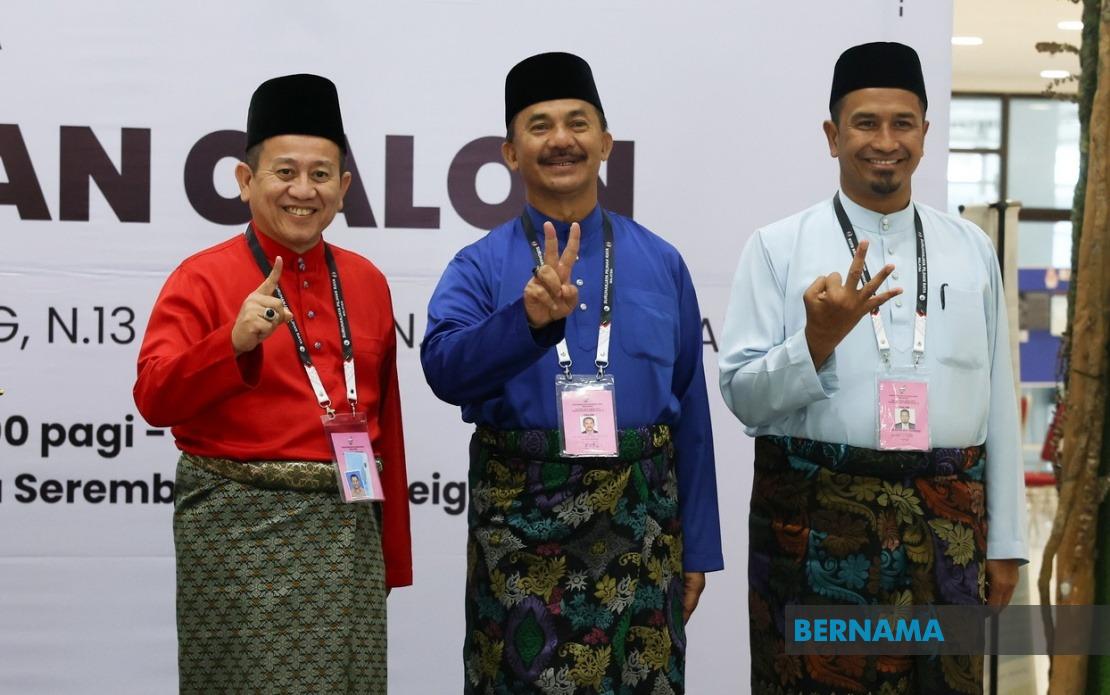
The 16th Negeri Sembilan State Election is shaping up as a contest between established political veterans and an unprecedented wave of fresh candidates, providing voters with sharply differentiated choices as campaign season intensifies ahead of the August 1 polling date. Across the 36 State Legislative Assembly seats, all three major coalition blocs—Pakatan Harapan, Barisan Nasional, and Perikatan Nasional—have adopted mixed strategies of retaining proven incumbents whilst introducing significant numbers of untested newcomers, a shift that reflects broader concerns about generational renewal and remedied representation within Malaysia's political system.
Pakatan Harapan, fielding candidates in all 36 constituencies, has committed most dramatically to renewal by selecting 24 new candidates alongside 12 incumbents and established figures. This strategy positions the coalition as forward-looking whilst retaining institutional memory and voter recognition through heavyweight names. Negeri Sembilan PH Chairman Datuk Seri Aminuddin Harun exemplifies this approach: rather than defending his Sekamat seat, he is moving to the Linggi DUN seat, a repositioning that suggests either strategic calculation or internal party management considerations. Similarly, DAP Secretary-General and Transport Minister Anthony Loke carries the coalition's national profile into the campaign by contesting the Chennah DUN seat, offering voters a direct link to federal decision-making and demonstrating PH's confidence in pairing established ministers with promising newcomers.
Barisan Nasional's approach reflects greater conservatism: the coalition is fielding 25 candidates overall, of which 13 are new entrants, meaning 12 of its candidates represent continuity with previous contests. UMNO Deputy President and Foreign Minister Datuk Seri Mohamad Hasan anchors the BN campaign by defending his Rantau DUN seat, signalling that despite new faces, the coalition retains its top-tier leadership commitment to the state. Negeri Sembilan BN Chairman Datuk Seri Jalaluddin Alias is defending the Pertang DUN seat he won in the 2023 election, indicating BN's strategy of preserving victories in competitive terrain. However, the party has also shuffled some candidates—notably Datuk Ismail Lasim, who is abandoning the Senaling DUN seat to contest Juasseh instead, a tactical movement that may reflect either seat marginality assessments or internal party assessments of candidate viability.
Perikatan Nasional takes a more fragmented approach, contesting only 11 of the 36 seats through a combination of PAS, Gerakan, Wawasan, and MIPP, thereby limiting its ambition but also its exposure in what may be perceived as unfavourable terrain. This constrained footprint suggests PN has calculated that selective presence is strategically superior to blanket contests. Simultaneously, Bersatu has emerged as a notable independent operator within this constellation: the party is fielding 24 candidates under its own logo rather than the PN banner it wore in 2023, a repositioning that signals organisational autonomy and potentially heightened ambition. Bersatu Information Chief Datuk Tun Faisal Ismail Aziz represents the new cadre the party is promoting, whilst Negeri Sembilan Bersatu Chairman Hanifah Abu Bakar embodies the retention of tested organisers, with responsibility for defending the Labu DUN seat.
Beyond the major coalitions, the electoral landscape includes representation from Parti Berjasa, the Orang Asli-focused ASLI, the socialist PSM, and four independent candidates. This fragmentation, whilst numerically modest, reflects broader contestation of the traditional two-coalition binary that has dominated Malaysian electoral politics for decades. The presence of ethnic and ideological micro-parties signals that even in state-level contests, diverse constituencies are attempting to secure dedicated representation outside mainstream coalition structures.
The age span of candidates reveals interesting demographic dynamics within the emerging political class. At 70 years old, PH's Datuk Abd Latiff A Tambi for the Gemencheh DUN seat represents the older generation still commanding candidacies despite pressure for renewal. Conversely, the youngest candidate, 23-year-old Leevineshwaraan Murugan contesting for Bersatu in Sri Tanjung DUN, exemplifies the expansion downward into candidates barely past voting age themselves, raising questions about experience levels and the party machinery's capacity to nurture such junior contenders.
The nomination period concluded on July 18, with the Election Commission confirming 103 candidates across all parties and independent categories. This total demonstrates both the competitiveness of the contest—multiple candidates per seat in many instances—and the willingness of political actors to invest resources despite the uncertainty of outcomes. The EC has scheduled early voting for July 28, with election day itself on August 1, compressing the formal campaign period into roughly a fortnight and requiring efficient mobilisation by all contending forces.
For Malaysian observers and particularly Selangor-adjacent Negeri Sembilan residents, this election carries implications beyond the state itself. Negeri Sembilan represents a testing ground for whether PH's strategy of wholesale candidate renewal can succeed against BN's more cautious blending of old and new, and whether PN's strategic selectivity can produce meaningful breakthroughs. The state's political complexion will also influence calculations ahead of the next federal general election, anticipated within two years, making this contest a de facto referendum on the viability of each coalition's current leadership and strategic direction. The influx of new candidates, particularly those in their twenties and thirties, may also reshape internal party dynamics, introducing cohorts with different generational priorities, digital communication styles, and policy perspectives than their predecessors.

