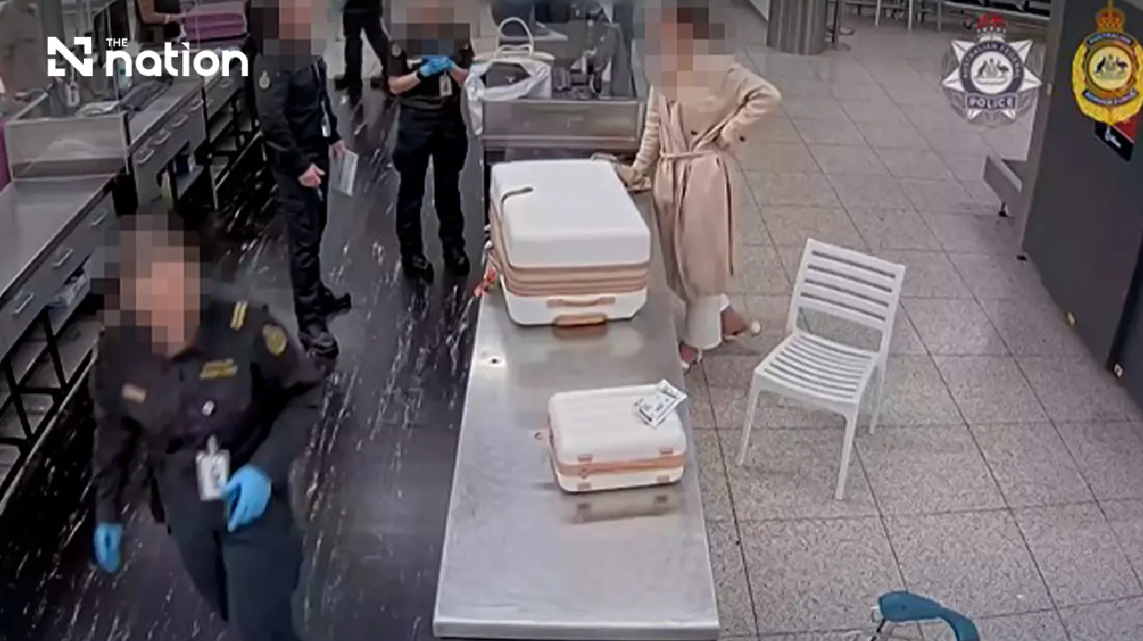
Authorities in Western Australia have laid serious charges against a French national accused of attempting to smuggle a highly toxic chemical into Australia from Thailand. The 31-year-old woman, who had been residing in Manning, Western Australia, was intercepted by Australian Border Force officers on May 29, 2026, when she disembarked from a Thailand-bound flight at Perth International Airport. The discovery has added another chapter to Australia's ongoing struggle with drug smuggling operations originating from Southeast Asia, a region that remains a critical source for illicit substance trafficking into the country.
During routine baggage screening procedures, ABF officers conducting inspections of the woman's luggage made a startling discovery that would trigger both state and federal law enforcement responses. What appeared to be an innocuous personal care item—a container labelled as body wash—contained something far more sinister. Subsequent testing of the liquid revealed approximately 50 grams of butanediol, a substance classified as border-controlled under Australian law. The quantity detected crossed the threshold into what prosecutors classify as a marketable quantity, elevating the severity of the charges considerably. This finding alone was sufficient to trigger a comprehensive investigation that would expand well beyond the initial discovery at the airport terminal.
The investigation deepened when Australian Federal Police and border force personnel examined the woman's mobile phone during secondary questioning. Digital evidence allegedly recovered from the device suggested the defendant may have been attempting to conceal additional border-controlled substances beyond the butanediol initially discovered. Following this lead, authorities conducted further searches that yielded 40 steroid tablets, which were seized and forwarded for forensic laboratory analysis. The compounding evidence suggested a coordinated effort rather than a casual attempt to import drugs, indicative of potentially organised smuggling networks operating between Thailand and Australia.
The charges brought against the woman carry extraordinary legal weight within Australia's stringent drug import framework. She faces one count of importing a marketable quantity of a border-controlled drug, a violation of section 307.2 of the Criminal Code. Conviction on this single charge carries a maximum prison sentence of 25 years, reflecting Parliament's determination to deter large-scale drug importation. The woman made her first appearance before Perth Magistrates Court on June 26, 2026, marking the formal entry of the case into the Australian criminal justice system. Such lengthy potential sentences serve as stark reminders of Australia's zero-tolerance approach to narcotics trafficking.
Butanediol occupies a particularly dangerous position within Australia's drug control architecture. This industrial chemical solvent undergoes metabolic conversion within the human body, transforming into gamma-hydroxybutyrate, commonly known as GHB. The toxicological profile of the substance is alarming—authorities warn that minute quantities, measured in mere milligrams, can prove lethal to users. This extreme danger profile distinguished butanediol from many other smuggled substances and justified its recent elevation to border-controlled status. Australia only formally declared butanediol a border-controlled drug in 2024, meaning the legislative framework surrounding its importation remains comparatively new even as enforcement operations have intensified.
The timing and methodology of this seizure underscore the sophistication of contemporary drug smuggling operations utilising Southeast Asian transit routes. Thailand, despite its own significant drug enforcement challenges, remains a primary staging point for narcotics destined for Australian markets. The choice to conceal butanediol within a body wash container reflects the deliberate deception tactics employed by trafficking networks seeking to evade detection at border checkpoints. Intelligence analysts increasingly recognise that smuggling operations targeting Australia have become more elaborate, utilising psychological profiling of travellers, decoy items, and multi-layered concealment strategies to penetrate customs barriers.
Australian Federal Police Detective Acting Superintendent Peter Brindal issued a forceful statement emphasising the collaborative nature of border security operations. He highlighted the critical partnership between the AFP and Australian Border Force in intercepting illicit substances before they penetrate Australian communities. Brindal's remarks conveyed an unmistakable message to prospective smugglers: detection remains virtually certain and consequences prove devastating. The law enforcement hierarchy's public commentary reflects institutional confidence in detection capabilities while simultaneously warning international networks that Australia views drug importation as among the most serious criminal enterprises deserving maximal investigative resources.
Australian Border Force Superintendent John Eldridge provided detailed technical explanation of butanediol's dangers, contextualising the prosecution within broader public health concerns. By positioning butanediol alongside methamphetamine, heroin, and cocaine in the enforcement hierarchy, Eldridge emphasised that Australia's border control framework extends beyond traditional narcotics to encompass precursor chemicals and synthetic alternatives. This regulatory expansion reflects the evolving landscape of global drug manufacturing, where traffickers continuously innovate to circumvent existing legislation. The ABF's commitment to community protection represents the enforcement perspective, prioritising prevention of substances reaching vulnerable populations.
The case reverberates across Southeast Asia as a demonstration of Australia's determination to prosecute transnational drug trafficking vigorously. For Malaysia and regional nations grappling with similar smuggling pressures, the Perth Airport interception illustrates how border security infrastructure functions as a critical defence mechanism. Thailand's role as a transit point for drug trafficking destined toward developed nations remains a persistent regional challenge, requiring coordinated law enforcement responses. The successful detection and prosecution of this particular case may serve as deterrent for would-be smugglers utilising similar routes and methodologies through Malaysian and other Southeast Asian airports.
Malaysian authorities monitoring transnational drug smuggling trends can draw several operational lessons from this case. The successful identification of butanediol through laboratory testing, the recovery of corroborating evidence through digital device examination, and the swift prosecution represent best practices in drug enforcement. Malaysia's own borders handle comparable volumes of international passenger traffic and face identical smuggling pressures originating from Thailand and other source countries. The coordination between Australian Federal Police and Australian Border Force demonstrates institutional cooperation models that Malaysian law enforcement might study as it strengthens domestic capacity to combat drug trafficking networks increasingly utilising air transport routes through Southeast Asia.

