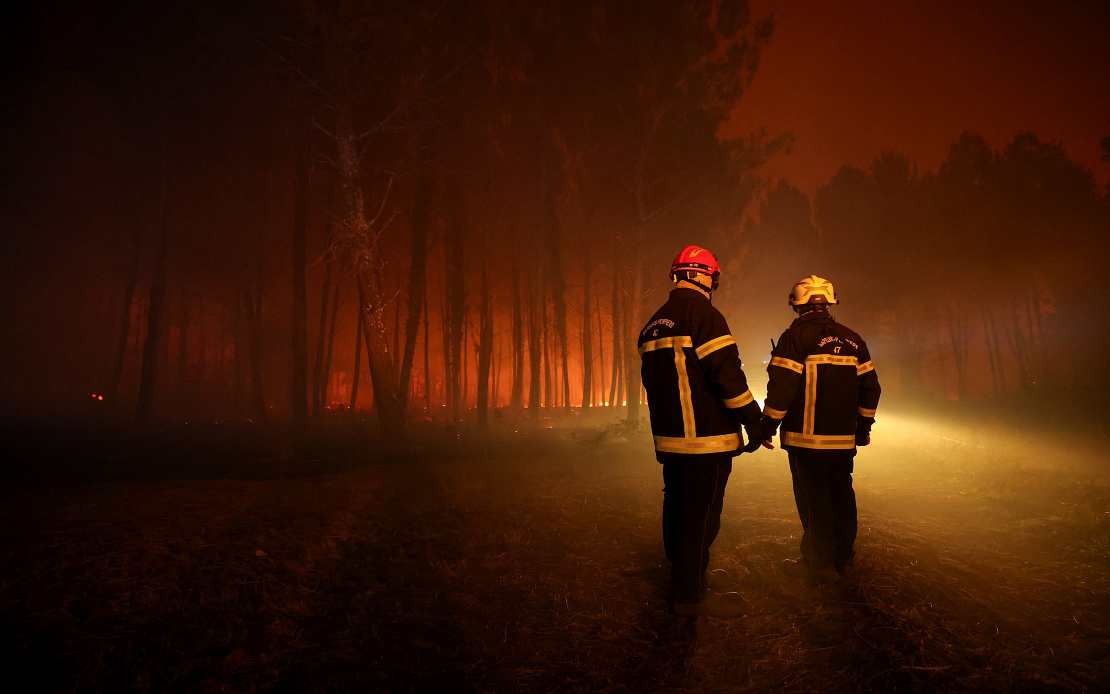
A French teenager has been formally charged following a deadly fire near Bordeaux airport that claimed the lives of two emergency responders last month. The 15-year-old was presented before a judge on Thursday and subsequently remanded to a closed educational facility pending trial, marking a significant development in an investigation that has drawn considerable attention to fire safety and negligence issues across France.
The incident occurred in Merignac, a municipality situated near Bordeaux-Mérignac Airport, where the teenager is believed to have carelessly discarded a lit cigarette onto dry grass. According to reports from French broadcaster BFMTV and regional newspaper Sud Ouest, this single act of negligence triggered a fire that rapidly spread and engulfed a nearby building. The teenager's 22-year-old brother, who was also taken into custody for questioning, has since been exonerated and released after investigators determined his involvement was minimal.
The sequence of events leading to the tragedy unfolded when both brothers stopped in the area and were smoking cigarettes. While the older sibling extinguished his cigarette properly in the parking lot, the younger boy allegedly threw his onto adjacent grass, where the dry vegetation provided ideal fuel for flames to take hold. What may have seemed like a minor infraction at that moment would have catastrophic consequences within minutes, as the fire spread with alarming speed through the surrounding area.
On July 21, two firefighters lost their lives while responding to the resulting building fire. As they battled the advancing flames, their emergency vehicle became trapped by the rapidly expanding inferno, leaving them with no escape route. The tragedy underscored the inherent dangers that firefighters face in their daily work and sparked renewed concern about fire prevention and the consequences of careless behaviour in vulnerable environments.
Following the fatalities, the Bordeaux prosecutor's office launched a comprehensive investigation into the circumstances surrounding the fire and its origins. The inquiry sought to establish a clear chain of causation and determine what charges, if any, were warranted. The decision to bring formal charges against the teenager reflects investigators' conclusion that there was sufficient evidence of negligence to warrant criminal proceedings.
This incident carries particular significance for Southeast Asian readers and policymakers given the region's seasonal susceptibility to uncontrolled fires. Malaysia, Indonesia, and other nations in the area frequently experience devastating wildfires during dry seasons, often exacerbated by agricultural burning and land clearing. The Bordeaux case demonstrates how individual acts of carelessness can cascade into community-wide emergencies, a lesson relevant to fire management strategies across the region.
The placement of the teenager in a closed educational centre rather than a conventional detention facility reflects French juvenile justice philosophy, which emphasises rehabilitation over purely punitive measures. However, the severity of the charges—linked directly to two deaths—indicates that the court is treating this case with appropriate gravity. The educational facility setting allows authorities to address underlying behavioural and decision-making issues while the legal process proceeds.
For firefighting services globally, this tragedy reinforces the vulnerability of emergency responders and the critical importance of scene safety protocols. The fact that a vehicle became trapped highlights how rapidly fire dynamics can change, trapping personnel who are working to save lives and property. Training, equipment, and tactical decisions all play roles in preventing such outcomes, and this incident will likely inform ongoing discussions about emergency response procedures in France and beyond.
The broader context of this case touches on public safety education and awareness. Many young people may not fully comprehend the ignition potential of discarded cigarettes, particularly in environments where vegetation is dry. The consequences revealed through this tragedy—two lost lives, trauma to families and colleagues, and the prosecution of a teenager—serve as a powerful cautionary example of how casual actions in moments of inattention can alter multiple lives permanently.
As the French legal system processes this case, the outcome will likely influence discussions about accountability, youth education programmes, and fire prevention campaigns throughout Europe. For Malaysia and the region, where fire management remains an ongoing challenge driven by both natural and anthropogenic factors, the lesson resonates strongly: prevention through public awareness and individual responsibility is far more effective than managing disasters after they occur.

