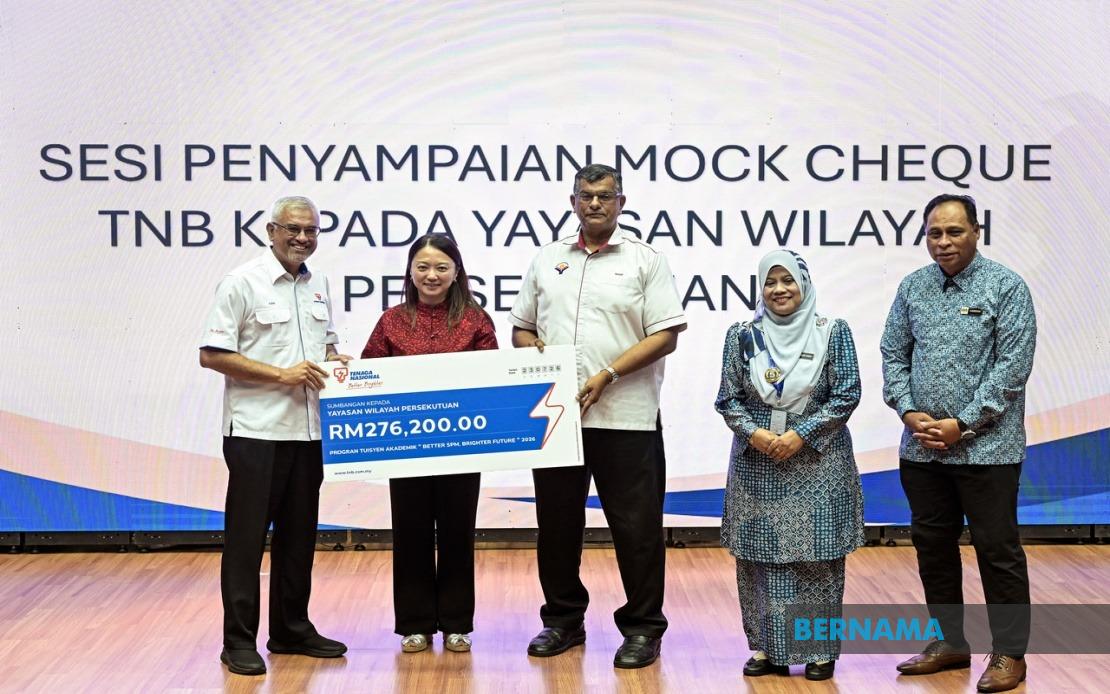
The Better SPM Brighter Future Programme has commenced its rollout across Kuala Lumpur, bringing free tuition support to 1,600 students sitting for the Sijil Pelajaran Malaysia examination from 40 secondary schools in the federal territory. The initiative represents a targeted effort to strengthen academic preparation at a critical juncture when students face mounting pressure from both educational expectations and family finances.
Launched at Sekolah Seni Malaysia Kuala Lumpur, the programme was unveiled by Hannah Yeoh, Minister in the Prime Minister's Department (Federal Territories) and chairman of Yayasan Wilayah Persekutuan (YWP). The initiative addresses a persistent challenge in Malaysia's education landscape: the widening gap between students who can afford supplementary tuition and those whose families struggle with the mounting costs of private classes. By removing the financial barrier to additional academic support, the programme aims to level the playing field for examination candidates across different socioeconomic backgrounds.
The financial backbone of this intervention comes from Tenaga Nasional Berhad (TNB), which has contributed RM276,200 to YWP to establish and operate the tuition programme. This corporate partnership underscores an increasingly common trend in Malaysia where large companies extend their corporate social responsibility commitments beyond typical charity work into targeted education initiatives. The investment reflects TNB's recognition that supporting youth education development ultimately benefits the broader economy and workforce pipeline.
Operating in collaboration with the Kuala Lumpur Federal Territories Education Department, the programme has deliberately narrowed its focus to four critical examination subjects: Bahasa Melayu, English, History, and Mathematics. This strategic selection reflects curriculum priorities and acknowledges which subjects typically prove most challenging for students nationally. By concentrating resources on these core areas, the programme maximises impact and ensures that tuition delivered reaches students where they most need additional reinforcement.
For Malaysian parents, particularly those in urban centres where tuition culture has become deeply entrenched, such initiatives offer meaningful relief. Private tuition costs in Malaysia can easily exceed thousands of ringgit annually per student, placing families in lower income brackets in an impossible position. When students from wealthier families receive extensive private tutoring while their peers do not, educational outcomes diverge dramatically—not necessarily due to aptitude, but access. The Better SPM Brighter Future Programme directly tackles this systemic inequality by ensuring that exam preparation quality becomes less dependent on parental purchasing power.
The timing of this initiative carries particular significance as Malaysia continues evaluating its broader education system. The country has undergone curriculum reforms and examination structure changes in recent years, and bridging support programmes like this one provide valuable safety mechanisms during transitional periods. Students navigating new curriculum expectations benefit tremendously from structured additional guidance that helps them understand assessment frameworks and master essential competencies.
Beyond the immediate academic benefits, such programmes contribute to national human capital development. When 1,600 students achieve improved SPM results, they enhance their prospects for secondary school progression, university entrance, and career opportunities. Aggregated across the education system, these improvements translate into a more skilled workforce and reduced educational inequality. For Malaysia's long-term development ambitions, particularly as the country seeks to transition toward higher-value economic sectors, maximising the potential of all students—not merely those from privileged backgrounds—becomes economically and socially essential.
The programme also reflects an implicit acknowledgment that government resources alone cannot fully address supplementary education needs. The TNB partnership demonstrates how private sector involvement, properly directed, can extend the reach of public education systems. This collaborative model offers a template that other corporations and institutions might emulate, potentially expanding free tuition access to students in other regions and states beyond Kuala Lumpur.
For educators and administrators, the existence of such initiatives reduces some pressure on schools to compensate for inadequate teaching time or resources through recommending private tuition. When quality external support becomes freely available through official channels, schools and teachers can focus on curriculum delivery without inadvertently widening socioeconomic achievement gaps.
As the programme unfolds across its participating schools, outcomes tracking will prove crucial. Monitoring whether participating students demonstrate measurable improvements in examination results, progression rates, and subject mastery will determine whether this model merits scaling to other Malaysian states. Success here could inform policy discussions about standardising free tuition access nationwide, particularly in states where private tuition markets remain prohibitively expensive for many families.

