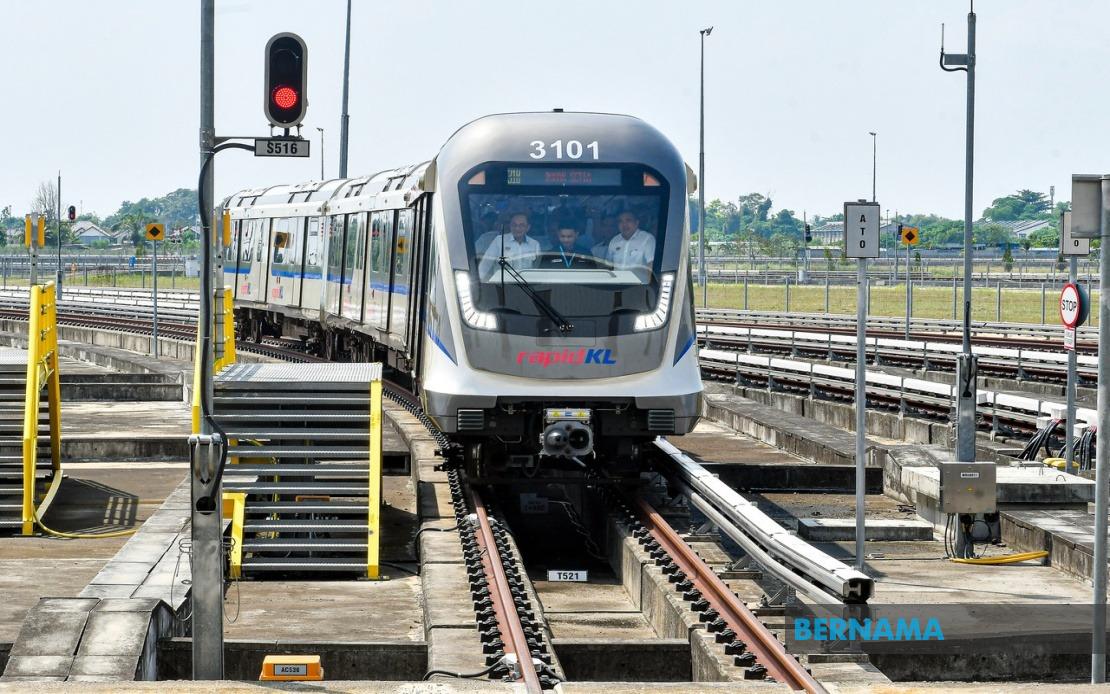
Prime Minister Datuk Seri Anwar Ibrahim has announced a significant incentive to boost adoption of the newly operational LRT3 Shah Alam Line, with all passengers enjoying complimentary travel for a full month beginning June 29 and running through July 31. The free-fare initiative represents a strategic move to familiarise the travelling public with the expanded rail network while simultaneously reducing transport expenditure during the critical launch period. The gesture extends beyond the main rail service to encompass feeder bus operations managed by Prasarana Malaysia Berhad that connect stations along the corridor, creating an integrated public transport ecosystem.
The response from commuters has been notably positive, particularly among student populations who stand to benefit substantially from improved mobility options. Arissa Ahmad Khairul, a 22-year-old Bachelor of Journalism student at Universiti Teknologi MARA, articulated how the initiative directly addresses financial pressures facing campus-based learners. Previously, students seeking alternatives to walking or relying on family transportation frequently turned to e-hailing services, incurring daily expenses that compound significantly across a semester or academic year. The LRT3 integration now offers a tangible pathway for cost reduction while providing access to superior facilities compared to conventional transport modes.
For Arissa, the Shah Alam Line holds particular logistical advantage, enabling a streamlined journey from her residence in Kepong through Bandar Utama to the UiTM campus. The routing eliminates multiple transfer points and reduces overall commute duration, delivering time savings alongside financial benefits. This emerging convenience factor may prove instrumental in driving sustained usage beyond the promotional month, as commuters discover that organised, predictable journey times compete favourably against the unpredictability and surge pricing associated with ride-hailing platforms.
Media professional Yamin Ahmad, 25, characterised the free-fare window as a proactive mechanism facilitating public experimentation with rail transport absent financial barriers. Her observation underscores a behavioural economics principle: reducing or eliminating upfront cost triggers trial behaviour among populations who might otherwise hesitate to adopt new services. Beyond immediate transport utility, the initiative furnishes commuters with concrete evidence demonstrating the comparative advantages of mass rapid transit, including the quantifiable time and cost benefits against private vehicle ownership when accounting for fuel, maintenance, parking, and congestion-related delays.
UiTM's Students' Representative Council President Mohamad Adib Hazim Mohamad Razali emphasised the infrastructural significance of the Shah Alam Line for the institution's substantial off-campus student population. Of approximately 42,000 enrolled students, merely 13,500 occupy residential college accommodation, leaving approximately 28,500 commuting from external locations. The demographic concentration creates substantial daily transportation demand, previously accommodated through private vehicles, parental transport arrangements, and e-hailing services. Students residing in neighbouring corridors including Kuala Lumpur and Subang Jaya gain particular advantage, as the new rail connection provides a viable alternative to vehicle ownership or continuous ride-hailing expenditure.
The affordability dimension carries particular resonance within Malaysia's student demographic, where transport costs represent a considerable portion of monthly discretionary budgets. Transitioning from e-hailing dependency to rail-based commuting potentially saves individual students hundreds of ringgit monthly, funds redirectable toward accommodation, meals, or educational materials. For families providing financial support to students, the availability of reliable, low-cost public transport reduces concurrent pressure to fund daily transport allowances, effectively improving household financial positioning across multiple economic strata.
The Shah Alam Line extension represents a meaningful expansion of Klang Valley rail infrastructure, connecting historically underserved corridors and providing seamless interchange with existing MRT and LRT networks. The corridor's positioning serves emerging suburban developments and established residential areas that previously lacked direct rapid transit access, potentially catalysing broader public transport usage patterns across the metropolitan region. By eliminating financial friction during the critical launch window, authorities maximise the probability that trial users transition into regular commuters, establishing sustainable ridership foundations essential for operational viability and long-term service planning.
Economic modelling suggests that each commuter attracted from private vehicle use generates multiplicative benefits including reduced traffic congestion, decreased atmospheric pollution, diminished parking infrastructure demands, and improved air quality particularly in high-density urban corridors. The Shah Alam Line's integration into the broader rapid transit network strengthens the economic case for future infrastructure investments, demonstrating to policymakers and private investors that demand exists for quality public transportation when accessibility and reliability standards are met. The free-fare initiative essentially functions as a market research instrument, generating ridership data that informs subsequent network optimisation and service frequency adjustments.
Student constituencies represent a particularly valuable ridership demographic from long-term strategic perspectives. Young adults establishing commuting habits during educational years frequently maintain those patterns throughout professional careers, creating stable demand foundations extending decades beyond the initial service launch. Institutions including UiTM, positioned directly alongside the new corridor, function as anchor demand generators, ensuring baseline passenger volumes that support service viability even during off-peak periods. The institutional relationship creates mutual benefit: universities gain improved student mobility and recruitment appeal, while operators secure predictable demand from a concentrated population centre.
The promotional period also provides operational intelligence essential for service refinement. By monitoring passenger flows, peak-hour patterns, boarding distributions across stations, and demographic utilisation patterns during the free-fare window, operators can optimise timetables, allocate resources efficiently, and identify potential bottlenecks requiring infrastructure adjustment before the transition to standard fare collection. Problems identified and resolved during this period enhance the long-term user experience substantially, reducing frustration-driven abandonment of the service that might otherwise occur if technical issues emerged only after fare collection commenced.
Beyond immediate transportation benefits, the Shah Alam Line symbolises a policy commitment toward expanding public transport networks serving suburban and middle-income constituencies historically neglected in urban planning priorities. The infrastructure investment signals government acknowledgment that liveable metropolitan regions require equitable access to mobility options across all socioeconomic segments. For emerging professionals, students, and families prioritising cost efficiency, the availability of modern rapid transit represents genuine alternative to vehicle ownership, enabling lifestyle choices previously constrained by transport infrastructure limitations.
The free-fare initiative's success will be measured not merely by immediate ridership numbers but by the proportion of trial users who sustain rail-based commuting after standard fares take effect. Psychological research suggests that once behavioural patterns become established, individuals demonstrate considerable inertia, favouring continuation of established routines even when circumstances change. The month-long promotional window provides sufficient duration for commuting habits to crystallise, potentially ensuring that many trial users become permanent constituents of the LRT3 passenger base. This strategic timing of the incentive maximises conversion probability, transforming a temporary cost reduction into enduring ridership adoption.

