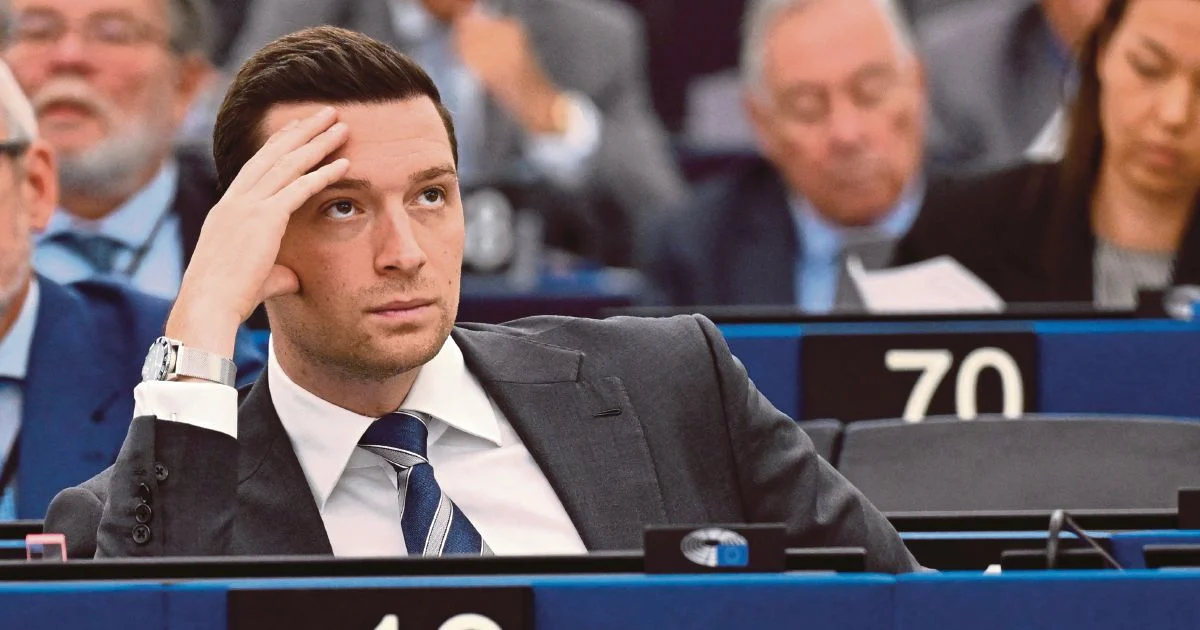
France's political establishment faces fresh turmoil as a transparency watchdog Tuesday requested an official investigation into allegations surrounding Jordan Bardella, a leading figure in the far-right National Rally party, over a purportedly fictitious job at the European Parliament. The development adds another layer of intrigue to an already contentious French political landscape, where Bardella remains a prominent voice within his party and a potential contender in future presidential elections.
The corruption probe centres on claims that Bardella, during his time as a Member of the European Parliament, held a bogus assistant position—a practice that, if substantiated, would constitute fraudulent misuse of EU institutional funds. Such allegations represent a serious matter within the context of European governance, where transparency in parliamentary operations remains a cornerstone of institutional credibility. The watchdog's decision to escalate the matter signals that the accusations carry sufficient weight to warrant formal investigation, though the proceedings remain preliminary at this stage.
Bardin's party, the National Rally, categorically rejects these allegations, arguing that any suggestions of impropriety are politically motivated and fundamentally baseless. This public denial represents a standard response from political organisations facing such accusations, though the formal launch of an investigation suggests the matter transcends mere political posturing. The tension between the watchdog's findings and the party's refutation underscores the polarised nature of contemporary French politics, where trust in institutions and transparency mechanisms remains contested terrain.
The timing of this development carries particular significance for Malaysia and Southeast Asian observers monitoring European political trends. France's political cycles increasingly influence broader EU policy decisions, including those affecting trade, diplomatic relations, and regional stability. Should investigations substantiate the allegations against Bardella, it would further complicate the French political environment during a period when the European Union already grapples with internal cohesion challenges and external geopolitical pressures.
From an institutional perspective, this episode illuminates ongoing vulnerabilities within European Parliamentary systems regarding oversight of assistant positions and staff allocations. The European Parliament has faced periodic scandals involving misuse of parliamentary resources and questionable employment arrangements. Such investigations, while politically uncomfortable, theoretically serve a preventive function by establishing accountability mechanisms that deter similar practices across the institution.
The National Rally's ascendancy within French politics has consistently attracted scrutiny from oversight bodies and investigative journalists. The party's previous administrative troubles and the current allegations reflect patterns common to populist movements that expand rapidly without corresponding administrative maturation. Whether these issues represent systemic problems within the party structure or isolated incidents remains contested among political analysts.
For Southeast Asian readers, the broader implications relate to how established democracies handle internal political challenges and institutional transparency. France's approach to investigating such allegations, through independent watchdogs rather than purely political mechanisms, demonstrates institutional separations of power that continue to function despite political polarisation. This contrasts with governance models in various regions where political investigations often reflect factional competition rather than genuine institutional oversight.
The investigation's scope and eventual outcomes will likely influence broader narratives about French politics as the country navigates complex domestic and EU-level challenges. European Parliament positions, including assistant roles, carry significant financial implications, with substantial budgets allocated for staff support. Substantiated cases of misallocation generate broader consequences for institutional credibility and public confidence in parliamentary governance systems.
Bardin's political trajectory remains significant within the National Rally, an organisation that has progressively moved toward establishing itself as a mainstream political force rather than purely an oppositional outsider movement. Investigations of this nature, whether they ultimately confirm or refute allegations, influence perceptions of party governance quality and institutional maturity among both French voters and international observers.
The investigation represents part of a broader pattern whereby European institutions increasingly subject political figures and organisations to transparency examinations. Anti-corruption mechanisms, while sometimes subject to political criticism, function as structural features designed to maintain institutional integrity. The watchdog's intervention in this instance reflects its mandate to pursue credible allegations regardless of the political positions or prominence of those involved.
As this matter develops through formal investigation channels, multiple stakeholders maintain conflicting interests. The National Rally faces potential reputational consequences; the watchdog must substantiate or dismiss allegations based on available evidence; and European Parliament authorities must balance protecting institutional reputation against supporting thorough investigations. Malaysian observers monitoring European political developments will likely see in this case reflection of universal challenges that democratic institutions face in maintaining transparency while managing internal investigations of prominent political figures.

