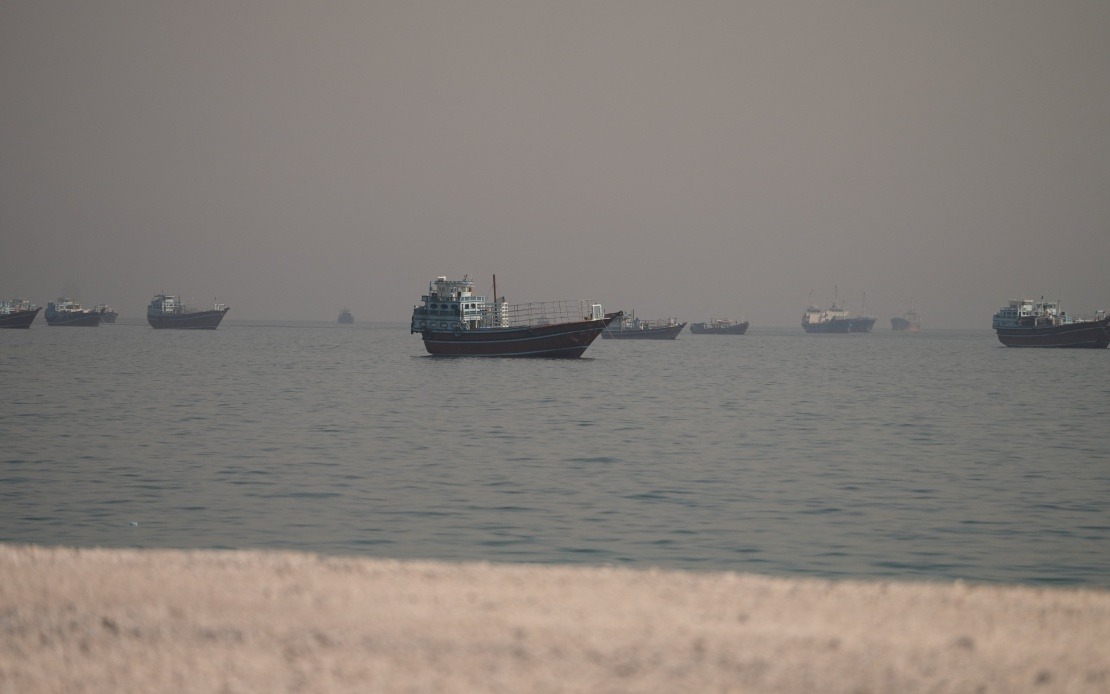
France is strategically reassessing its energy security architecture by exploring Syria as an alternative conduit for oil shipments, according to Foreign Minister Jean-Noel Barrot. Speaking in an interview with TF1 during a diplomatic mission to Berlin on Thursday, Barrot articulated a broader French objective to insulate global energy markets from supply disruptions tied to geopolitical flashpoints. The Strait of Hormuz, a critical chokepoint through which roughly one-fifth of the world's seaborne oil passes, has become an increasingly volatile transit zone amid escalating tensions between the United States and Iran.
Barrot's comments reflect mounting concerns within Western capitals about the fragility of existing energy infrastructure and the concentration of supply routes through contested waterways. The heightened prospect of disruption at the Strait of Hormuz—whether through military action, sanctions enforcement, or miscalculation—has forced policymakers across Europe and beyond to contemplate hedging strategies. France's interest in diversifying energy corridors signals a recognition that the traditional Middle Eastern supply paradigm, which has long depended on narrow maritime passages, requires supplementation through alternative geographic pathways. This shift carries particular relevance for Southeast Asian economies, including Malaysia, which remain heavily exposed to disruptions in regional and international shipping lanes and possess direct interests in maintaining stable global energy markets.
The French diplomatic initiative centres on Syria's potential to serve as a regional economic and energy hub following the overthrow of Bashar al-Assad approximately eighteen months ago. Barrot characterised Syria's current trajectory as one of reunification and institutional strengthening, positioning the country as capable of facilitating renewed connectivity across the Eastern Mediterranean and beyond. This assessment reflects France's belief that a stabilised and reintegrated Syria could function as an alternative nexus for energy distribution networks, potentially linking producers in Iraq, the Gulf, and North Africa to European and other international markets through routes that circumvent traditional chokepoints. The implicit logic suggests that developing Syria-based infrastructure could render global energy supply chains more resilient to disruption emanating from the Persian Gulf region.
President Emmanuel Macron's visit to Damascus on Tuesday underscored the diplomatic importance France attaches to Syria's political rehabilitation and economic reorientation. Barrot accompanied the president on this journey, which carried symbolic weight as the first such high-level visit since Assad's departure. The trip was designed to convey France's commitment to supporting Syria's state-building efforts and to signal confidence in the country's trajectory toward normalcy and sovereignty. By positioning France at the forefront of engagement with Syria's post-conflict transition, Paris aims to secure influence over the country's future alignment and institutional development at a moment when multiple regional and international actors are positioning themselves to shape Syria's recovery.
The French minister explicitly framed the expansion of ties with Damascus as encompassing economic and commercial dimensions alongside political solidarity. Barrot pledged that France seeks to broaden cooperation across multiple sectors and to deepen trade relationships with the Syrian government and economy. Such commercial engagement serves a dual purpose: it reinforces the political gesture of support whilst simultaneously creating tangible French economic interests in Syria's stabilisation and prosperity. For countries dependent on global energy security, including Malaysia and other Southeast Asian nations, the development of alternative energy corridors carries material implications for price stability, supply reliability, and economic competitiveness in energy-intensive sectors.
The strategic calculus underlying France's Syria initiative must be understood against the backdrop of broader European energy security anxieties. The European Union has sought to reduce dependence on Russian hydrocarbons following Moscow's invasion of Ukraine, whilst simultaneously grappling with persistent instability in Middle Eastern supply routes. The concentration of global oil reserves in the Persian Gulf, combined with the chokepoint geography of maritime shipping lanes, creates structural vulnerabilities that have periodically disrupted European and global economies. By cultivating Syria as an alternative hub, France is attempting to create redundancy in energy supply networks—a redundancy that could mitigate the economic damage from future disruptions in existing corridors.
However, the feasibility and timeline for developing Syria-based energy infrastructure remain uncertain. The country has endured more than a decade of civil conflict, resulting in devastated physical infrastructure, displaced populations, and institutional fragmentation. Rebuilding port facilities, pipeline networks, and logistics systems capable of handling meaningful volumes of international oil trade would require substantial capital investment and extended implementation periods. Nevertheless, France's diplomatic positioning suggests that Paris views this as a longer-term strategic project rather than an immediate solution, one that aligns with Syria's own interests in economic recovery and regional reintegration.
The geopolitical implications of France's initiative extend across multiple dimensions of regional and international relations. Increased French engagement with post-Assad Syria may influence how Syria navigates its relationships with regional powers including Turkey, Saudi Arabia, and Iran, each of which maintains distinct interests in Syria's future orientation. France's emphasis on Syrian sovereignty and reunification, coupled with its energy-focused engagement, potentially offers a model of interaction that differs from both the military interventionism of earlier years and the strict pariah status Syria endured under previous international sanctions regimes. For Southeast Asian nations with energy security concerns, France's diplomatic moves in Syria merit attention as potential precedents for how middle powers can reshape energy supply networks and reduce dependence on contested corridors.
The broader context of US-Iran tensions, which Barrot highlighted as a driver of Strait of Hormuz instability, underscores why alternative energy routes have moved higher on the strategic agenda of energy-importing nations. Periodic escalations in the Gulf, whether through military incidents, drone strikes, or threats to shipping, have created a pattern of uncertainty that encourages diversification. The emergence of Syria as a potential alternative hub, even speculatively, reflects how geopolitical pressures are reshaping the global energy architecture. For Malaysia and other regional economies, developments affecting global energy supply chains carry immediate relevance to manufacturing competitiveness, transportation costs, and overall macroeconomic stability, making France's strategic reorientation worth monitoring closely.

