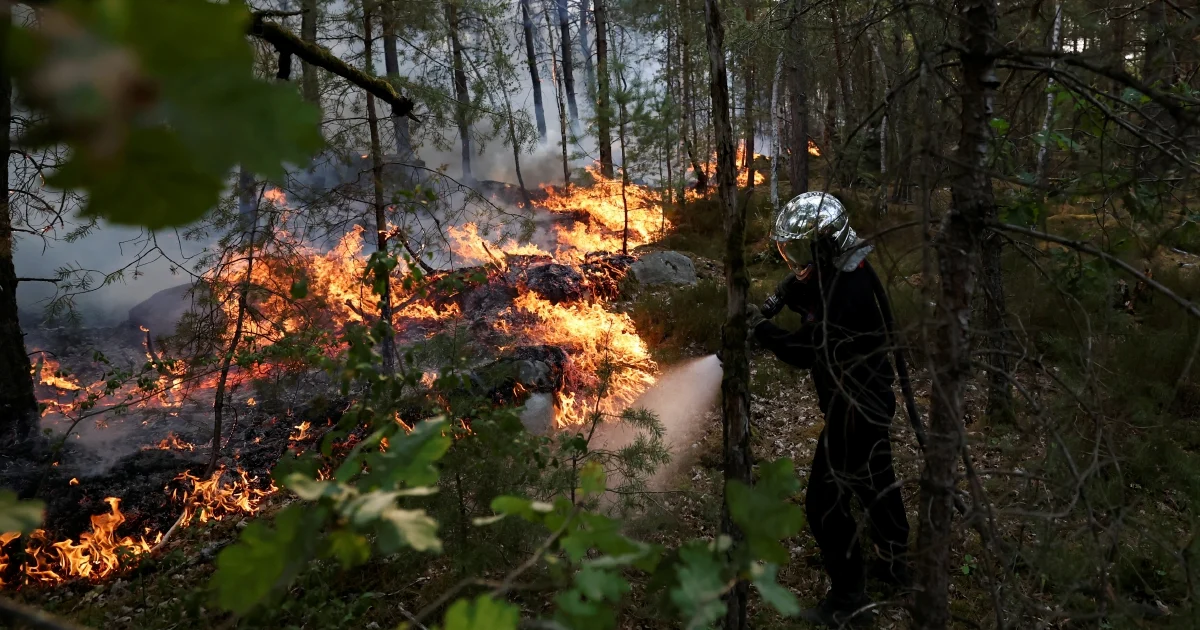
France faced an escalating wildfire crisis as two major blazes tore through a historic forest region south of Paris on Monday, destroying over 1,300 hectares of vegetation. The simultaneous fires prompted an intensive response from French emergency services, while police made headway in the investigation by detaining two individuals suspected of deliberately igniting the flames.
The Arbonne-la-Foret area, known for its ecological significance and recreational value, became the epicenter of the emergency response as firefighters worked to contain the advancing fires. The sheer scale of the destruction—spanning more than 1,300 hectares—underscores the severity of France's ongoing battle with forest fires during a period of heightened fire risk across Western Europe. The region's forests, which have substantial historical and environmental importance, face potentially lasting damage from the rapid spread of flames.
Police involvement in the investigation suggests that the fires may have been intentionally set rather than caused by natural factors such as lightning or accidental sparks. The arrest of two suspects on suspicion of arson represents a significant development, as it directs attention toward criminal responsibility for the destruction. Such deliberate fire-setting represents a serious criminal offense in France and raises broader questions about security in vulnerable forest areas during high-risk seasons.
The simultaneous nature of the two fires has implications for understanding how the incidents unfolded. Whether the blazes were connected or represented separate arson incidents remains unclear, but the timing and proximity suggest investigators are exploring potential links between them. The coordination of resources to fight multiple fires in the same region stretches emergency response capabilities, making the dual nature of the crisis particularly challenging for firefighting teams.
France has experienced recurring wildfire challenges in recent years, particularly as climate patterns and seasonal conditions create environments where fires spread more rapidly and burn with greater intensity. The Arbonne-la-Foret incident reflects vulnerabilities in forest management and fire prevention systems across the continent. For Malaysia and other Southeast Asian nations monitoring global climate trends, the European experience demonstrates how environmental pressures and human factors intersect to create large-scale disasters.
The arrest of arson suspects marks an important investigative milestone but also highlights the criminal element in some forest destruction cases. Deliberate fire-setting can occur for various motivations, ranging from insurance fraud to land dispute resolution or simple malice. French authorities will likely pursue thorough prosecutions to deter similar criminal behavior and send a clear message about the consequences of forest arson.
The environmental consequences of the fire extend beyond immediate property damage. Historic forests carry ecological value including biodiversity, carbon storage, and watershed protection. The loss of 1,300 hectares disrupts these functions and may take decades to recover, even with active replanting and restoration efforts. For a country that relies on tourism and natural heritage as economic assets, such destruction carries long-term financial implications alongside environmental costs.
The incident occurs within a broader context of fire risk affecting Southern Europe. Climate change has extended fire seasons and intensified weather conditions favorable to rapid fire spread. Countries across the Mediterranean region have increasingly sophisticated wildfire response systems, yet the scale of individual incidents continues to challenge these infrastructures. France's response demonstrates both the capabilities and limitations of modern firefighting coordination.
For regional observers in Southeast Asia, the French wildfire situation offers important lessons about the relationship between climate, vegetation, human activity, and disaster response. While Southeast Asia faces different fire dynamics—particularly peat and vegetation fires during dry seasons—the underlying principles regarding prevention, rapid response, and criminal accountability remain relevant. The coordination of multi-agency responses to simultaneous fire incidents, as demonstrated in the Arbonne-la-Foret case, provides a model worth examining for improved regional preparedness.
The investigation into the arson allegations will likely reveal additional details about planning, motive, and circumstances surrounding the fires. French law enforcement agencies possess substantial forensic and investigative resources to pursue such cases, and outcomes may influence fire prevention policies. The detention of suspects sends a warning that deliberate forest destruction will be treated as serious crime with criminal consequences, potentially deterring similar attempts in the future.

