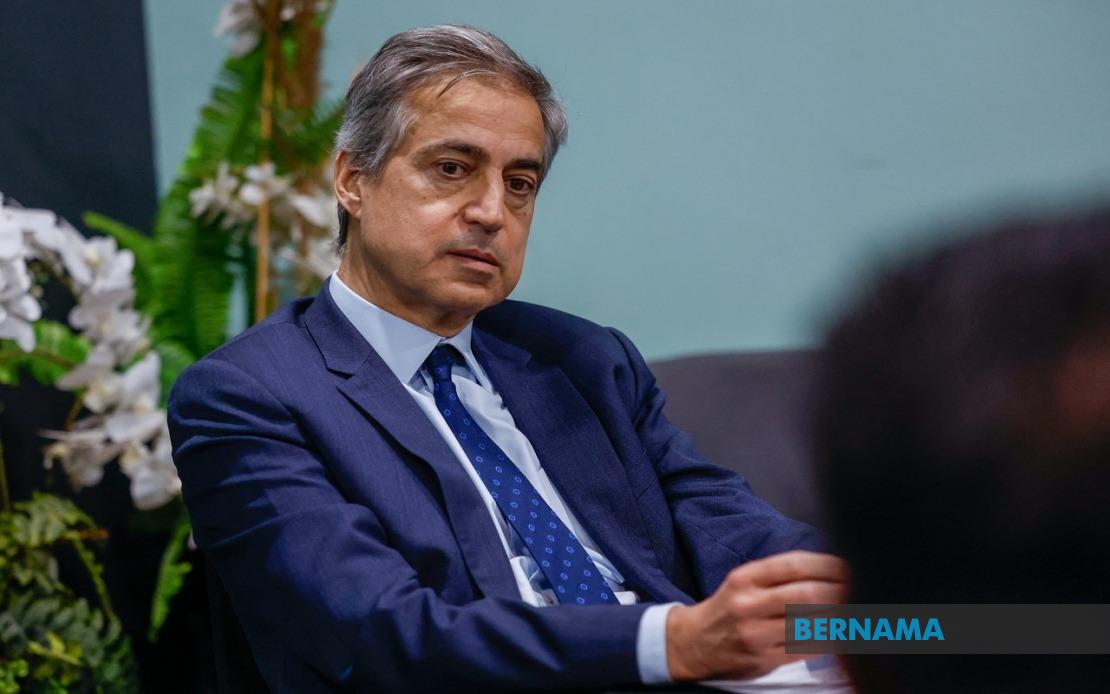
France and Malaysia have recommitted themselves to deepening their partnership at a time when the international order faces unprecedented fragmentation and competing geopolitical interests. The declaration came during celebrations marking French National Day on Tuesday evening at the French Ambassador's residence in Kuala Lumpur, where French Ambassador to Malaysia Marc Abensour articulated a shared vision of both nations serving as bridges across dividing lines in global affairs.
Abensour's remarks underscored a strategic recognition that in an increasingly polarised world, bilateral relationships grounded in concrete economic and social foundations become essential stabilising forces. He framed the France-Malaysia partnership not merely as a diplomatic courtesy but as a deliberate commitment to foster connectivity in a fractured geopolitical landscape. This perspective reflects a broader French diplomatic strategy of maintaining robust engagement across Asia-Pacific, a region where competition among major powers has intensified in recent years.
The economic dimension of the bilateral relationship demonstrates substantial depth. Last year, bilateral trade between the two nations expanded by 11 per cent, a growth trajectory that signals healthy commercial momentum despite global economic headwinds. More significantly, France has established a considerable footprint in Malaysia's economy through approximately 600 French companies that collectively provide employment to more than 30,000 Malaysian workers. This employment figure illustrates how foreign direct investment translates into tangible domestic benefits, creating livelihoods and contributing to skills development across various sectors of the Malaysian economy.
Malaysia's significance in France's broader Asian investment strategy is further illustrated by its ranking as the world's tenth-largest destination for French foreign direct investment. This positioning places the country among France's most important economic partners globally, reflecting the attractiveness of Malaysia's business environment, skilled workforce, and strategic location within Southeast Asia. The continued influx of French capital suggests confidence among French investors in Malaysia's long-term economic prospects and regulatory stability.
Educational and cultural exchanges represent another pillar strengthening the bilateral relationship. The French language continues to attract growing interest among Malaysians, with more than 3,700 candidates undertaking French-language certification examinations in Malaysia annually. Notably, Malaysia ranks as Asia's third-largest centre for French-language certification, trailing only India and China in terms of candidate numbers. This linguistic engagement facilitates deeper intellectual and cultural connections between the two societies and creates pathways for future professional collaboration, particularly in sectors requiring international communication.
The vibrant people-to-people dimension of the relationship extends beyond language learning to encompass broader cultural appreciation and mutual understanding. Such exchanges form the bedrock of durable diplomatic relationships, as they create networks of individuals with personal investments in bilateral friendship. Sustained cultural engagement also counters narratives of civilisational incompatibility, demonstrating instead the capacity for cross-cultural understanding and enrichment.
The French National Day reception itself embodied the spirit of bilateral cooperation. The event attracted approximately 800 guests, including senior Malaysian government officials, international diplomats, and ambassadors representing various nations. Federal Territories Minister Hannah Yeoh, serving as guest of honour and representing the Malaysian government, lent official weight to the celebration, signalling governmental enthusiasm for the deepening relationship. The attendance of such high-level representation underscores Malaysia's commitment to maintaining strong ties with France.
The reception's programming demonstrated deliberate cultural fusion, with organisers offering both authentic French cuisine and Malaysian specialities, notably a durian-tasting experience. This blending of culinary traditions symbolised the bridging of cultural differences that both nations have emphasised, while also providing guests an experiential understanding of bilateral harmony. Such carefully orchestrated cultural moments serve diplomatic purposes by creating shared memories and positive associations around bilateral engagement.
French National Day, commemorated annually on July 14, carries significant symbolic weight. The date marks the Storming of the Bastille in 1789, a pivotal event in European history that initiated the French Revolution and established foundational principles of liberty, equality and fraternity that continue shaping French political identity. By celebrating this occasion in Kuala Lumpur with such prominence and scale, France affirmed its commitment to these universal values and their relevance to contemporary international relations. Malaysia's enthusiastic participation reflected its own commitment to democratic governance and the universal principles these celebrations represent.
For Southeast Asia more broadly, the France-Malaysia partnership carries implications beyond bilateral matters. France remains a significant power with economic interests and military presence across the Indo-Pacific region through overseas territories and naval capabilities. A strong relationship with Malaysia, Southeast Asia's relatively advanced economy and an ASEAN pillar state, strengthens France's position within regional dynamics. Similarly, Malaysia benefits from cultivating relationships with European powers as it navigates an increasingly complex geopolitical landscape characterised by strategic competition among major powers.
The emphasis on bridge-building in a fragmented world reflects contemporary diplomatic challenges. As the international system experiences strain from rising powers, ideological competition, and transnational challenges like climate change, nations increasingly emphasise their roles as stabilising forces promoting dialogue and cooperation. France and Malaysia's rhetoric positions both countries within this constructive space, advocating for inclusive multilateralism and rejection of zero-sum competition.
Looking forward, the bilateral agenda appears expansive. Economic cooperation will likely continue growing through trade expansion and investment flows. Educational exchanges should deepen as linguistic and cultural interest mounts. The framework both nations have established provides resilient foundations for weathering international turbulence. As geopolitical competition intensifies globally and within Asia-Pacific specifically, the France-Malaysia partnership demonstrates that nations of different civilisations, geographic regions, and historical trajectories can forge genuine, mutually beneficial relationships grounded in economic interdependence, cultural appreciation, and shared commitment to international principles.

