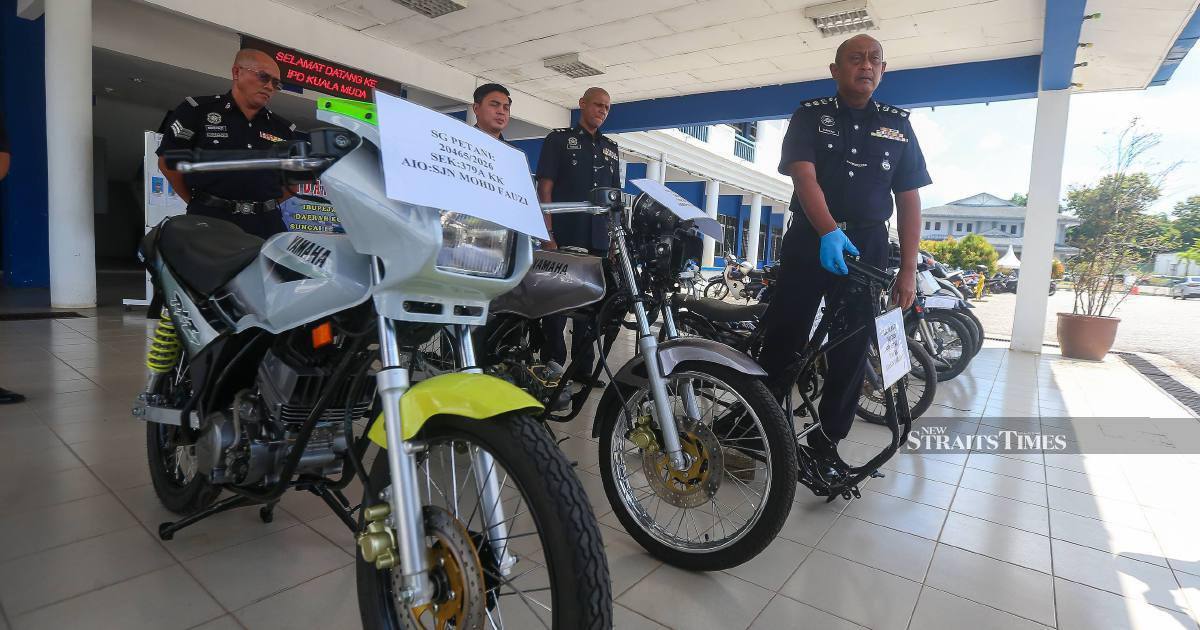
Police in Sungai Petani have apprehended four teenage boys suspected of operating a motorcycle theft operation targeting the parking area adjacent to Keretapi Tanah Melayu Bhd (KTMB) facilities. Three of the arrested individuals are brothers, whilst the fourth is an unrelated teenager. The arrests came following reports of stolen motorcycles in the locality, with authorities zeroing in on the KTMB parking zone as the focal point of criminal activity.
The incidents in question occurred on July 14, when officers responded to multiple theft reports concentrated around the railway transport company's parking premises. The strategic nature of the location—a busy transportation hub where commuters leave vehicles unattended for extended periods—likely made it an attractive target for organised youth theft rings. KTMB parking areas serve thousands of daily users travelling on Malaysia's rail network, creating both opportunity and cover for criminal elements.
Vehicle theft, particularly motorcycle theft, remains a persistent challenge across Malaysia's urban and semi-urban centres. The relative ease of stealing motorcycles compared to cars, combined with their resale value and demand in both legitimate and illicit markets, makes them prime targets for criminal syndicates. Teenage involvement in such operations underscores growing concerns about youth engagement in property crime, a trend that law enforcement agencies across the country have been intensifying efforts to combat.
The capture of three related teenagers functioning within the same theft operation raises questions about family dynamics and the circumstances that pushed these minors toward criminal activity. Authorities often find that teenage theft rings operate with a degree of coordination suggesting prior planning and communication infrastructure. The inclusion of a fourth unrelated teenager suggests either peer recruitment or a broader network of accomplices, indicating this may not be an isolated incident of opportunistic theft but rather part of a more organised scheme.
Sungai Petani, located in the Kuala Muda district of Kedah, has experienced various crime issues typical of growing towns that serve as transport hubs. The presence of KTMB facilities makes the area a natural crossroads for commuters and travellers, which simultaneously creates vulnerabilities for criminals seeking targets. Parking facilities at transportation nodes often present security challenges for authorities, particularly when monitoring capacity cannot keep pace with user volume.
The arrests carry implications for how Malaysian law enforcement approaches youth crime prevention. Rather than viewing teenage offenders purely through a punitive lens, authorities increasingly recognise the need for understanding root causes—whether poverty, broken homes, peer pressure, or lack of educational opportunity—that drive young people toward crime. The juvenile justice system in Malaysia emphasises rehabilitation alongside accountability, though resource constraints often limit the effectiveness of preventative programmes.
For KTMB and other transport operators, incidents like these underscore the necessity of enhanced security measures at parking facilities. This may encompass improved surveillance systems, increased on-site security personnel, better lighting, and public awareness campaigns encouraging users to employ anti-theft devices. The railway company may also explore coordination with local police to establish regular patrols and rapid response protocols for theft reports.
The broader Malaysian public, particularly those utilising KTMB services, faces the practical concern of vehicle safety when leaving motorcycles and other vehicles in parking areas. Such incidents generate anxiety among commuters and may deter some from using public transport if confidence in vehicle security wavers. This represents an indirect cost to the nation's transportation system and urban mobility objectives.
Authorities have not yet disclosed whether the arrested teenagers have been formally charged, are assisting investigations, or await court proceedings. The handling of these cases will be instructive for Malaysian jurisprudence regarding juvenile crime. Questions remain about the scale of the theft operation—whether it was limited to a single incident on July 14 or spanned a longer period—and how many motorcycles were recovered or remain outstanding.
The incident highlights the ongoing tension between youth vulnerability and criminal responsibility. Whilst teenagers clearly require legal protection and rehabilitation opportunities, their involvement in organised theft operations also demands swift intervention to prevent escalation into more serious crimes. Local communities and parent groups in Sungai Petani may face pressure to examine how teenage populations are monitored and supported, particularly during unsupervised hours.
Police in Kedah have signalled through this arrest operation their commitment to tackling vehicle crime, particularly in high-profile locations like transportation facilities. However, sustainable solutions require coordinated approaches involving transport operators, security contractors, community organisations, and youth welfare agencies. For Malaysian commuters relying on KTMB services, this case is an unwelcome reminder of the persistent vulnerability of personal property in public spaces.

