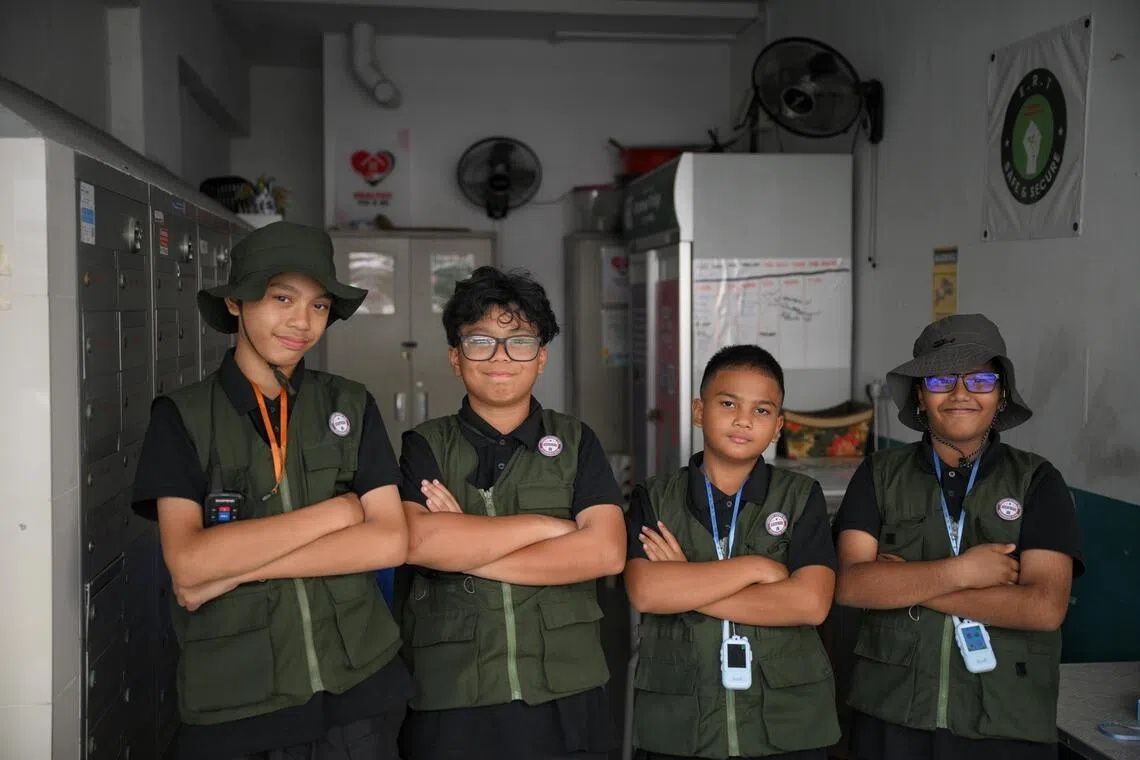
When 12-year-old Rafieq Sahin Rafizal watched strangers systematically deplete a community refrigerator intended to provide complimentary milk and beverages for disadvantaged children in his neighbourhood, he recognised an opportunity to take action. Rather than passively accept the situation, he proposed a solution that would ultimately expand into something far more ambitious than anyone initially anticipated. What began as a single teenager's concern has evolved into an organised community initiative that demonstrates how young people can meaningfully contribute to their immediate surroundings through structured civic participation.
Today, Rafieq works alongside three peers—Aaron Sarandev, Al-Mirza Danish, and Didie Andiqa Muhaimin—to form the Emergency Response Team LB, an informal patrol unit operating throughout their Lengkok Bahru residential precinct. Their operation commenced in August 2025 and has since expanded to address multiple neighbourhood concerns that might otherwise escape official attention. Operating in rotating pairs, the boys conduct daily rounds through up to six blocks of their housing estate, equipped with mobile communication devices enabling them to maintain contact with supervising adults. They perform regular checks for illicit dumping of large items, visible damage to common property, and potentially hazardous charging of personal mobility devices in shared spaces—risks that could precipitate fire incidents affecting numerous households.
The mechanics of their patrol system reflect thoughtful organisation and genuine community consciousness. Each boy wears a branded vest displaying his name and the team emblem, creating visible accountability and legitimacy within the neighbourhood. Rafieq's mother, Marlina Yased, a 48-year-old homemaker, provides essential adult oversight and liaison capacity, ensuring that documented issues reach the appropriate estate management personnel for remediation. Working alongside volunteer Fahmidah Farihullah, the supervision structure balances the boys' autonomy with responsible adult guidance. This model represents a meaningful alternative to more traditional community policing approaches, leveraging young people's presence and energy whilst maintaining proper safeguarding protocols.
Beyond their primary mandate of environmental monitoring, the team has demonstrated remarkable versatility in addressing genuine neighbourhood difficulties. The boys have assisted an elderly resident with limited mobility in transporting groceries from shops to her residence. They have intervened in conflicts between neighbourhood children, helping to de-escalate tensions before situations deteriorated. Most significantly, during early 2026, their attentiveness to environmental warning signs—specifically an unusual odour emanating from a residential unit—triggered an investigation that culminated in the discovery of a deceased elderly man's remains. This incident starkly illustrates how community vigilance among neighbours of all ages can serve protective functions that formal systems might otherwise miss, particularly in dense urban environments where social isolation affects vulnerable residents.
The initiative emerged from practical necessity and local resourcefulness. In 2023, Marlina established the community refrigerator at her block's ground-floor void deck with sponsorship assistance, recognising that many neighbourhood children attended school without adequate breakfast provisions. While secured compartments contain regular foodstuffs accessible through established protocols, an unlocked refrigerator specifically stocks milk and beverages for students to collect during morning school preparation. The arrangement works successfully for its intended beneficiaries, though certain residents occasionally exceeded reasonable consumption parameters. Rather than positioning Rafieq as a literal guardian of this resource—an approach that might have provoked resentment—Marlina redirected his civic impulses toward neighbourhood-wide protection, fundamentally transforming what could have been an uncomfortable individual conflict into community-centred activity benefiting everyone.
The naming choice for their organisation reveals important insights into how young people conceptualise civic service. Rafieq selected the Emergency Response Team designation by specifically referencing Singapore's official police Emergency Response Team, which responds to high-risk critical incidents. This naming convention suggests the boys view their neighbourhood work not as peripheral or marginal to proper governance, but as occupying legitimate space within public safety infrastructure. The naming reflects aspiration, formality, and the teenager's recognition that systematic community care constitutes genuine emergency work deserving comparable respect and structure. This psychological framing may prove as valuable as their operational contributions, establishing in young minds that community engagement represents serious work meriting formal recognition.
The boys' motivations for participation reflect diverse entry points into volunteerism. Rafieq articulates a clear moral framework, explicitly stating that despite having ample opportunities for recreation, he and his peers consciously allocate approximately one hour daily to community service. He frames this allocation as time allocation choice—they could play at alternative moments, but they deliberately prioritise neighbourhood responsibility. Aaron identifies personal development outcomes, noting that his patrol participation has cultivated responsibility and resilience, particularly on occasions when fatigue tempts him to abandon his commitment. Didie describes experiencing social aimlessness that the project channelled productively, suggesting that well-structured community work may serve important developmental functions for young people navigating early adolescence. These varied motivations highlight how civic initiatives can simultaneously address community needs whilst providing meaningful developmental experiences for young participants.
Community reception has evolved from initial scepticism toward growing recognition of the initiative's legitimacy and value. Certain residents questioned the appropriateness of young children conducting neighbourhood surveillance, presumably concerned about overreach or inappropriate authority assumptions. However, this perspective appears to constitute a minority position. Nasha Asrin, a 27-year-old mother of five residing in Lengkok Bahru, expressed relief that the boys channel their youthful energy into constructive neighbourhood stewardship rather than congregating idly throughout the estate. This observation captures a broader intergenerational dimension: the initiative simultaneously addresses genuine community maintenance issues whilst providing prosocial activity engagement for teenagers during hours when unsupervised peer congregation might otherwise occur. The project thereby serves multiple social functions simultaneously—practical maintenance, youth development, and community cohesion enhancement.
Marking the initiative's growing institutional recognition, the four boys have received invitations to participate in Singapore's National Day Parade in August 2026, appearing in a segment specifically celebrating residents who actively contribute to improving their nation. This represents the team members' inaugural participation in this major national occasion, elevation from local neighbourhood initiative to national-scale recognition. The inclusion reflects official acknowledgement that their grassroots efforts merit celebration alongside more formally established community service organisations. For young people still developing their civic identity and understanding of their place within broader social structures, such recognition likely carries substantial significance, potentially influencing their long-term commitment to community engagement.
Significantly, adult supervisors observe measurable positive changes extending beyond the patrol activity itself. Marlina reports that several boys demonstrate improved school attendance patterns and enhanced classroom attention span since commencing their neighbourhood work. These observations, corroborated by feedback from the young people's mothers, suggest that structured community responsibility may generate broader developmental benefits transcending their immediate civic contribution. The discipline required for consistent neighbourhood patrol, the responsibility accompanying adult trust, and the concrete evidence of meaningful impact may strengthen academic engagement and overall maturity development. This pattern aligns with broader research suggesting that purposeful community engagement frequently correlates with positive youth development outcomes across multiple life domains.
The Lengkok Bahru initiative carries particular relevance for Southeast Asian urban contexts characterised by dense housing estates, diverse age-demographic composition, and varying resource availability among residents. Singapore's model of young people systematically patrolling their immediate housing environment, reporting issues to adult coordinators rather than assuming enforcement roles, potentially offers transferable lessons for other regional cities. Malaysia's own housing estates face comparable challenges—unauthorised dumping, fire hazards from improperly stored items and charging devices, social isolation among elderly residents, and insufficient community connection mechanisms. The Emergency Response Team LB demonstrates that modest resource investments combined with thoughtful adult coordination can mobilise young people's civic potential, generating practical neighbourhood benefits whilst providing developmental experiences that extend well beyond immediate community impact. This grassroots approach to urban stewardship through intergenerational collaboration suggests possibilities for expanding community resilience beyond traditional governmental and formal organisational structures.

