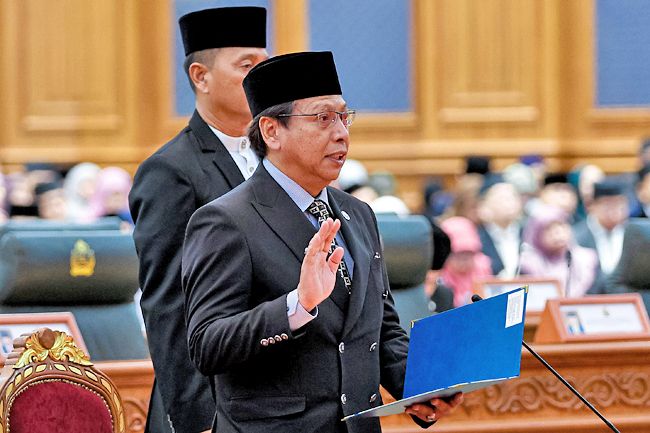
Brunei Darussalam has formally integrated four senior Cabinet members into its Legislative Council through an official swearing-in ceremony held on Monday, August 3, as part of the constitutional processes governing the nation's legislature. The event took place at the opening of the Second Meeting of the 22nd Legislative Council Session, underscoring Brunei's adherence to the institutional frameworks established under its 1959 Constitution. The ceremony reflects the procedural integration of executive branch officials into the deliberative chamber, a mechanism embedded within Brunei's Westminster-influenced governance architecture.
The four ministers entering the Legislative Council represent critical portfolios spanning national security, energy management, religious governance, and transportation infrastructure. Datuk Seri Setia Awang Sufian Sabtu assumes his position as Minister at The Prime Minister's Office overseeing Security and Law, a portfolio that carries substantial weight in Southeast Asia's evolving security landscape. His inclusion in the LegCo signals continued emphasis on security-related legislative scrutiny and executive oversight during a period marked by regional tensions and transnational challenges.
Energy sector representation was strengthened through the appointment of Datuk Seri Setia Awang Mohamad Azmi Mohd Hanifah, who serves as Minister at the Prime Minister's Office for Energy, Upstream and Downstream. Given Brunei's historically significant petroleum reserves and the sector's economic importance to the sultanate, this ministerial role carries particular significance. The portfolio encompasses both traditional oil and gas extraction as well as downstream operations, reflecting the complexity of managing Brunei's hydrocarbon resources amid global energy transition pressures and regional competition for market share.
The religious affairs ministry was represented through Pengiran Datuk Seri Setia Mohammad Tashim Pengiran Hassan's swearing-in. In Brunei, where Islam holds constitutional primacy and religious governance plays a central role in national identity and public policy, the Religious Affairs minister occupies a consequential institutional position. This appointment underscores the continuing integration of Islamic governance structures within the formal legislative apparatus, consistent with Brunei's constitutional framework designating Islam as the official religion.
Transport and communications infrastructure received legislative representation through Datuk Seri Setia Awang Mohammed Riza Datuk Paduka Mohammed Yunos, whose portfolio encompasses both transport systems and information and communications technology. This consolidated responsibility reflects contemporary governance trends recognizing the interconnection between physical infrastructure and digital connectivity in regional economic competitiveness. For Brunei and Southeast Asia broadly, transport and ICT development remain central to enhancing intra-regional connectivity and positioning nations favourably within evolving digital economies.
The ceremonial proceedings followed constitutional protocols established within Brunei's 1959 Constitution governing the admission of ex-officio members to the Legislative Council. Ex-officio membership typically grants Cabinet ministers automatic seats within the legislature, distinguishing them from elected or appointed representatives. This mechanism embeds executive participation within legislative processes, facilitating direct ministerial engagement with lawmakers and enabling real-time policy discussion across branches of government.
Legislative Council Speaker Pehin Orang Kaya Seri Lela Datuk Seri Setia Awang Abdul Rahman Datuk Setia Mohamed Taib presided over the ceremony, affirming the formal character of the proceedings. The Speaker's presence emphasises the institutional importance attributed to welcoming new members and maintaining constitutional propriety within the deliberative chamber. For Malaysian observers, Brunei's governance structures offer instructive parallels and contrasts with Malaysia's own federal system, particularly regarding the relationship between executive authority and legislative representation.
Brunei's Legislative Council operates within a unique constitutional context shaped by its sultanate governance model and Islamic legal foundations. Unlike Malaysia's bicameral parliament, Brunei's unicameral legislature combines appointed, ex-officio, and elected elements, reflecting the sultanate's deliberate institutional design. The integration of senior ministers as ex-officio members serves multiple functions: ensuring executive accountability to the legislature, facilitating policy implementation oversight, and maintaining hierarchical coherence between government branches.
The timing of this swearing-in ceremony at the commencement of the Second Meeting signals renewed legislative focus on ministerial priorities. The rotation of meetings throughout the year allows for sustained attention to evolving policy challenges and emerging issues requiring legislative consideration. For regional observers monitoring Brunei's political developments, such ceremonial moments provide windows into the nation's institutional functioning and the priorities receiving elevated governmental attention.
The appointment of these four ministers to the Legislative Council carries implications extending beyond ceremonial significance. Their presence ensures ministerial participation in legislative debates, committee work, and policy formulation processes. This integration of executive officials within the legislature enhances direct communication channels and potentially facilitates more coordinated governance across institutional boundaries. Within Southeast Asia's diverse political landscape, Brunei's approach to legislative-executive relations remains distinctive, reflecting the sultanate's particular constitutional heritage and governance philosophy.

