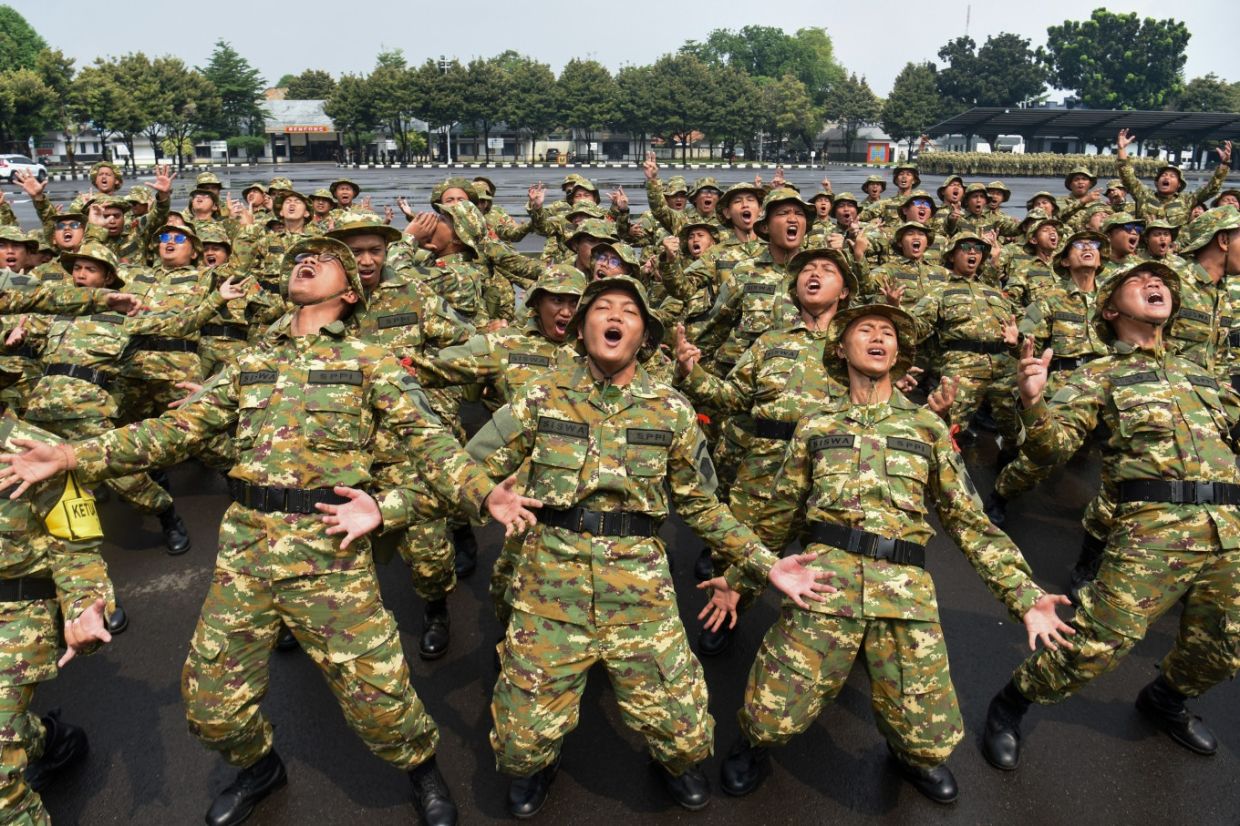
The Indonesian government faces mounting pressure to reform a mandatory military training programme after four deaths emerged among more than 35,000 participants enrolled in President Prabowo Subianto's initiative to establish rural cooperatives and fishing villages. The fatalities, occurring within days of the 30-day basic military training conducted by the Defence Ministry's reserve component, have amplified warnings from lawmakers and human rights organisations that the scheme prioritises military discipline over the welfare of civilian cooperative managers.
The most recent death involved Muhammad Rifqi Renaldi Gunawan, who experienced respiratory distress during training at an Air Force facility in Jakarta on Thursday, 25 June, before succumbing early Friday morning despite hospitalisation. This incident followed the deaths of three other participants: Anisa Muyassaroh, who collapsed from heat stroke in Balikpapan, East Kalimantan; Yonanda Muhammad Taufiq, who suffered cardiac arrest after preliminary activities in Baturaja, South Sumatra; and Novia Rahmadhani Sihotang, who died from complications the Defence Ministry linked to tuberculosis. The clustering of deaths in consecutive days has intensified scrutiny of safety protocols across multiple training sites.
In response, the Defence Ministry announced a "comprehensive review" of the programme's structure and safeguards. Brigadier General Rico Ricardo Sirait, the ministry's spokesperson, committed to strengthening health screening procedures, enhancing early detection mechanisms for pre-existing medical conditions, improving participant monitoring systems, and upgrading emergency response protocols. However, the announcement fell short of the outright suspension demanded by critics, instead signalling incremental adjustments to an established framework.
Amnesty International Indonesia has taken a more aggressive stance, characterising the military training component as fundamentally incompatible with cooperative management. Executive director Usman Hamid called for the programme's immediate termination, arguing that education focused exclusively on cooperative administration and business acumen would serve the initiative's objectives more effectively than military-style instruction. Hamid further warned that the training represents a troubling expansion of military influence into civilian governance, potentially echoing structural patterns from Indonesia's New Order period when the military maintained a formal "dual function" in political and administrative affairs. His critique extended to the philosophical contradiction of imposing hierarchical, command-based discipline on organisations theoretically built on democratic participation and collective decision-making.
Parliamentary oversight bodies have adopted a more measured but still critical position. Members of the House of Representatives Commission I, which supervises defence matters, indicated they were monitoring implementation closely to identify refinement opportunities. Dave Laksono, deputy chair from the Golkar Party, acknowledged that while the training aims to cultivate discipline, leadership, and national consciousness, its methodologies require substantial revision. Laksono emphasised that rigorous evaluation and targeted improvements would strengthen rather than undermine the programme, provided safety remained the paramount concern.
Commission member Imas Aan Ubudiyah of the National Awakening Party focused specifically on medical gatekeeping, proposing that participants undergo substantially more thorough health evaluations before exposure to physically demanding activities. She recommended integrating comprehensive risk mitigation standards, medical supervision throughout training, and systematic assessment of individual physical capabilities into the programme's structure. Her intervention highlights a critical vulnerability: the training's physical demands appear incompatible with Indonesia's general population health profile, suggesting inadequate pre-screening mechanisms failed to identify participants with underlying cardiovascular, respiratory, or metabolic conditions.
The government's initial response, articulated by Presidential Chief of Staff Dudung Abdurachman, attempted to frame the deaths as anomalous rather than systemic. Abdurachman stated that investigations had uncovered no evidence of negligence, characterising the training itself as "not particularly strenuous" and suggesting that undetected pre-existing health conditions or unspecified external factors bore primary responsibility. He pledged that future cohorts would prioritise participant safety more explicitly, yet this commitment remained vague regarding specific procedural changes that would prevent recurrence.
The timing and pattern of deaths carry particular significance for the broader trajectory of Prabowo's presidency. Since assuming office, his administration has emphasised nationalist messaging, institutional discipline, and state capacity-building across multiple sectors. The cooperative and fishing village initiative, targeting the creation of 80,000 cooperative units and 5,000 fishing villages by 2029, represents a flagship rural development strategy. However, embedding military training within this civilian development framework signals an ideological preference for hierarchical, command-oriented governance structures that may conflict with cooperative principles and regional stability concerns.
For Malaysian observers and policymakers, the Indonesian experience offers cautionary lessons regarding the integration of military training into civilian development programmes. Malaysia's own cooperative sector, governed through the Malaysian Cooperative Societies Commission, has historically maintained clearer institutional separation between military and civilian management structures. The four deaths in Indonesia underscore potential risks when governments attempt to instil institutional discipline through military mechanisms rather than professional management training tailored to cooperative operations. Regional development practitioners should note how premature expansion of such programmes, without rigorous health screening and safety protocols, can compromise both the legitimacy of the underlying initiative and public confidence in government-led rural development.
The controversy also reflects broader Southeast Asian patterns regarding state capacity, institutional design, and the militarisation of civilian functions. Several nations in the region have similarly grappled with integrating security-oriented approaches into development programming, with mixed results. Indonesia's experience suggests that enthusiasm for national projects must be balanced against rigorous attention to participant welfare, transparent accountability mechanisms, and alignment with the actual professional requirements of civilian roles. The Defence Ministry's promised review will likely determine whether military-style training remains embedded in Indonesia's cooperative development strategy or whether lawmakers successfully advocate for its replacement with civilian-focused management education.

