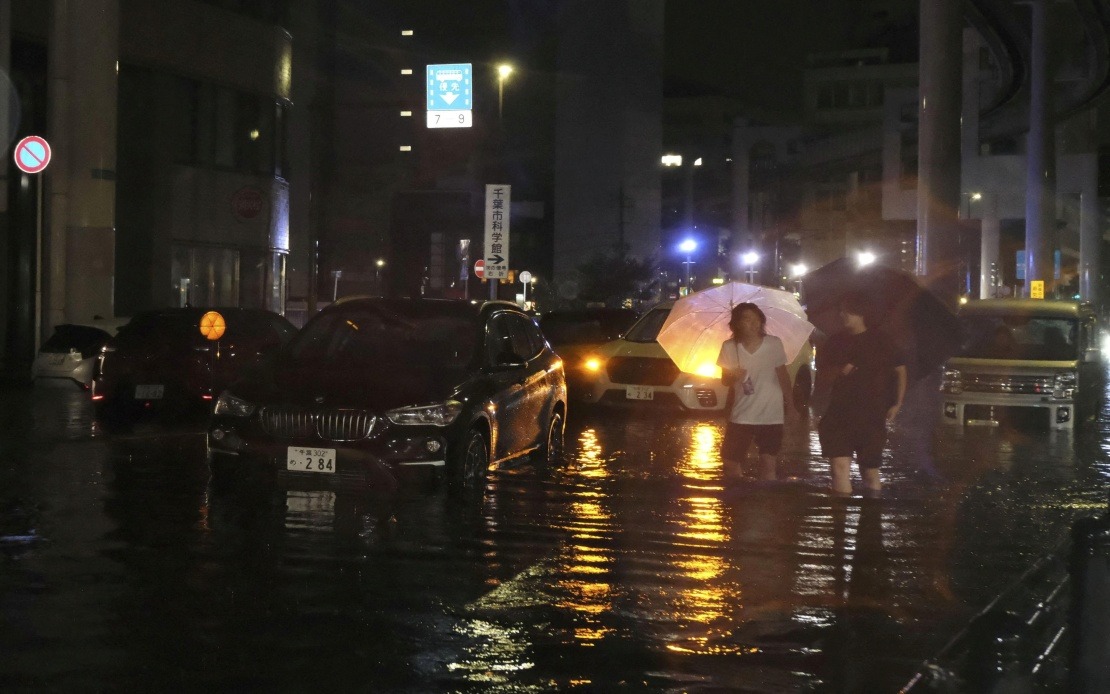
The Japanese prefecture of Chiba adjacent to Tokyo experienced a catastrophic weather event on Thursday as intense rainfall claimed at least four lives, with a fifth person in critical condition. The Japan Meteorological Agency's decision to issue a Level 5 warning—its most severe classification—reflected the extraordinary nature of the downpour, which affected more than one-third of municipalities across the prefecture. The scale of the danger was further underscored by similar maximum-level landslide warnings issued for several communities, including the cities of Chiba and Ichihara, though these were subsequently downgraded by Friday morning.
The exceptional meteorological conditions that created this disaster stemmed from a collision of contrasting air masses over eastern Japan. Warm, moisture-laden air flowing into the region collided with frigid air at higher altitudes, generating profoundly unstable atmospheric layers that converted into relentless precipitation. The accumulation rates were staggering: in Chuo Ward within Chiba city, hourly rainfall reached 115 millimetres on Thursday evening—a volume equivalent to the entire typical August precipitation that the region normally receives across four weeks. Such concentrated intensity overwhelmed drainage infrastructure and natural water absorption capacity throughout the prefecture.
The human toll and displacement were substantial. The Fire and Disaster Management Agency confirmed that evacuation orders, issued at the directive of local authorities in Chiba and neighbouring Ibaraki Prefecture, reached a peak of affecting more than 400,000 residents. By early Friday morning, even as conditions marginally improved, approximately 126,000 people remained under mandatory evacuation orders across both prefectures. These figures underscore the geographic extent of danger and the difficulty in determining when conditions would stabilise sufficiently to permit residents' safe return to their homes. Government agencies established over 200 evacuation centres across Chiba, Ibaraki, Saitama, and Gunma prefectures to accommodate displaced persons.
The infrastructure damage manifested across multiple sectors. Extensive road flooding paralysed transportation networks throughout the prefecture, while the unusual visual spectacle of water surging from underground utility access points in Chiba city illustrated the overwhelming force of runoff that conventional systems could not manage. Residents were photographed wading through knee-high water as they attempted to return home, highlighting the public safety challenges. The prefectural government building itself became an impromptu shelter, accommodating approximately 1,800 stranded commuters who could not reach their destinations due to impassable conditions.
Electrical infrastructure also suffered significant disruption. A subsidiary of Tokyo Electric Power Company Holdings Inc. reported that power outages at their peak affected around 45,000 households in Chiba Prefecture alone, further complicating evacuation efforts and shelter operations that depend on functioning utilities. The municipal authorities of Chiba and Ichikawa, cognisant of the escalating danger, had issued direct public appeals urging residents to implement immediate protective measures, reflecting the unpredictable nature of conditions even as official warnings remained active.
The meteorological agency's forecast predicted that heavy precipitation would persist through Friday across Chiba and surrounding areas, meaning that conditions would require continued monitoring before any widespread all-clear could be issued. This extended duration distinguished the event from more typical passing storms and allowed rainfall accumulation to reach levels associated with seasonal or even annual totals compressed into single-day timeframes. The combination of intensity and persistence created compounding hazards: saturated soil increased landslide susceptibility, swollen watercourses threatened secondary flooding, and fatigue among emergency responders mounted as the event extended.
For Malaysian and Southeast Asian observers, this event carries instructive implications regarding climate resilience and disaster preparedness. Japan's well-resourced meteorological infrastructure and established evacuation protocols, though tested severely, demonstrated how advanced warning systems and coordinated governmental response can mitigate casualties. However, the scale of displacement and infrastructure damage illustrates that even technologically sophisticated nations face significant challenges when extreme weather events intensify. Regional countries including Malaysia, which periodically experiences monsoon-related flooding, can examine how Japan's Level 5 warning system escalation and rapid mobilisation of evacuation centres might inform their own emergency management frameworks.
The Chiba event also reflects broader patterns of weather intensification that climate scientists attribute to changing atmospheric conditions. The collision of warm and cold air masses generating extreme precipitation mirrors mechanisms observed in tropical and subtropical regions, where monsoon systems interact with local topography and temperature gradients. As such systems potentially intensify, infrastructure planning in densely populated areas must anticipate rainfall rates that historical averages no longer reliably predict. Japan's experience on this August weekend serves as a reminder that even nations with sophisticated engineering and comprehensive disaster management systems require continuous adaptation to evolving climate realities.
The immediate recovery phase would involve assessing structural damage to homes and businesses, restoring power and transportation networks, and determining when the 126,000 evacuated residents could safely return. Secondary concerns include water quality in inundated areas, potential disease vectors associated with flooding, and psychological impacts on displaced populations. The death toll, while tragic, could have been substantially worse absent Japan's mandatory evacuation procedures and public communication systems. The incident underscores how preparedness protocols, though often viewed as economic burdens during calm periods, justify their existence when extreme events materialise, saving lives through timely warnings and organised relocation of vulnerable populations into secure environments.

