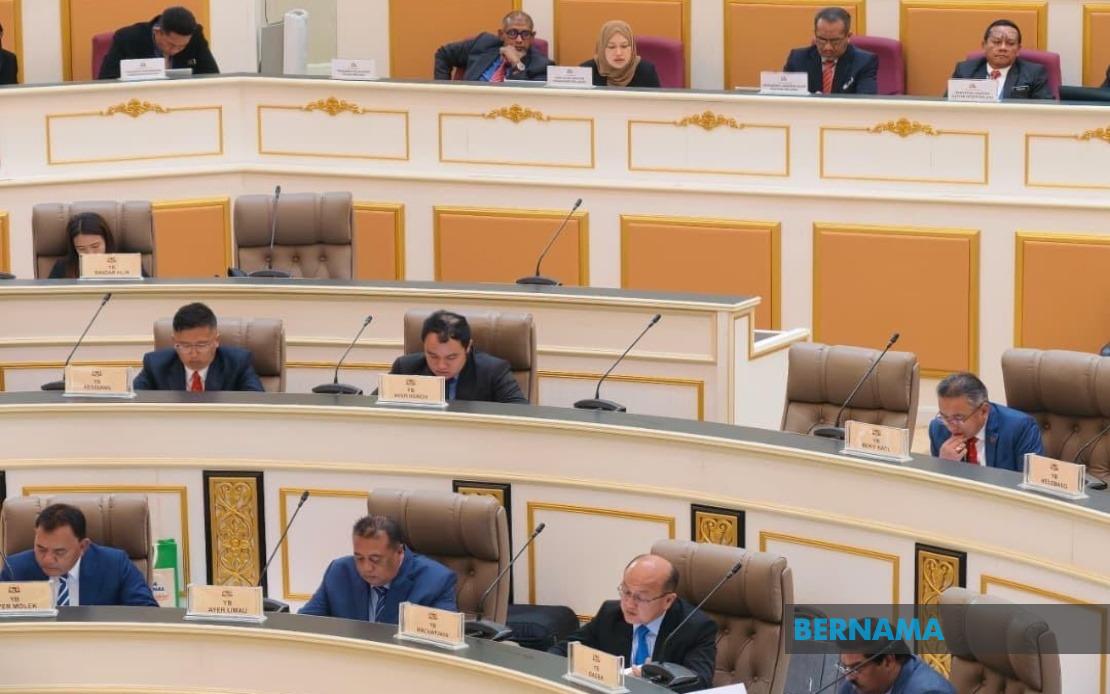
The political landscape in Melaka shifted on July 15 when four Democratic Action Party assemblymen physically relocated their seats to the opposition bloc during the final day of the state legislative sitting. The move formalised a rupture between the DAP and the Barisan Nasional administration that Melaka voters elected in 2023, marking a significant reconfiguration of the state assembly's political balance.
Allex Seah Shoo Chin, Low Chee Leong, Leng Chau Yen, and Kerk Chee Yee now sit alongside Perikatan Nasional representatives and Independent assemblymen, having announced their departure from the government coalition the previous day. Their decision follows months of tension within the ruling coalition and reflects deepening ideological differences within Melaka's multiethnic political structure.
The catalyst for the DAP's exit was the state legislature's passage of constitutional amendments permitting the appointment of nominated assemblymen. Melaka DAP chairman Khoo Poay Tiong characterised the move as fundamentally incompatible with democratic principles, arguing that unelected representatives undermine the electoral mandate. This constitutional innovation departed significantly from Malaysia's established conventions of representative democracy, where seats are won through public ballots.
Critically, the four DAP lawmakers did not act in complete unity with their party's sole Amanah coalition partner. Adly Zahari, the sole Amanah assemblyman and Melaka Pakatan Harapan chairman, remained seated within the government bloc despite the DAP's departure. This division within the opposition coalition highlights the fragility of Pakatan Harapan's Melaka configuration and underscores the strategic calculations guiding individual politicians' survival strategies.
Prime Minister Datuk Seri Anwar Ibrahim had publicly appealed to Melaka DAP to reconsider its decision, urging postponement so state attention could focus on development and public welfare. His intervention suggested that the federal government viewed the assembly crisis as detrimental to the broader Pakatan Harapan agenda. However, the DAP's internal party dynamics ultimately prevailed over federal-level coordination attempts.
Assembly Speaker Datuk Ibrahim Durum issued formal expectations that all representatives would conduct themselves with discipline and courtesy while adhering to house procedures. His statement underscored the constitutional framework governing assembly decorum, even as the body itself became a contested space reflecting broader Malaysian political fragmentation.
For Malaysian readers, this Melaka development carries implications extending beyond the state's boundaries. The nominated assemblyman provision represents a structural innovation that bypasses electoral accountability, a principle that resonates across Malaysian federalism. If such mechanisms gain traction in other states, they could reshape how voter mandates translate into legislative representation.
The DAP's principled stand against nominated appointments reflects its consistent advocacy for electoral democracy since its founding. Yet the party's isolation within Melaka's coalition—notably, Amanah's failure to join the withdrawal—suggests that ideological unity among opposition partners remains conditional rather than absolute. Amanah's political calculation may reflect concerns that abandoning government would damage its viability as a state partner or reduce its influence over policy implementation.
The immediate consequence involves altered legislative numbers and committee compositions. With four DAP members now in opposition, the BN-led government's arithmetic becomes more vulnerable to defections or procedural complications. However, the government's numerical position likely remains manageable unless further coalition members defect. This precarious balance will shape policy implementation throughout Melaka's term and may explain why federal leadership sought accommodation rather than accepting the coalition fracture.
For Southeast Asian observers, Melaka's instability reflects broader regionwide tensions between electoral legitimacy and executive flexibility. Nominated appointment mechanisms appear elsewhere in the region, often justified as enabling expert input or ensuring minority representation. Yet their deployment here—ostensibly without compelling public justification—demonstrates how such provisions can become instruments of political consolidation rather than democratic enrichment.
The DAP's withdrawal also illuminates persistent coalition management challenges within Malaysian politics. Despite federal-level unity under Pakatan Harapan and Barisan Nasional coalitions, state-level partnerships remain volatile. Melaka's case suggests that parties prioritise principle-based stands over coalition stability when fundamental governance mechanisms are questioned, even when such principled positions carry significant political costs.
Going forward, Melaka's government faces a test of legislative effectiveness with reduced coalition strength. The state's development agenda, which the Prime Minister emphasized as the priority, will now proceed amid heightened scrutiny from an enlarged opposition presence. Whether this amplifies accountability or simply introduces legislative gridlock remains uncertain, but the constitutional amendments that precipitated this crisis have permanently altered Melaka's political dynamics.

