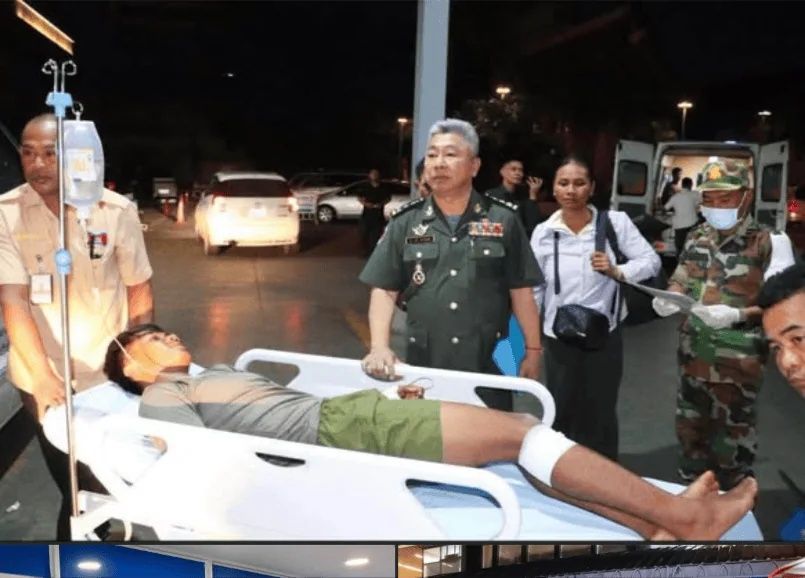
Cambodia's military confirmed on Monday that an explosive device detonated along its frontier with Thailand the previous day, leaving four soldiers nursing injuries sustained during a border patrol operation. The blast occurred in the cashew plantation region straddling Chouk Kruos and Thma Don villages within Oddar Meanchey province, one of Cambodia's northernmost territories bordering Thailand's Surin and Sisaket provinces. Lieutenant General Maly Socheata, serving as undersecretary of state and defence ministry spokeswoman, disclosed that the incident took place at 12:35 p.m. on Sunday while Cambodian forces were executing their regular security patrol across the agricultural zone.
The injured personnel have been transferred to medical facilities where they are receiving treatment from military medical teams and associated healthcare providers. Although the statement did not specify the nature or severity of the soldiers' injuries, such incidents along the Cambodia-Thailand frontier underscore the persistent challenges facing both nations as they manage shared border security. The cashew plantations in this region, while economically significant for local communities, create complex terrain that complicates military operations and surveillance efforts.
Thailand's military swiftly responded to reports of the explosion. Winthai Suvaree, the Royal Thai Army's spokesperson, released a statement indicating that Thai personnel stationed nearby had detected the blast while conducting routine patrols on the Thai side of the demarcation line. The Thai military categorically denied any involvement in the incident, emphasising that no Thai troops deployed weapons or explosive devices during the timeframe in question. This denial reflected Thailand's standard protocol when border incidents occur, given the sensitivity of cross-border relations and the need to prevent escalation.
Following immediate inquiry protocols, Thai military officials conducted a rapid assessment with responsible units to establish the precise location and cause of the detonation. Findings confirmed that the explosion originated entirely within Cambodian territory and resulted from causes unrelated to Thai military activity. This determination proved crucial for managing the diplomatic dimensions of the incident and preventing misunderstandings that could strain bilateral security cooperation between Bangkok and Phnom Penh.
The Cambodia-Thailand border has experienced periodic security incidents over several decades, stemming from historical disputes, unresolved demarcation issues, and the presence of landmines and unexploded ordnance from previous conflicts. Oddar Meanchey province, positioned along this frontier, remains one of Cambodia's most sensitive military zones. The presence of explosive devices—whether legacy munitions from earlier conflicts or improvised weapons—represents an ongoing hazard that both nations must manage through coordinated border patrols and mine-clearance operations.
Incidents of this nature carry implications beyond immediate military concerns. They reflect the practical difficulties both countries face in securing their shared boundary whilst maintaining productive bilateral relations. Thailand and Cambodia have established mechanisms for military coordination and communication specifically designed to prevent misinterpretation of border events and to facilitate rapid information-sharing when incidents occur. This framework, developed over years of diplomatic engagement, helps ensure that isolated explosions do not escalate into broader tensions.
The involvement of soldiers in routine patrol operations highlights the constant vigilance required along the border. Cambodian and Thai forces conduct regular reconnaissance missions to monitor cross-border movement, prevent unauthorised incursions, and maintain security in their respective territories. These operations expose personnel to risks inherent in patrolling areas where unstable ordinance may remain buried or where hostile actors might position devices. The four wounded soldiers represent the real human cost of such border security responsibilities.
Regional security dynamics in Southeast Asia involve careful navigation of bilateral relationships, particularly where land borders create direct contact between nations. Cambodia and Thailand, as neighbouring ASEAN members, share interests in stability and prosperity across their frontier region. While historical tensions and ongoing disputes over land demarcation persist, both governments recognise the importance of preventing military incidents from derailing broader cooperation in trade, cultural exchange, and regional integration initiatives.
The incident underscores why international cooperation in mine-clearance and explosive ordnance removal remains critical. Decades after Cambodia's internal conflicts concluded, residual munitions continue threatening civilians and military personnel alike. International organisations and donor nations support demining operations, yet the sheer volume of unexploded ordnance across the country ensures that discoveries and detonations will continue periodically. Both Cambodia and Thailand participate in regional mine-action coordination efforts aimed at gradually reducing these hazards.
For Malaysian observers, this incident illustrates broader patterns affecting Southeast Asian border regions. Many of Malaysia's own land and maritime boundaries involve complex historical claims and ongoing security considerations. The manner in which Cambodia and Thailand managed this incident—through rapid military assessment, clear communication, and transparent statements—reflects diplomatic maturity that contributes to regional stability. As ASEAN nations increasingly focus on non-traditional security challenges including transnational crime and terrorism, effective border management remains foundational to collective security.
The medical treatment being provided to the four wounded soldiers represents a positive element, ensuring that those injured receive appropriate care. Both nations maintain ongoing dialogue through military hotlines and diplomatic channels designed specifically to address such incidents quickly and prevent misunderstandings. Moving forward, continued investment in mine-clearance programmes and border security infrastructure will remain essential for reducing such incidents and protecting those tasked with maintaining peace along the Cambodia-Thailand frontier.

