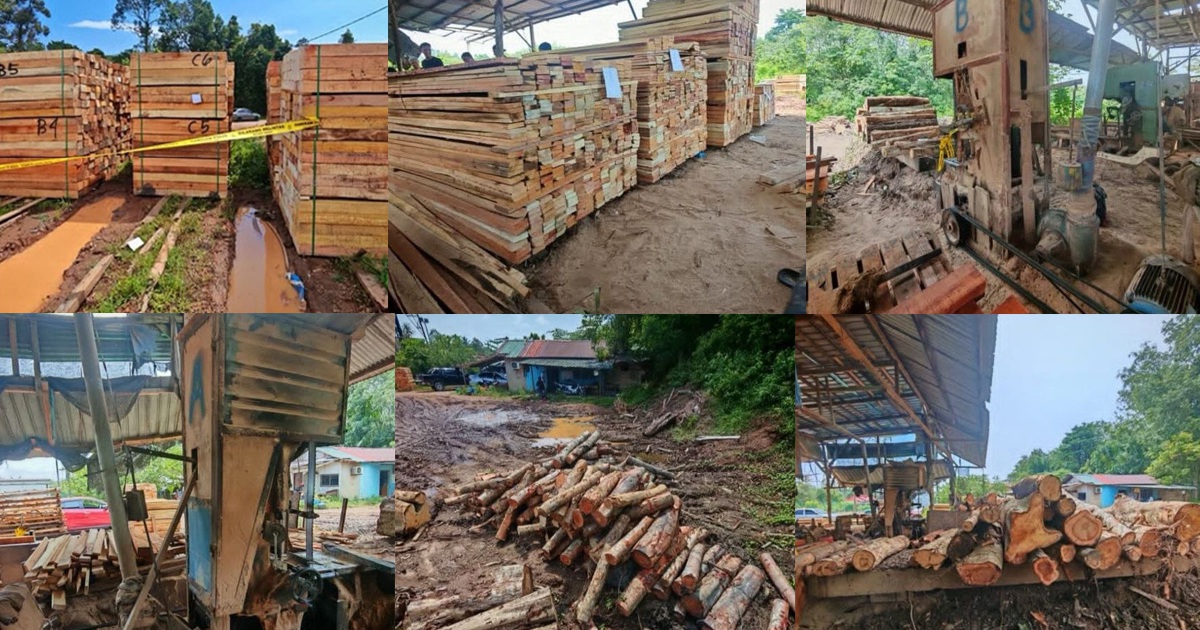
A crackdown on illegal timber processing in Kelantan has resulted in four arrests and the confiscation of substantial assets in what authorities describe as a significant enforcement action against unregulated forestry operations. The operation took place in Kampung Bukit Kechik, Tanah Merah, where personnel discovered an unlicensed sawmill engaged in timber processing activities without proper regulatory approvals. The facility's operator and three workers employed at the site were taken into custody for questioning.
The raid yielded impressive seizures that underscore the scale of the illicit operation. Enforcement teams removed logs, processed timber, and industrial machinery worth a combined RM600,000 from the premises. The quantity and value of confiscated materials suggest the facility had been operating as a functioning commercial enterprise rather than a minor, informal operation. The machinery haul indicates the operator had invested substantially in production capacity, pointing to potentially significant profit margins driven by circumventing regulatory compliance costs and licensing fees.
This enforcement action arrives amid growing scrutiny of timber processing activities across East Malaysia and the peninsula. Authorities have intensified monitoring of sawmill operations, particularly smaller facilities operating on the periphery of formal industrial zones. Unlicensed sawmills present multiple regulatory challenges: they operate outside environmental monitoring frameworks, generate uncontrolled waste streams, and often lack proper safety protocols for workers. The timber sourcing practices of such operations frequently raise concerns about the legality and sustainability of raw material supplies.
Kelantan has historically been an important timber-producing state, with legitimate milling operations contributing substantially to the state's industrial sector. The existence of unregulated competitors undermines licensed operators who bear full compliance expenses and creates market distortions. Illegal processors can undercut legitimate businesses by avoiding environmental levies, safety standard implementations, and proper taxation. This dynamic incentivises further unlicensed operations and erodes the competitive position of properly regulated enterprises.
The seizure of machinery and timber stocks represents tangible consequences for those operating outside regulatory boundaries. Beyond the immediate financial impact on the arrested operator, the action demonstrates enforcement agencies' commitment to disrupting illegal milling activities. Whether the confiscated timber will be forfeited to the state or returned to legitimate channels remains subject to investigation outcomes and legal proceedings.
Worker welfare considerations underscore the risks inherent in unlicensed operations. Staff employed at unregulated sawmills typically lack insurance protections, formal employment contracts, and access to standard workplace safety provisions. Machinery operation in facilities without proper oversight creates elevated accident risks, and injured workers have limited recourse for compensation. The arrest of the three workers raises questions about their status and whether they will face charges or be treated primarily as witnesses in the investigation.
For Malaysian businesses in the timber sector, this raid reinforces regulatory expectations and potential enforcement intensification. Authorities appear committed to pursuing material violations rather than issuing warnings to marginal operators. Companies considering expansion into timber processing must account for comprehensive licensing requirements, environmental assessments, and infrastructure investments. The cost differential between compliant and non-compliant operations may narrow as enforcement tightens.
The RM600,000 asset seizure also carries broader implications for regional timber trade patterns. As enforcement pressure increases in Malaysia, operators may seek alternatives in jurisdictions with lighter regulatory oversight. This could shift processing activities across borders, potentially affecting supply chains and export patterns. Legitimate Malaysian processors may find competitive advantages if enforcement creates more level playing field conditions locally.
Investigation outcomes will likely determine whether charges focus on licensing violations, environmental infractions, or potential timber sourcing irregularities. If the raw materials prove to originate from questionable sources, the case could expand into supply chain investigations affecting multiple stakeholders. Authorities typically pursue comprehensive examinations when discovering unlicensed facilities, as such operations frequently connect to broader networks of illegal resource extraction or laundering practices.
The action reflects Kelantan's broader regulatory environment under its current administration. State-level enforcement priorities shape how aggressively authorities pursue specific violations. The apparent resource commitment to this sawmill operation suggests timber regulation ranks among current enforcement priorities, particularly in peripheral areas where monitoring becomes more challenging.
Moving forward, this raid may prompt industry-wide reviews of compliance standards among smaller operators. Word of substantial asset seizures and prosecutions tends to deter marginal players more effectively than administrative warnings. Whether this translates into broader compliance improvements across Kelantan's timber sector will become apparent through subsequent enforcement patterns and industry feedback.

