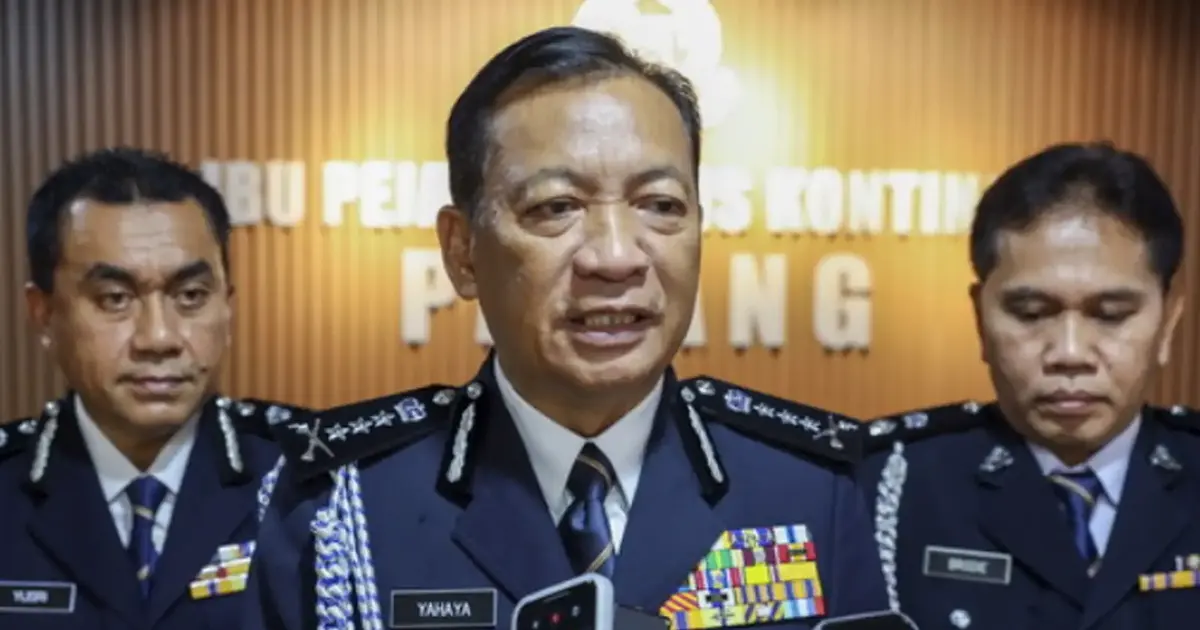
Police in Pahang have expanded their crackdown on a fraudulent medical certificate scheme, taking four additional individuals into custody as part of an ongoing investigation into the illicit document-forging network. The arrest operation reflects escalating law enforcement efforts to dismantle what authorities suggest is an organised operation producing counterfeit medical documents, a criminal activity that has far-reaching consequences for workplace safety and healthcare integrity across the region.
According to Pahang police chief Yahaya Othman, five individuals who were initially apprehended on Monday have been released from remand following their detention and interrogation. The release of these suspects indicates that investigators may have gathered sufficient preliminary information from them to proceed with the inquiry into additional participants in the scheme, or that bail conditions have been imposed enabling their temporary discharge pending further developments in the case. This staged approach to suspect management is typical in complex investigations involving multiple players and various roles within a suspected criminal enterprise.
The forged medical certificate trade represents a particularly insidious form of fraud with ripple effects throughout Malaysian society. Fabricated sick leave documentation allows employees to extend absences from work without legitimate health justifications, imposing productivity losses on employers across diverse sectors. More troublingly, the proliferation of fake certificates undermines the credibility of genuine medical documentation, potentially complicating matters for individuals with legitimate health concerns requiring documented absences. Healthcare facilities themselves may be implicated in such schemes if medical personnel are found to be party to the forgery operation.
The Pahang police operation underscores broader concerns about document fraud that extend beyond medical certificates alone. Similar techniques used to forge medical documents often parallel methods employed in fabricating other official certificates and credentials, suggesting that dismantling this particular network may yield insights applicable to other forms of identity and credential fraud affecting the country. The investigation's scope and the sequential nature of arrests hint at a hierarchical structure within the operation, with organisers and facilitators distinct from those involved in document production and distribution.
Malaysia has witnessed increasing vigilance around document fraud in recent years, driven partly by corporate and government sector demands for enhanced verification protocols. Many employers now require additional confirmation of medical leave claims, cross-referencing employee submissions with healthcare facilities, a defensive measure directly attributable to the prevalence of forged certificates circulating in the employment market. This cat-and-mouse dynamic between document forgers and verification-conscious institutions creates persistent demand for improved authentication mechanisms.
The investigation's progress in Pahang may prompt similar enforcement actions in other Malaysian states where such operations are suspected. The interconnected nature of document fraud networks suggests that suppliers of forged certificates likely serve clients across state boundaries, making inter-agency coordination essential for effective disruption of these criminal activities. The Pahang operation therefore carries significance beyond the state's borders, potentially contributing to broader national security and integrity of administrative systems.
From an employment regulation perspective, the continued emergence of forged medical certificate schemes highlights vulnerabilities in how Malaysian workplaces verify employee health claims. While medical certificates issued by registered practitioners should theoretically be verifiable through official healthcare channels, the speed and convenience of fraudulent alternatives appeal to employees seeking to circumvent workplace attendance requirements. Employers unable or unwilling to invest in thorough verification become unwitting facilitators, accepting documents at face value without authentication.
The involvement of four additional suspects suggests the operation employed diversified roles—potentially including document creators, intermediaries, distributors, and clients who commissioned forgeries. Understanding these functional distinctions helps authorities identify the most critical nodes within the network for disruption. Targeting high-level organisers and suppliers produces more effective dismantling than arresting end-user clients, though comprehensive enforcement typically addresses the entire chain.
Yahaya Othman's disclosure of these enforcement actions reflects police commitment to addressing white-collar crime categories that, while non-violent, carry substantial cumulative societal costs. Document fraud investigations require different skill sets and investigative approaches compared to violent crime, necessitating sustained departmental focus and resource allocation to achieve meaningful impact. The sequential release and re-arrest pattern suggests investigators are applying deliberate tactical approaches rather than mass indiscriminate detention.
Looking forward, the Pahang cases may catalyse discussions about strengthening verification infrastructure for medical certificates nationwide. Digital authentication systems, QR codes embedded in official certificates, and real-time healthcare facility databases accessible to employers could substantially reduce forged document viability. Singapore and other regional neighbours have implemented such technological solutions, and Malaysian authorities may increasingly view similar adoption as essential to combating this persistent criminal problem.
%22%2F%3E%3C%2Fpattern%3E%3C%2Fdefs%3E%3Crect%20width%3D%22100%25%22%20height%3D%22100%25%22%20fill%3D%22url(%23ph454chg)%22%2F%3E%3Crect%20width%3D%22100%25%22%20height%3D%22100%25%22%20fill%3D%22url(%23ph454chp)%22%2F%3E%3Ctext%20x%3D%2250%25%22%20y%3D%2250%25%22%20text-anchor%3D%22middle%22%20dominant-baseline%3D%22central%22%20fill%3D%22rgba(255%2C255%2C255%2C0.95)%22%20font-family%3D%22Georgia%2C%20'Times%20New%20Roman'%2C%20serif%22%20font-weight%3D%22700%22%20font-size%3D%22170%22%20letter-spacing%3D%22-0.02em%22%3EMalaysia%3C%2Ftext%3E%3C%2Fsvg%3E)
%22%2F%3E%3C%2Fpattern%3E%3C%2Fdefs%3E%3Crect%20width%3D%22100%25%22%20height%3D%22100%25%22%20fill%3D%22url(%23ph2a9atg)%22%2F%3E%3Crect%20width%3D%22100%25%22%20height%3D%22100%25%22%20fill%3D%22url(%23ph2a9atp)%22%2F%3E%3Ctext%20x%3D%2250%25%22%20y%3D%2250%25%22%20text-anchor%3D%22middle%22%20dominant-baseline%3D%22central%22%20fill%3D%22rgba(255%2C255%2C255%2C0.95)%22%20font-family%3D%22Georgia%2C%20'Times%20New%20Roman'%2C%20serif%22%20font-weight%3D%22700%22%20font-size%3D%22320%22%20letter-spacing%3D%22-0.02em%22%3EPKR%3C%2Ftext%3E%3C%2Fsvg%3E)