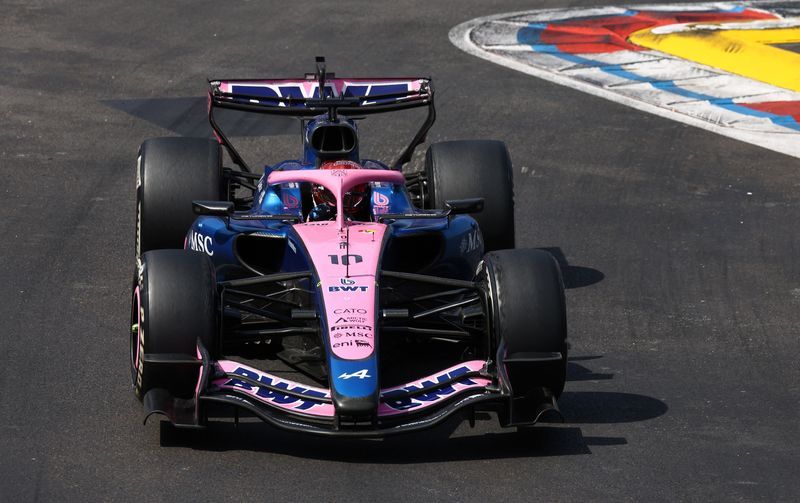
Formula One's highest judicial body is preparing to deliver its definitive ruling on one of the championship season's most contentious podium controversies, with the international court of appeal scheduled to hear arguments in Paris on Tuesday regarding Pierre Gasly's third-place finish at the Monaco Grand Prix. The extraordinary timeline of this case—now stretching beyond two months since the race on June 7—underscores the complexity of the matter and the unprecedented nature of reversing stewards' decisions in motorsport's governing structure.
Gasly, driving for the Alpine team, crossed the line at the Mediterranean principality in third position but found himself stripped of that result within hours. Race stewards applied two separate five-second penalties for exceeding pit-lane speed limits, a decision that cascaded through the finishing order and elevated Red Bull's Isack Hadjar onto the podium in third place. The Austrian driver celebrated what appeared to be a podium triumph, following the traditional champagne-spraying ceremony that marks Formula One's celebratory rituals.
However, the situation reversed dramatically just five days later when Alpine presented fresh evidence to the stewards demonstrating that a timekeeping malfunction, rather than driver error, had caused the speeding violations. The stewards accepted this technical explanation and rescinded both penalties, restoring Gasly to third place and requiring Hadjar to return his trophy. This reversal set an unprecedented precedent in modern Formula One, where post-race penalties have traditionally been considered final determinations subject only to established appeal procedures.
The reversal triggered immediate concern within the Formula One paddock, with observers warning that overturning stewards' decisions on the basis of technical evidence discovered after formal adjudication could fundamentally undermine the sport's regulatory framework. This apprehension proved justified when McLaren and Red Bull lodged formal appeals to the international court just four days after the penalty reinstatement, challenging both the substance of the reversal and its broader implications for competitive fairness.
McLaren's grievance extends beyond Gasly's restoration to the podium. The Woking-based team's driver Oscar Piastri had initially finished fourth but dropped to fifth following Gasly's reinstatement. Critically, Piastri had accepted and served identical pit-lane speeding penalties during the race itself, believing the violations were unavoidable technical matters beyond driver control. Unlike Gasly, who was never required to serve his penalties and faced only the prospect of added time being removed, Piastri lost actual pit stop time that could not be recovered, fundamentally altering his race performance and championship points tally.
The distinction proves crucial to understanding McLaren's dual-pronged appeal strategy. Team principal Andrea Stella articulated two separate but interconnected concerns when discussing the matter at the following weekend's Dutch Grand Prix, which McLaren's Lando Norris won. First, Stella emphasized that the reversal process itself threatened the sport's integrity by creating inconsistent treatment of identical infractions. If penalties could be retroactively cancelled based on evidence discovered after stewards' initial determinations, the regulatory structure that governs all competitors becomes inherently unstable and subject to post-hoc revision.
Second, Stella highlighted McLaren's material injury through the championship standings. The team had served a penalty it was never able to contest through normal appeal channels, then watched as identical penalties applied to a competitor were subsequently cancelled. This asymmetry resulted in McLaren losing championship points that could prove decisive in the season-long competition. For a team fighting for constructors' championship honours, such point differentials carry substantial financial and competitive consequences that extend far beyond a single race weekend.
The FIA, Formula One's international governing body, has confirmed that the hearing will proceed under confidentiality protocols, with neither public spectators nor media representatives present during arguments. This closed-door approach reflects the technical complexity of the proceedings and the potential for precedent-setting rulings that could reshape how stewards' decisions are managed throughout the sport. The FIA has pledged to publish its verdict as soon as the deliberations conclude, though no specific timeline for that announcement has been provided.
For Malaysian and Southeast Asian motorsport enthusiasts, this case carries broader significance regarding how international sporting governance functions and the challenges inherent in applying consistent standards across complex technical circumstances. The Monaco Grand Prix remains one of Formula One's most prestigious events, and the legitimacy of its results affects championship narratives throughout the season. The extended timeline for resolving this matter also raises questions about whether sporting bodies possess adequate procedures for addressing technical disputes that emerge after initial adjudication.
The international court's ruling will likely establish precedent for how future technical evidence relating to timekeeping systems and pit-lane monitoring can be introduced after formal stewards' decisions have been published. Should the court uphold the original penalty reversal, it signals that comprehensive technical investigations can override stewards' initial determinations. Conversely, should the court reinstate the penalties, it would protect the finality of stewards' decisions and prevent the continuous re-litigation of results based on subsequently discovered technical malfunctions.
This case also highlights the tension between technological precision and human decision-making in elite sports. If pit-lane speeding detection systems possess technical vulnerabilities that can cause false readings, the question of which party bears responsibility—drivers, teams, or the sporting authority—becomes philosophically vexing. The outcome may require Formula One to invest in more robust monitoring infrastructure or to establish clearer procedures for identifying systemic failures before applying individual competitor penalties.
Beyond the immediate question of Gasly's podium position, the appeal represents a critical juncture for Formula One's regulatory architecture. How this dispute concludes will influence not only this championship season but also the framework governing technical decisions for years to come. The international court's judgment will demonstrate whether modern motorsport governance can accommodate technological complexity while maintaining competitive equity and decisional finality.

