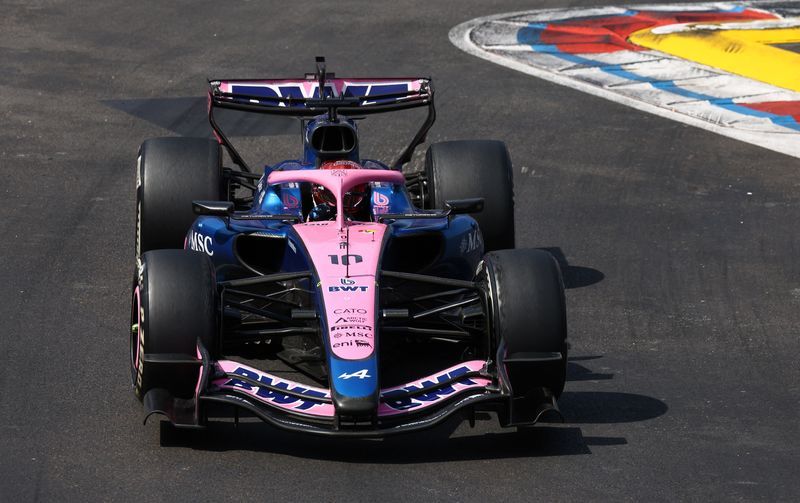
The Formula One season's most contentious result remains unresolved as the FIA's international court of appeal begins deliberations on the June Monaco Grand Prix. A panel of judges convened behind closed doors in Paris on Tuesday to hear arguments that will ultimately determine whether Alpine driver Pierre Gasly retains his third-place finish or loses it to Red Bull's Isack Hadjar, a decision carrying significant repercussions for other competitors in the championship battle. The court confirmed it needs between two and three weeks to issue its final ruling on a race that has already been decided, reversed, and appealed once since June 7.
The extraordinary saga began when Gasly crossed the line in third place at the prestigious Monaco circuit, only to be stripped of that position hours later when stewards applied two post-race five-second penalties for exceeding speed limits in the pit lane. The sanctions demoted the French driver to seventh, promoting his compatriot Hadjar to the podium. However, this decision lasted just five days. Alpine provided evidence of a timekeeping error that stewards deemed sufficient grounds to overturn the penalties on June 12, restoring Gasly to third place and forcing Hadjar to relinquish his trophy and champagne celebration.
The reversal sparked immediate protest from McLaren and Red Bull's respective teams, who lodged an appeal on June 16 that has now reached the highest judicial body in Formula One. The timing created an extraordinary situation where stewards themselves acknowledged the unfairness of their own decision. In their June 12 ruling, they recognised the fundamental problem: "There is no regulation that gives the stewards the power to 'undo' a served penalty. In any case, it is impossible to imagine how such power could be applied." This statement underscored the procedural chaos at the heart of the dispute.
The broader context reveals a startling inconsistency in how pit-lane speeding was handled during the race. Oscar Piastri, Gasly's McLaren teammate, received identical penalties for the same offence but served them immediately during the race rather than after the chequered flag. Because Piastri's penalties were applied in real time, they could not be reviewed or overturned, permanently costing the Australian driver positions and crucial championship points. George Russell of Mercedes also received a pit-lane speeding penalty, which he served as a drive-through during the race, similarly preventing any possibility of review. This disparity—where timing and sequencing of penalty enforcement determined whether penalties could later be cancelled—struck teams as fundamentally unjust.
Russell's experience further highlighted the system's arbitrariness. The title contender reportedly requested that his penalty be applied post-race to preserve the possibility of later reversal, a request apparently denied. He finished outside the points, a result that might have been different had his penalty been structured differently. The Mercedes driver's situation starkly illustrated how the same infraction could have radically different career consequences depending on procedural interpretation.
McLaren team principal Andrea Stella articulated the team's dual motivation for pursuing the appeal at the recent Dutch Grand Prix. "There's a general interest for Formula One and the sport and the integrity of the sport, and there's a material interest for McLaren in terms of our championship impact," he explained. The statement reflects both a principled concern about fairness and McLaren's practical interest in recovering the points Piastri lost through circumstances beyond his control. With the drivers' championship tightening as the season progresses, those lost points carry tangible weight in the title race.
The Monaco result carried additional significance because it involved the race winner's identity. Mercedes driver Kimi Antonelli claimed the victory with Ferrari's Lewis Hamilton taking second place. Any change in the podium positions would ripple through the championship standings, affecting not only individual driver points but also the constructors' championship where McLaren and Ferrari are engaged in a tight battle with Mercedes.
The confidential nature of Tuesday's hearing meant no substantive details about the judges' reasoning emerged publicly. Formula One typically conducts these high-level appeals in closed sessions, limiting transparency about how the sport's most senior judicial bodies evaluate complex regulatory questions. This secrecy, while standard, adds another layer of frustration for teams seeking clarity on how penalties should be administered and reviewed going forward.
The timing of the appeal's resolution creates unusual circumstances for the remainder of the championship. The Italian Grand Prix at Monza is scheduled for September 6, just days away from when the court might announce its decision. If the judges rule in McLaren's favour and penalties are reinstated, Gasly would lose his podium position and Piastri's points would potentially be restored. Conversely, if they uphold the June 12 reversal, the current standings would be confirmed and the precedent for overturning served penalties would be established, potentially opening questions about other penalties served earlier in the season.
The case also exposes broader regulatory challenges facing Formula One as the sport becomes increasingly competitive and teams more willing to litigate grey areas. The lack of a clear mechanism for reviewing served penalties versus post-race penalties represents a significant gap in the sporting code. Every team's sporting director is now aware that timing and sequencing can determine whether a penalty remains final or becomes subject to review—a distinction that should be deliberately chosen by regulation rather than accidentally created by circumstance.
As the championship battle intensifies heading into the final races of the season, the Monaco ruling has become more than a historical matter to resolve. It represents a test of Formula One's judicial system under pressure, a demonstration of how the sport applies its rules when inconsistencies emerge, and a signal about what teams can expect from future penalty decisions. Whether the court sides with principle or precedent in the next few weeks will shape competitive expectations for seasons to come.

