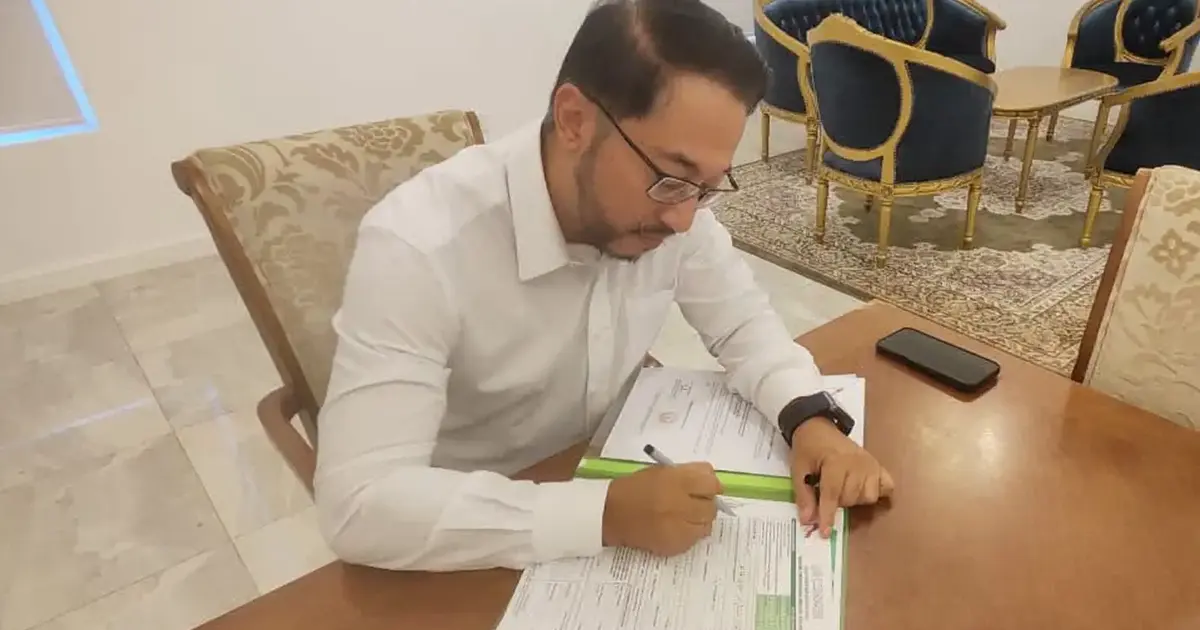
A prominent former figure within Umno's upper echelons has formally applied for membership in PAS, marking a significant shift in his political trajectory. Isham Jalil, who previously served as a member of Umno's Supreme Council, has decided to leave Malaysia's oldest political party and transition to the Islamist opposition. His application signals a notable defection at a time when both parties are navigating complex political dynamics within the current Malaysian political landscape.
Isham's decision to join PAS rests fundamentally on his perception of the Islamic party's integrity and governance standards. In explaining his move, he has emphasised that PAS represents a political environment distinctly free from the corruption that he views as endemic to his previous political home. This critique carries weight given his extensive experience within Umno's institutional structures, where he had access to the party's highest strategic and decision-making forums. His characterisation of PAS as corruption-free suggests he has conducted considerable reflection on the comparative ethical foundations of Malaysia's major political organisations.
The defection carries implications for Umno's current standing and internal cohesion. Umno has faced sustained reputational damage over the past decade due to high-profile corruption scandals involving senior party members and leaders. The party's association with financial misconduct has fundamentally altered voter perceptions and weakened its electoral appeal in many constituencies. When established figures like Isham explicitly cite corruption as their reason for departure, it reinforces public narratives about institutional decay within the party and accelerates the departure of integrity-conscious members.
For PAS, Isham's application represents a strategic gain in recruiting experienced administrators and political operatives from the opposition. Though PAS has maintained stronger public messaging around Islamic governance and ethical standards, adding officials who have served at Umno's highest levels brings practical governance experience and administrative expertise that can strengthen the party's institutional capacity. Isham's background on the Supreme Council indicates familiarity with policy formulation, party administration, and high-level political negotiation—all assets that expand PAS's organisational depth.
This development reflects broader patterns of defection and political realignment occurring across Malaysian politics. The past several years have witnessed repeated movements of politicians between major parties, driven by shifting electoral calculations, ideological recalibrations, and increasingly, by reactions to corruption narratives. Individual politicians have become more willing to switch affiliation when they perceive their current party structure as compromised or when alternative platforms offer enhanced legitimacy or electoral viability. Isham's move exemplifies this fluid political environment.
The Islamic party has positioned itself as an alternative governance model distinct from the established secular-nationalist framework that Umno long represented. PAS's emphasis on Islamic principles and religious governance appeals to voters concerned about moral and ethical foundations of leadership. By recruiting former Umno officials, PAS can simultaneously bolster claims about attracting serious administrators disillusioned with their former party while reinforcing its positioning as the more principled political choice. Isham's previous role within Umno lends credibility to his professed motivations.
Regional and national political observers will likely monitor whether Isham's application succeeds and how prominently PAS positions him within its organisational structure. His acceptance would signal PAS's confidence in its ability to absorb senior figures from competing parties while maintaining institutional discipline and ideological consistency. Conversely, if PAS exercises caution about accepting someone with deep Umno institutional connections, it may reflect concerns about infiltration or insufficient ideological alignment despite his stated motivations.
The timing of such defections often influences their political resonance. Applications for party transfer rarely occur in isolation; they typically cluster around electoral cycles, major policy disagreements, or shifts in factional balance within source parties. Isham's move may indicate broader discontent among Umno's remaining Supreme Council members or signal recognition that defection carries reduced political cost in the current environment where other senior figures have successfully transitioned to competing parties.
For Malaysian voters, particularly those concerned about governance standards and political accountability, such movements raise important questions about the sustainability of existing party structures. When officials with extensive institutional experience conclude that their party is irredeemably compromised, it creates cascading reputational consequences that extend beyond the individual defection. The cumulative effect of such departures fundamentally reshapes how voters assess party legitimacy and comparative governance capacity.
Isham Jalil's application to PAS represents more than a simple party transfer; it encapsulates current tensions within Malaysian politics regarding corruption, institutional integrity, and the competitive positioning of ideologically distinct parties. His former position at Umno's highest levels gives his critique particular significance, while his choice of PAS reflects the ongoing competition between Malaysia's major political organisations to position themselves as the more credible and corruption-resistant option. The resolution of his application and his subsequent role within PAS will carry implications for both organisations and for broader patterns of political realignment continuing to reshape Malaysian electoral politics.

