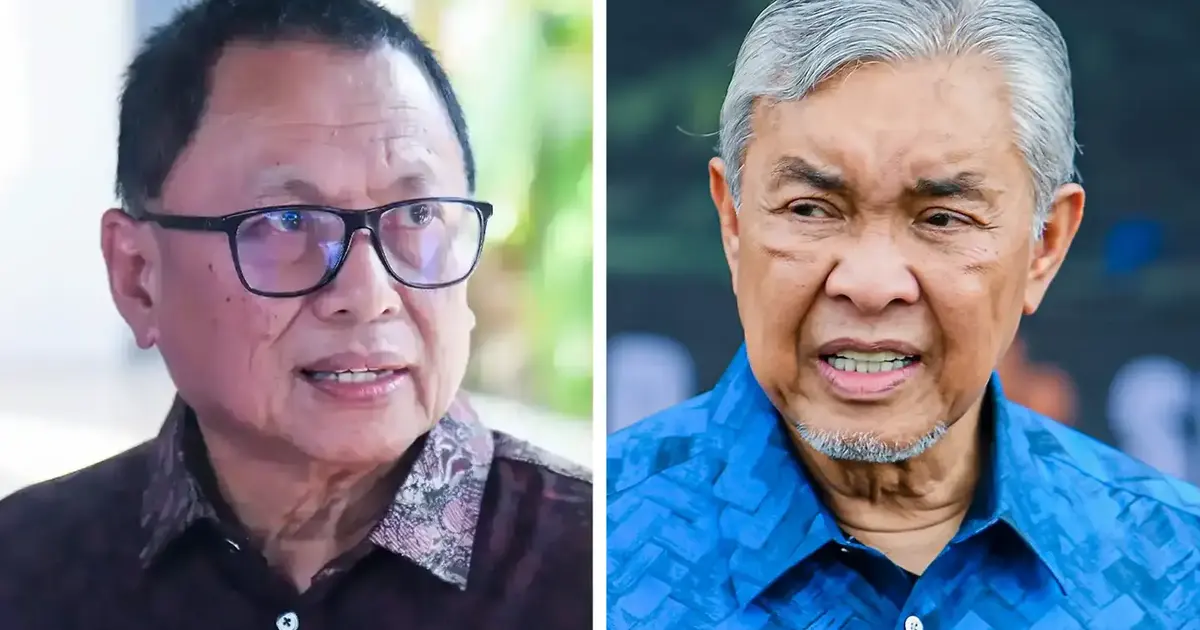
A prominent figure in Umno's upper echelons has raised pointed questions about the authenticity and timing of reported warnings directed at Malaysia's civil service, suggesting that Deputy Prime Minister Ahmad Zahid Hamidi may be deliberately stoking internal divisions within the current coalition administration.
The challenge from the former Umno Supreme Council member arrives at a moment of heightened sensitivity within Malaysia's governing structure. The unity government, formed in 2022 as an unprecedented coalition bringing together parties with historically opposing ideologies, has repeatedly faced scrutiny over the durability of its arrangements. Whether internal communications between senior leadership and the bureaucracy are being weaponised to create political leverage remains an open question in political circles.
The request for documentary evidence of any official communication to civil servants carries substantial weight in Malaysia's political discourse. Throughout the nation's history, the civil service has functioned as a broadly neutral administrative apparatus meant to serve the interests of the state rather than any particular political faction. When allegations emerge that civil servants have been cautioned about their conduct or loyalties, questions naturally surface about whether such interventions are legitimate administrative measures or political theatre designed to achieve other objectives.
The former Umno official's skepticism reflects deeper anxieties about Ahmad Zahid Hamidi's recent manoeuvres and their implications for the fragile equilibrium maintained within the unity government. As deputy prime minister, Zahid occupies a position of considerable institutional authority, yet the suggestion that he might manipulate his office to generate tension among coalition partners strikes at the heart of what makes consensus-based governance function.
Oscar Zahid's actions warrant examination in the context of broader factional dynamics within Umno itself. The party has experienced considerable internal turbulence in recent years, with competing power centres vying for influence and resources. By drawing the civil service into political discussions, there exists potential for strengthening particular factional narratives whilst weakening others. For readers across Southeast Asia where similar coalition governments operate, this scenario illustrates the delicate negotiations required to maintain multi-party governing arrangements.
The unity government represents an experiment in Malaysian politics precisely because it defies conventional categorisation. Pakatan Harapan, Barisan Nasional, and various independent parties agreed to set aside historical antagonisms in service of broader national interests. Yet this arrangement remains contingent upon good faith dealings among coalition partners. Should any component party perceive that another is weaponising state machinery for partisan advantage, the entire structure becomes vulnerable to cascading defections and realignments.
Furthermore, the civil service itself occupies a unique position in this dispute. Malaysia's bureaucratic apparatus comprises hundreds of thousands of individuals bound by codes of conduct and employment regulations. These professionals have legitimate reasons to feel apprehensive if they believe political leadership is using warnings and communications to signal factional allegiances rather than enforcing genuine administrative standards. Such confusion between legitimate governance and political opportunism can undermine institutional effectiveness and public confidence in neutral administration.
The demand for concrete evidence also reflects broader concerns about transparency in government communications. When officials make statements about warnings or cautions to senior civil servants, there should be clear documentation establishing what was communicated, through what channels, and based on which specific concerns or policies. The absence of such documentation, or claims that no such warning exists in official records, would suggest that reports may be exaggerated, misinterpreted, or deliberately fabricated to achieve political ends.
Looking ahead, the resolution of this dispute carries implications extending beyond immediate factional squabbles within Umno. The unity government's sustainability depends upon coalition partners accepting that certain institutional spaces—including interactions with the civil service—remain depoliticised. If political actors begin routinely instrumentalising the bureaucracy to score points against rivals, the very foundations of consensus governance erode. Malaysian observers watching these developments must recognise that how the current leadership resolves such tensions will establish precedents for future coalition arrangements.
The broader Southeast Asian context adds additional significance to this episode. Across the region, numerous nations have experimented with coalition governments as alternatives to single-party dominance. Thailand, Indonesia, and the Philippines have all navigated complex multi-party arrangements with varying degrees of success. Malaysia's unity government will be watched carefully by regional political analysts seeking to understand whether diverse parties can genuinely cooperate or whether institutional pressures inevitably drive wedges between coalition partners.
Ultimately, the call for proof of these alleged warnings represents more than bureaucratic pedantry. It embodies a fundamental principle about governance: that political leaders must be willing to substantiate their claims, especially when those claims involve communications to state institutions. The former Umno leader's intervention suggests that Malaysia's political community retains capacity to hold even senior officials accountable for transparency and truthfulness. Whether such accountability mechanisms prove sufficient to preserve the unity government's integrity remains to be determined through concrete actions rather than assertions.

