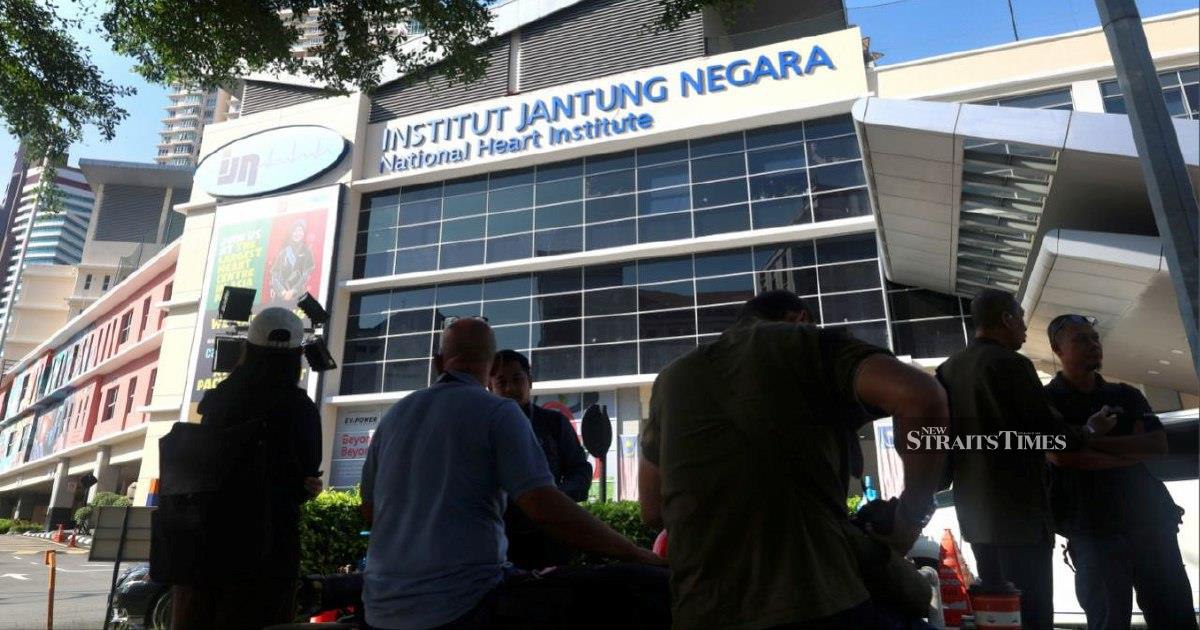
Datuk Seri Ismail Sabri Yaakob, who led Malaysia as Prime Minister from 2021 to 2022, is scheduled to undergo a pacemaker implantation procedure at the National Heart Institute (IJN) following recent medical assessments that revealed cardiac arrhythmia. The former premier's legal counsel disclosed the health development, indicating that the surgical intervention had been planned following specialist evaluation of his heart condition.
Arrhythmia, the medical term for irregular heartbeat, is a condition where the heart's electrical signals fail to coordinate properly, leading to rhythms that are either too rapid or too slow. While many cases of arrhythmia are manageable through medication alone, pacemaker implantation becomes necessary when the heart's natural electrical system cannot maintain a safe and steady rhythm without mechanical assistance. The procedure represents a standard medical response to certain forms of cardiac irregularity and carries well-established safety protocols when performed at a facility of IJN's calibre.
The National Heart Institute, located in Kuala Lumpur, stands as one of Southeast Asia's leading cardiac centres, equipped with state-of-the-art diagnostic and surgical facilities. The institution has built its reputation over decades handling complex cardiac cases ranging from routine interventions to intricate surgical procedures. For a prominent figure such as a former prime minister, IJN would be the natural choice given its excellence and capacity to manage high-profile patients with appropriate discretion and world-class medical standards.
Ismail Sabri's tenure as Prime Minister concluded in August 2022 after his United Malays National Organisation (UMNO) joined a coalition government following the 2022 general election, which produced a fractured parliament with no clear majority for any single bloc. His administration had overseen Malaysia's recovery period from the pandemic and managed the subsequent economic stabilisation efforts. Since departing office, he has remained active in parliamentary politics and party affairs, maintaining a prominent profile in national discourse.
The timing of such a medical procedure for a high-ranking political figure typically prompts broader discussion about succession planning and delegation within political parties, though UMNO has not signalled any significant internal restructuring related to this development. The announcement reflects a straightforward medical matter being handled transparently, consistent with international norms where public figures' significant health interventions are disclosed to maintain public confidence and institutional clarity.
Pacemaker technology has advanced considerably over recent decades, with modern devices now offering years of reliable function between battery replacements or replacements of the entire unit. These devices are remarkably compact and minimally invasive to implant, with patients typically returning to normal activities within weeks of the procedure. The surgery itself usually takes two to three hours and carries minimal risk when performed by experienced cardiac surgeons in properly equipped medical centres.
From a public health perspective, Ismail Sabri's case underscores the prevalence of cardiac conditions across all demographic groups and socioeconomic levels, reinforcing the importance of regular cardiac screening, particularly for individuals over 60 years of age. The condition he faces is increasingly common in Malaysia's ageing population, where lifestyle factors including sedentary habits, dietary patterns, and stress levels contribute to rising cardiovascular disease rates. Early detection and appropriate management, as demonstrated in his case, significantly improve long-term health outcomes and quality of life.
The disclosure of the medical procedure also touches upon broader questions about transparency regarding the health of political leaders. Malaysia, like other democracies, has grappled with balancing public interest in the wellbeing of senior officials against the privacy rights of individuals, even those in public service. The choice to announce this procedure reflects a judicious approach to keeping stakeholders informed while respecting medical confidentiality.
For UMNO and Malaysian politics more broadly, the matter appears to be treated as a routine personal health issue rather than a matter with significant institutional implications. The party has not indicated any need for contingency planning or immediate changes to its leadership structure, suggesting confidence in the party's administrative continuity. Ismail Sabri's colleagues and supporters have expressed well-wishes, focusing on a successful outcome and swift recovery.
The recovery period following pacemaker implantation is typically straightforward, with most patients able to resume normal activities within four to six weeks, depending on individual circumstances and any complications. Follow-up appointments at IJN will be crucial for monitoring the device's function and ensuring optimal heart rhythm management. For a former prime minister with access to premium healthcare services, the prognosis for successful implantation and full recovery is exceptionally favourable.
This development serves as a reminder that health challenges transcend political boundaries and public station, affecting individuals regardless of their prominence or position. It also demonstrates Malaysia's capacity to provide world-class cardiac care through institutions like the National Heart Institute, positioning the country advantageously within Southeast Asia's medical tourism landscape. The procedure represents not a crisis but a routine intervention enabled by modern medicine's capacity to manage cardiac conditions that would have carried far greater risks mere decades ago.

