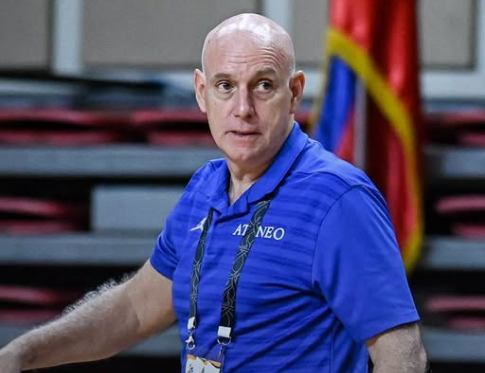
The Philippine National Police Criminal Investigation and Detection Group has recommended charges against former Ateneo de Manila University men's basketball team head coach Thomas Anthony 'Tab' Baldwin and ten other staff members for violating the Anti-Hazing Act, marking a significant development in the investigation into two player deaths that occurred during a training activity in Dipaculao, Aurora in June.
Rene Baterbonia and Divine Adili perished while participating in a seawater training exercise on June 8, an incident that has prompted intensive scrutiny of coaching practices and player safety protocols in Philippine collegiate sports. The recommendation specifically targets violations of Republic Act No. 11053, which criminalises actions designed to cause physical or psychological suffering as part of initiation or team membership requirements. The other individuals facing charges include strength and conditioning coaches Grant Dearns and Ceasar Vicent Javellana Elumba, three assistant coaches—Dean Caesar B. Castaño, Sandro Nicholas Romero Soriano, and Reynaldo Jacinto—two student managers, a physical therapist, and utility personnel.
Investigators emphasised that all eleven individuals were physically present at the Aurora beach location throughout the disputed activity, creating a critical failure in duty of care. Officials characterised the incident as a situation where multiple adults with professional responsibility witnessed concerning events yet took no action to prevent progression toward tragedy. This collective presence without intervention proved particularly damaging to any defence that might claim ignorance of evolving hazards.
The investigation has fundamentally reframed what constitutes hazing under modern Philippine law, expanding well beyond traditional initiation ceremonies. The activities documented on June 8 included compulsory calisthenics, extended physical exertion, exposure to harsh environmental conditions, and punishment-based competitive games—a progression that authorities argue transformed a purported team-building exercise into actionable hazing. The itinerary itself revealed deliberate escalation: players were required to wake at 4am, undertake a four-kilometre run, participate in intense physical competitions with penalties for losers, and then enter seawater at approximately 2 to 2:30pm, directly coinciding with peak tidal conditions.
The timing element proved particularly crucial to investigators. June 8 experienced active high tide at 2:27pm—the precise window when players were directed into the ocean. By positioning the water activity during hazardous tidal conditions, after hours of prior physical exhaustion, authorities argued the training methodology reflected reckless disregard for participant safety. The coastal environment presented documented risks including rip currents, powerful wave action, and unpredictable seabed variations that transform open-water swimming into an inherently dangerous proposition.
A significant factual discovery involved the absence of weights on the deceased players' bodies when recovered from the sea. This detail contradicts any suggestion that drowned individuals were deliberately weighted down, yet raises further questions about what actually occurred during the water exercise. The physical evidence supported the broader investigative narrative of a chaotic activity inadequately supervised and lacking proper safety measures.
The investigation also identified a strategic dimension underlying the Aurora activity. Rather than serving genuine team-building purposes, officials contend the exercise functioned as a selection mechanism to determine which members of the 20-player group would qualify for inclusion in the 17-player roster submitted to the University Athletics Association of the Philippines. This transactional purpose—converting hazing into a pathway for roster determination—particularly offends anti-hazing legislation, which explicitly prohibits using such practices as prerequisites for team membership.
Baldwin had previously released a lengthy video apology addressing the deaths, acknowledging his role and expressing remorse. This public statement, while potentially demonstrating some acceptance of responsibility, could not insulate him from legal consequences under a statute that emphasises accountability for those who oversee team activities resulting in injury or death. The legal framework prioritises protecting vulnerable athletes from exploitation by authority figures, regardless of subsequent expressions of regret.
For Malaysian and Southeast Asian observers, this case illustrates evolving legal standards surrounding athletic supervision and institutional liability. Many regional universities operate under frameworks that historically granted coaches considerable discretion in training methodology. The Philippine anti-hazing statute demonstrates a legislative movement toward strict liability for those directing player activities, fundamentally shifting burdens of proof from proving deliberate malice toward demonstrating whether leaders failed to prevent foreseeable harms. This precedent could influence how Malaysian institutions approach coaching accountability, particularly regarding water-based activities, extreme conditioning regimens, and the legal distinction between rigorous training and actionable hazing.
The prosecutorial trajectory signals determination to establish that negligent training methodologies carry criminal consequences, not merely disciplinary ones. The breadth of charges—encompassing not only the head coach but also conditioning specialists, assistant coaches, and support personnel—reflects understanding that institutional accountability requires targeting entire leadership structures, not solely principal figures. This approach essentially dismantles arguments that individual subordinates simply followed superior orders, establishing instead that each adult at an activity bears independent obligation to intervene when participant safety deteriorates.
The case fundamentally challenges prevailing assumptions about what constitutes legitimate athletic preparation within Southeast Asian sporting contexts. Hazing statutes predicate themselves on the principle that coaches possess superior knowledge of safe training boundaries and fiduciary duties protecting athlete welfare. Positioning selection activity during peak tidal conditions, after exhausting preliminary exercise, while maintaining insufficient supervision apparatus, violates these duties regardless of whether outcomes were specifically intended. The charges therefore establish that training methodology itself—not merely outcomes or intentions—becomes subject to legal scrutiny.

