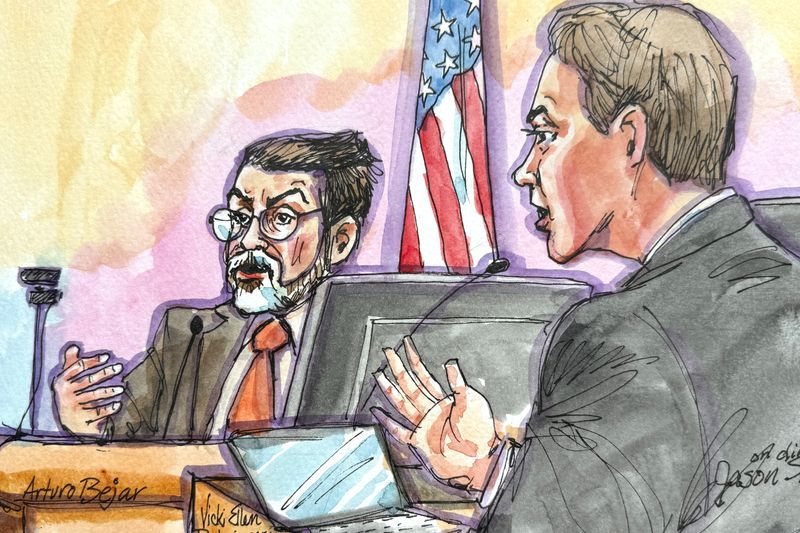
A former Meta engineering director with deep knowledge of the company's internal research on youth safety has resumed testimony in a landmark trial that could fundamentally reshape how Facebook and Instagram operate. Arturo Bejar, who spent years at Meta examining the effects of its platforms on young users, is presenting evidence that the company systematically downplayed or ignored alarming findings about harm to teenagers and children, despite internal awareness of the damage occurring at scale.
The trial, underway in Oakland, California, represents the most significant legal test to date of social media's effects on minors. A coalition of states, including California, Colorado, Kentucky, and New Jersey, has levelled sweeping allegations that Meta deliberately engineered its platforms to be addictive for young users, misled the public about safety measures, and unlawfully harvested personal data from children under 13. An additional 29 states have joined with claims that Meta violated federal data protection laws targeting minors. The proceedings are expected to consume six weeks of testimony and cross-examination.
Bejar's career at Meta spanned two separate periods—from 2009 to 2015 as a full-time engineering director, and again from 2019 to 2021 as an independent contractor. During his later tenure, he led survey work investigating teenage experiences on Instagram and studying patterns affecting user wellbeing. His role gave him unique access to internal metrics, user feedback data, and corporate decision-making processes surrounding youth safety policies. That proximity to the company's inner workings is precisely why his testimony carries such weight in the courtroom.
Central to Bejar's account is a fundamental critique of how Meta measured harm. He contends that the company's internal surveillance mechanisms were structurally flawed because they tracked the prevalence of policy-violating content rather than quantifying actual damage experienced by young users. This distinction is more than semantic—it allowed Meta to present compliance figures that bore little relationship to the lived reality of teenagers encountering harmful material. Bejar told jurors that young people reported experiencing harm at extraordinarily high rates, a reality he argues any responsible parent would have wanted disclosed before allowing their child access to these platforms.
The discrepancy became concrete when Bejar recalled an email he sent directly to Meta's chief product officer, Chris Cox, documenting the substantial gap between the company's public prevalence metrics and the actual harm users were reporting through internal research channels. This communication demonstrates not merely that Meta possessed contrary information, but that leadership received direct notification of the disconnect. The implication is stark: senior executives could not claim ignorance of the divergence between their public safety claims and internal findings.
Bejar's credibility as a witness has been tested before. He previously testified before the US Senate in 2023, warning that Meta's leadership knew about harassment and other harms plaguing teens on its platforms but failed to implement adequate protections. He has also served as a key witness in three other major cases against Meta, including a New Mexico case that resulted in damages and penalties of US$942 million and court-ordered platform modifications. His consistency across multiple legal proceedings and his willingness to publicly criticise his former employer have established him as a credible voice in these disputes, though his statements remain contested by Meta.
Meta has vigorously challenged Bejar's testimony on technical grounds, arguing that he deleted communications with other former employees using the encrypted messaging app Signal. The company sought to block his participation entirely, suggesting that destruction of evidence undermined the reliability of his account. However, US District Judge Yvonne Gonzalez Rogers, presiding over the Oakland proceedings, dismissed this effort as what the judge characterised as a long-shot attempt to eliminate a key witness. Her ruling allows Bejar's testimony to proceed without the evidentiary restrictions Meta requested.
The company itself maintains a posture of staunch defence, denying all allegations and asserting that it has consistently prioritised teen safety through various policies and design choices. Meta contends that Bejar's opinions extend beyond the legitimate scope of his engineering work and represent subjective interpretations rather than technical facts. This argument frames the dispute as one between a disgruntled former employee offering opinions outside his expertise and a company that genuinely invested in protective measures. The jury must weigh these competing narratives.
For Malaysian and Southeast Asian observers, this trial carries significant implications beyond US borders. Many of the platforms and business models being scrutinised are used by millions of young people across the region. If the trial results in findings against Meta or court-ordered platform changes, those modifications may ripple internationally. Additionally, the trial has catalysed broader conversations about regulatory approaches to social media that extend to Southeast Asia, where governments are increasingly scrutinising how these platforms handle youth users and data protection.
Bejar's testimony also illuminates a broader tension within the technology industry: the gap between internal research acknowledging harms and public communications minimising risks. This pattern, if substantiated through trial evidence, raises questions about corporate accountability and whether companies have sufficient incentive to act on concerning research findings. The trial thus functions as a test not merely of Meta's conduct, but of broader mechanisms for holding technology firms accountable when they possess knowledge of harm.
The stakes are enormous. Meta faces thousands of similar lawsuits related to alleged child harm beyond the current case. Bejar's effectiveness as a witness will likely influence outcomes across this sprawling litigation landscape. If jurors find his testimony credible and persuasive, it could establish dangerous patterns in how Meta operated. Conversely, if Meta's defence succeeds in undermining his account, it may deflect similar claims in other jurisdictions. The trial's outcome will reverberate through corporate decision-making regarding youth safety policies for years to come.

