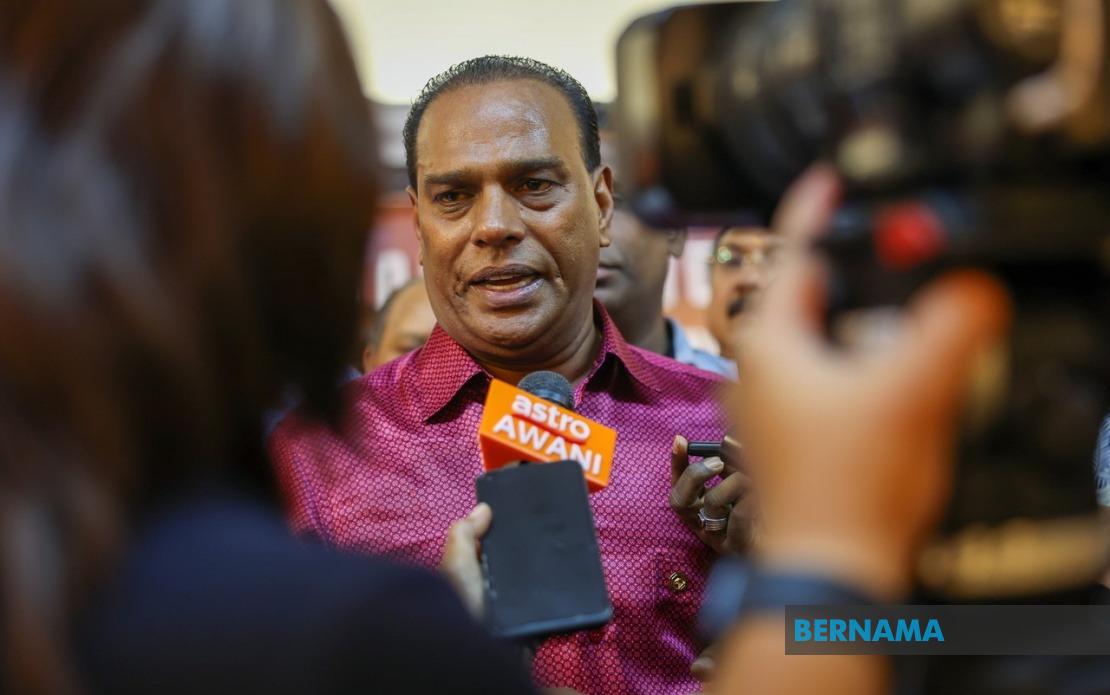
Datuk Seri M. Saravanan, the former Human Resources Minister and current Tapah MP, has publicly confirmed his intention to appear before the Sessions Court in Kuala Lumpur to face formal charges. The Saravanan, who holds the position of deputy president within the Malaysian Indian Congress, disclosed this development through a video statement distributed to media outlets, marking a significant moment in what has become a protracted legal matter involving employment practices during the health crisis period.
The charges against Saravanan are connected to assertions regarding the engagement of foreign workers at a time when Malaysia was navigating the complexities of pandemic-related restrictions and labour shortages. According to the Malaysian Anti-Corruption Commission announcement, the allegations fall under Section 16 of the MACC Act 2009, specifically relating to soliciting, receiving, providing or pledging bribes or gratification in any form. The legislative framework carries substantial penalties for those found culpable of violating its provisions, reflecting the seriousness with which authorities treat such matters.
A critical dimension of Saravanan's defence centres on the origins of the allegations themselves. He has highlighted that the accusations stemmed from a witness statement made by an individual who subsequently passed away two months prior to the current proceedings. This timing raises questions about the trajectory of the case and the standard procedures followed when primary witnesses become unavailable. Saravanan emphasised that the individual who lodged the initial complaint later filed a Statutory Declaration explicitly retracting the allegations, a legal mechanism intended to correct factual records and withdraw erroneous claims.
Denying any inappropriate connection to the matter, Saravanan stated plainly that he neither contacted nor maintained prior knowledge of the individual whose statement formed the basis of the charges. His explicit rejection of personal involvement suggests that he views the case as arising from mistaken identity or misattribution rather than any substantive wrongdoing on his part. The statement represents an attempt to establish distance between himself and the allegations while simultaneously signalling his willingness to pursue vindication through judicial channels.
The government official has signalled his intention to mount a vigorous defence within the courtroom, framing his appearance not as an admission of guilt but as an opportunity to address false accusations head-on. By volunteering to appear and face the charges directly, Saravanan has adopted a confrontational posture toward the allegations, suggesting confidence in his legal team's ability to dismantle the prosecution's case. His legal representatives have already indicated they will petition the court to accelerate proceedings, seeking to resolve the matter without unnecessary delays that might prolong uncertainty.
The timing of the charges against Saravanan carries political undertones, emerging during a period of shifting coalitions and ministerial reshuffles within Malaysia's government structure. Former ministers facing legal scrutiny have become an increasingly familiar occurrence in the nation's political landscape, with questions frequently raised about whether such prosecutions reflect genuine wrongdoing or form part of broader political manoeuvring. The MACC's involvement, while lending institutional credibility to the process, does not necessarily eliminate public speculation about the underlying motivations for pursuing particular cases.
The foreign worker employment controversy itself reflects enduring tensions within Malaysia's labour market during and after the pandemic crisis. Employers faced competing pressures to maintain operations while respecting movement restrictions, creating situations where hiring practices became complex and occasionally contentious. The government implemented various policies attempting to balance labour demands with pandemic safety protocols, yet these measures sometimes created grey areas where interpretation varied significantly among different stakeholders and enforcement agencies.
For the Malaysian Indian Congress, Saravanan's position as deputy president adds another layer of complexity to the proceedings. The party maintains significant influence within Malaysia's political ecosystem, particularly regarding Indian community interests and minority representation in cabinet positions. Any sustained legal troubles affecting senior MIC figures inevitably impact the party's internal dynamics and standing within broader political alliances, potentially affecting its bargaining power during coalition negotiations.
Saravanan's public acknowledgement of the upcoming court appearance demonstrates a strategy of transparency rather than evasion, positioning himself as someone prepared to engage with the legal system rather than circumvent it. This approach contrasts with other political figures who have faced similar allegations and chosen different tactics. By accepting the charges head-on while simultaneously attacking their credibility, Saravanan attempts to frame the narrative as one involving a vindicated individual standing against false accusations.
The proceedings will unfold against the backdrop of Malaysia's ongoing efforts to strengthen institutional checks against corruption and abuse of power. The MACC, as the primary anti-corruption body, faces continuous scrutiny regarding both the impartiality of its investigations and the consistency of its enforcement activities across the political spectrum. Cases involving high-profile figures inevitably attract disproportionate public attention, with observers carefully monitoring whether the judicial system applies standards equitably regardless of an individual's political standing or connections.
Looking forward, the resolution of Saravanan's case will likely establish important precedent regarding how Malaysian courts interpret evidence in corruption-adjacent matters, particularly when key witnesses have become unavailable and documentary evidence may be contested or incomplete. The decision to accelerate proceedings, should the court grant this request, would signal judicial recognition of the need for efficiency in handling politically sensitive matters while maintaining procedural fairness. Ultimately, the outcome will reflect not merely upon Saravanan's individual circumstances but also upon public confidence in Malaysia's institutional capacity to address allegations fairly and transparently.

