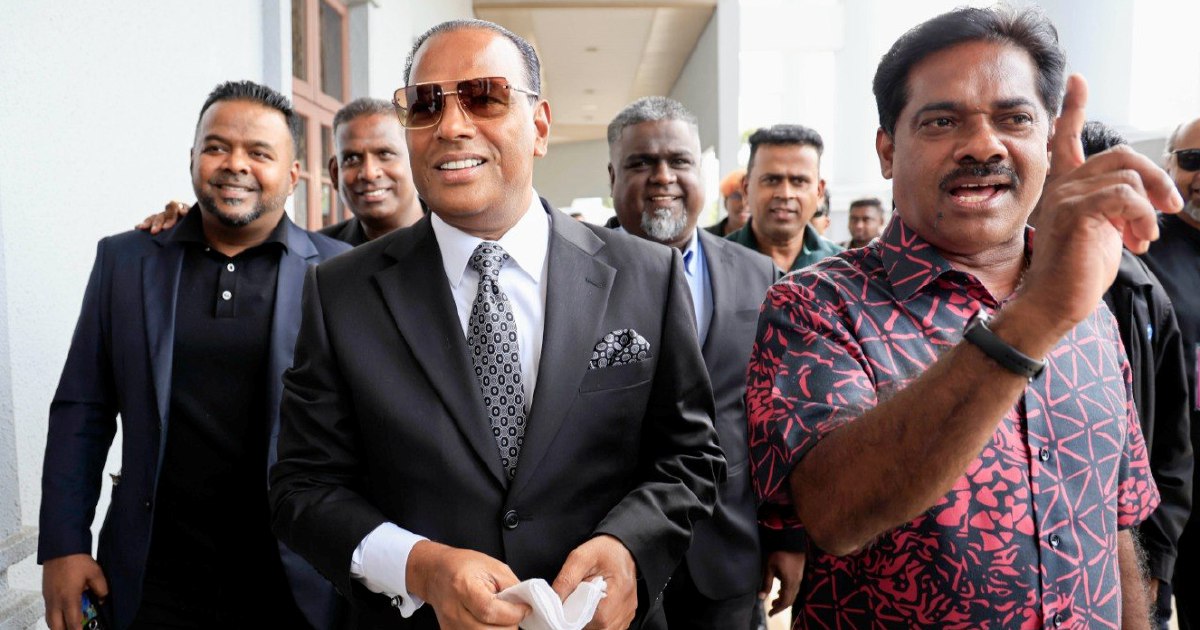
Datuk Seri M. Saravanan, the former Human Resources minister, has vigorously rejected corruption charges that allege he received RM1.097 million in bribes, dismissing the accusations as baseless and unsubstantiated. The politician's strong rebuttal comes as Malaysia's anti-corruption authorities maintain their investigation into his conduct during his tenure in government.
The charges against Saravanan represent part of a broader pattern of scrutiny affecting high-ranking Malaysian officials in recent years. The specifics of the alleged bribes relate to transactions that prosecutors claim occurred during his ministerial service, a period when his portfolio included responsibilities spanning human resources matters at the federal level. His categorical denial underscores the contested nature of the accusations, setting the stage for what promises to be a contentious legal proceeding.
Saravanan's characterization of the allegations as a "wild accusation" reflects a defensive posture common among public figures facing corruption-related charges in Malaysia. The phrase suggests he views the claims as lacking credible foundation and driven by motivations beyond legitimate law enforcement concerns. Such rhetoric often signals an intention to mount a vigorous courtroom defence and potentially appeal to public sympathy by portraying himself as a victim of unjust prosecution.
The Malaysian public and international observers have grown increasingly attentive to how the country's institutions handle corruption allegations involving senior government officials. These cases carry significant implications for Malaysia's governance reputation and its standing among regional peers in Southeast Asia. The outcomes of such prosecutions influence foreign investor confidence and shape perceptions of institutional independence and the rule of law.
The RM1.097 million figure represents a substantial sum, suggesting the alleged illicit transactions were neither trivial nor easily explicable as minor administrative irregularities. The precision of this amount indicates that prosecutors have conducted detailed financial investigations into Saravanan's accounts and transactions. Such forensic scrutiny typically precedes formal charging decisions, implying that authorities possessed what they deemed sufficient evidence before proceeding to prosecution.
Saravanan's tenure as Human Resources minister placed him at the intersection of several potentially lucrative areas including civil service management, labour policy, and employment-related regulations. Allegations of bribery in such positions often involve contractors, service providers, or individuals seeking favourable treatment in government contracts or regulatory decisions. The specifics of what the alleged RM1.097 million related to remain critical factual details that will likely dominate courtroom proceedings.
The political dimensions of corruption cases in Malaysia cannot be divorced from the broader electoral and factional contexts within which they emerge. Opposition parties typically scrutinize such charges for evidence of selective prosecution, while government supporters often argue that accountability mechanisms are functioning appropriately. Saravanan's response will likely become a touchstone in ongoing debates about the impartiality of Malaysian law enforcement and judicial institutions.
The timeline from allegation to formal charging typically involves months of investigation by the Malaysian Anti-Corruption Commission or police, suggesting that the decision to prosecute followed exhaustive preliminary work. Prosecutors must present evidence sufficient to establish prima facie cases before courts, a procedural requirement that applies regardless of political status. Saravanan's denial does not preclude the presentation of substantial documentary or testimonial evidence during trial proceedings.
For Malaysian observers, these developments underscore the country's ongoing confrontation with corruption, an issue that has featured prominently in national discourse and election campaigns for years. Public attitudes toward high-level prosecutions reflect broader concerns about governance quality and official accountability. The outcome of cases like Saravanan's potentially influences public confidence in institutions and shapes political behaviour among current and future officials.
The legal process ahead will test whether the evidence prosecutors have assembled meets the threshold required for conviction under Malaysian criminal law. Saravanan's characterization of charges as wild accusations positions him to argue that authorities have misinterpreted legitimate transactions or conflated lawful conduct with criminal behaviour. Defence strategies in such cases frequently challenge the inferential logic connecting financial transactions to corrupt intent.
The broader implications extend to how Malaysia manages the tension between pursuing accountability for senior officials and maintaining political stability. Neighbouring Southeast Asian nations observe how Malaysia's institutions navigate such cases, with consequences for regional perceptions of institutional strength. These prosecutions carry weight beyond individual circumstances, influencing assessments of how far-reaching anti-corruption efforts truly extend within the Malaysian system.

