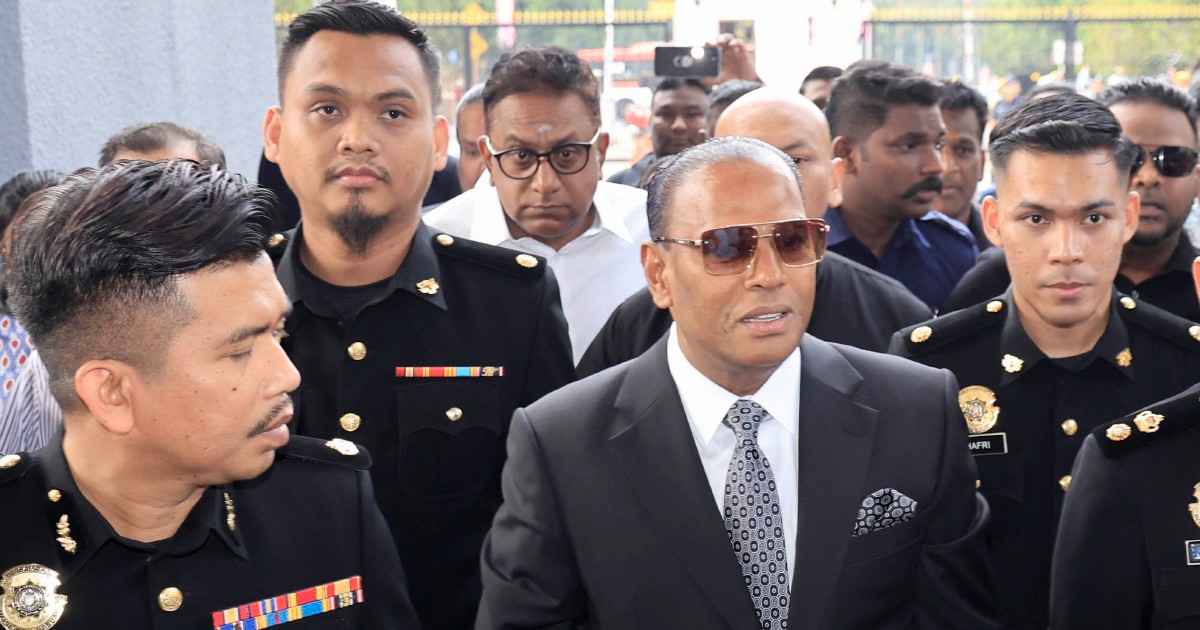
Datuk Seri M. Saravanan, who previously held the position of Human Resources Minister, made a statement to the public shortly after his court appearance to address three corruption charges levelled against him. The former minister expressed confidence in his integrity, stating that he maintains a clear conscience regarding the allegations he now faces. His comments mark the first significant public response since the legal proceedings commenced against him in connection with the corruption charges.
The appearance in court represents a significant moment for Saravanan, whose career in government was marked by his role overseeing Malaysia's human resources sector. The charges against him suggest potential misconduct during his tenure, though Saravanan has consistently maintained his position that his conduct was proper and lawful. His statement immediately following the court hearing indicates his intention to contest the allegations vigorously and to maintain public confidence in his character.
The case carries implications for Malaysia's ongoing efforts to address corruption at the ministerial level. The government has positioned itself as committed to pursuing corrupt officials regardless of their previous rank or position, signalling that no one is above the law. However, high-profile cases involving former cabinet members often generate intense public scrutiny and test the credibility of the justice system's impartiality. The outcome of Saravanan's case will therefore serve as a barometer for how seriously the authorities treat allegations against senior political figures.
Corruption charges against former ministers represent a persistent challenge in Malaysian governance. Such cases frequently dominate public discourse and can influence voter confidence in government institutions. The former HR Minister's insistence on his innocence, coupled with his decision to face the court proceedings, reflects a strategy of maintaining composure and dignity throughout the legal process. Many observers will be watching closely to see how the evidence presented in court supports or contradicts the charges.
The three specific charges against Saravanan remain central to understanding the nature of the allegations. While details surrounding each charge would have been presented to the court, the former minister's blanket assertion of innocence suggests he intends to contest each allegation individually. This approach is common in high-profile corruption cases, where maintaining a unified defence narrative can be strategically important for both legal and public relations purposes.
Saravanan's statement that he has nothing to be ashamed of carries weight in Malaysian political culture, where personal integrity and honour remain significant factors in how public figures are perceived. By making this declaration immediately after court, he appears intent on shaping the narrative around his case and preventing the charges from being automatically equated with guilt in the public mind. This timing is deliberate, as it allows him to control the immediate media message before extensive reporting begins.
The broader context of anti-corruption efforts in Malaysia frames this case within the government's stated commitment to rooting out misconduct. Various anti-corruption agencies have increased their focus on ministerial-level malfeasance in recent years, reflecting public demands for accountability. However, the prosecution of high-ranking former officials also invites scrutiny regarding the consistency and impartiality of such investigations, particularly in a politically charged environment.
For Malaysian readers and the broader Southeast Asian region, this case exemplifies the ongoing tension between political accountability and the challenges of proving corruption allegations in court. Corruption charges require substantial evidence and proof beyond reasonable doubt, a standard that ensures the accused's rights are protected while holding officials accountable. Saravanan's confidence in his position will be tested as the legal proceedings advance and evidence is presented and examined.
The former minister's composure in the face of serious charges suggests he believes the evidence will vindicate him. Whether this confidence is justified will become clear as the case progresses through the courts. For now, Saravanan's public statement serves to assert his position that his tenure as Human Resources Minister was conducted with integrity and in accordance with the law, regardless of what the current charges suggest.
This case also raises questions about the standards governing ministerial conduct in Malaysia and the mechanisms through which potential violations are investigated. The public will be keenly interested in understanding what specific actions or decisions gave rise to the corruption charges. Saravanan's willingness to face court proceedings directly, rather than attempt to avoid them, suggests a confidence that may be rooted in his belief that the facts will support his innocence.
As the legal process unfolds, the case will likely attract continued attention from civil society, media observers, and the general public. The outcome will have ramifications beyond Saravanan's personal circumstances, potentially affecting perceptions of how government institutions handle allegations of misconduct among former senior officials. His statement maintains the presumption of innocence while signalling his intention to defend himself thoroughly against each charge.

