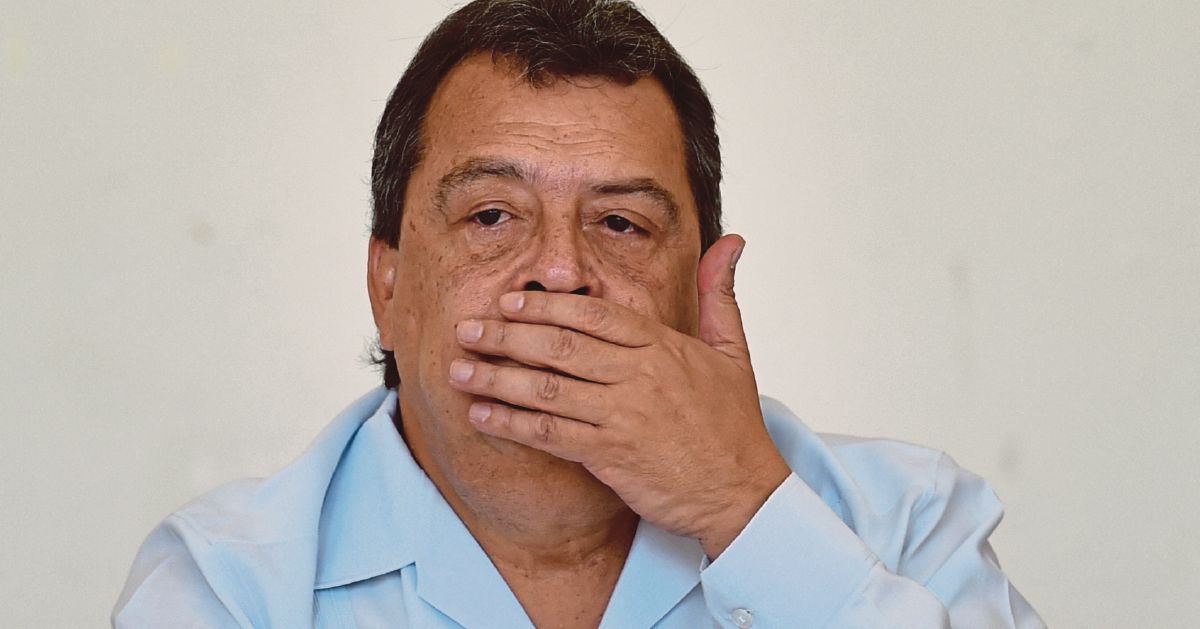
The former governor of Guerrero, a state in southern Mexico, has been taken into custody following accusations that he ordered the elimination of evidence that might have illuminated the fate of 43 students who vanished a decade ago, Mexican authorities announced Thursday. The arrest marks a significant development in a case that has shadowed Mexico's legal system and international standing since 2014, drawing renewed attention to questions of accountability and justice in the matter.
The 2014 disappearance of the 43 students from Ayotzinapa represents one of Mexico's most emblematic cases of mass abduction and institutional failure. The students, trainee teachers from a rural teacher-training college, were seized in the town of Iguala by what authorities have described as a coordinated operation involving local police and organised crime figures. The incident catalysed widespread protests, international scrutiny, and multiple official investigations, yet the ultimate fate of the students and the full scope of official complicity remained contested for years. The vanishing became shorthand for the broader dysfunction afflicting Mexico's security apparatus and judicial institutions during a particularly violent period.
The allegation now brought against the former governor centres on the alleged systematic suppression of investigative materials that could have advanced understanding of the kidnapping and its aftermath. Authorities contend that evidence destruction occurred at a governmental level, suggesting coordination among officials to obstruct inquiries into the incident. Such obstruction allegations are among the most grave that can be levelled against sitting or former public officials, implicating not just individual wrongdoing but systemic impediments to justice. The charge underscores how high-level political actors may have been implicated in hampering rather than facilitating the investigation.
The timing of this arrest reflects ongoing efforts by Mexican authorities to revisit and prosecute cases that had languished or been inadequately pursued under previous administrations. In recent years, Mexico's government has signalled determination to reexamine unsolved disappearances and atrocities, partly in response to domestic pressure from grieving families and partly owing to Mexico's international obligations regarding human rights compliance. These renewed investigative efforts have occasionally yielded arrests of former officials previously considered untouchable, reshaping accountability landscapes within Mexican governance.
For Malaysian and Southeast Asian observers, the Ayotzinapa case and developments around it carry lessons regarding institutional weakness and the intersection of organised crime with state structures. Disappearances attributed to coordinated state-criminal actor networks, inadequate investigation mechanisms, and obstruction of justice represent vulnerabilities that exist across multiple jurisdictions in the region. Malaysia itself has contended with high-profile missing persons cases, and understanding how larger neighbours confront challenges of evidence preservation, investigative integrity, and official accountability offers comparative perspective on strengthening regional justice systems.
The arrest of the former governor also illuminates the tension between political survival and accountability that characterises transitions in Mexican governance. Officials who held powerful positions during periods of systemic failure often benefit from institutional forgetting or explicit amnesties once they leave office. Breaking this pattern through prosecutorial action requires sustained political will and independent institutions capable of resisting pressure to shelve inconvenient investigations. Mexico's efforts, though inconsistent and often delayed, demonstrate that such reversals remain possible even years after incidents occur.
For the families of the 43 students, this development offers a measure of institutional responsiveness, though the gap between formal investigation and substantive resolution of the disappearances themselves persists. The students have not been recovered or accounted for, and the determination of their precise fate remains contested. Additional prosecutions and evidence recovery, should they materialise, would represent incremental progress toward the comprehensive accountability these families have demanded for a decade.
The international dimension of the Ayotzinapa case also warrants attention. Organisations dedicated to human rights monitoring and victims' advocacy have maintained scrutiny of Mexico's handling of the matter, and jurisdictions including the Inter-American Commission on Human Rights have assessed Mexico's performance against international standards. Actions such as the arrest announced Thursday demonstrate responsiveness to this external scrutiny, though critics contend that the pace and scope of accountability remain insufficient relative to the gravity of institutional failures the case exposed.
Moving forward, the prosecution of the former governor for evidence destruction will test Mexico's capacity to build legal cases against high-ranking officials for obstruction related to serious crimes. Success would strengthen precedent for holding powerful figures accountable for malfeasance in office. Conversely, acquittal or procedural setbacks would perpetuate perceptions of selective or ineffective accountability, further eroding public confidence in Mexican judicial institutions already diminished by decades of widespread impunity and institutional dysfunction.
The Guerrero arrest also occurs within Mexico's broader reckoning with the structural weaknesses that enabled the Ayotzinapa disappearance in the first place. Coordination between local police and criminal organisations, inadequate vetting or oversight of security personnel, and the fusion of narcotrafficking networks with municipal governance structures reflected pathologies extending across multiple Mexican states. Addressing these systemic issues requires reform beyond individual prosecutions, demanding institutional restructuring, professional standards in security forces, and the dismantling of criminal-state nexuses that permitted such abductions to occur. The arrest represents prosecution of consequences rather than prevention of underlying causes, a distinction that shapes evaluation of whether Mexico's justice system is genuinely addressing or merely performing accountability.

