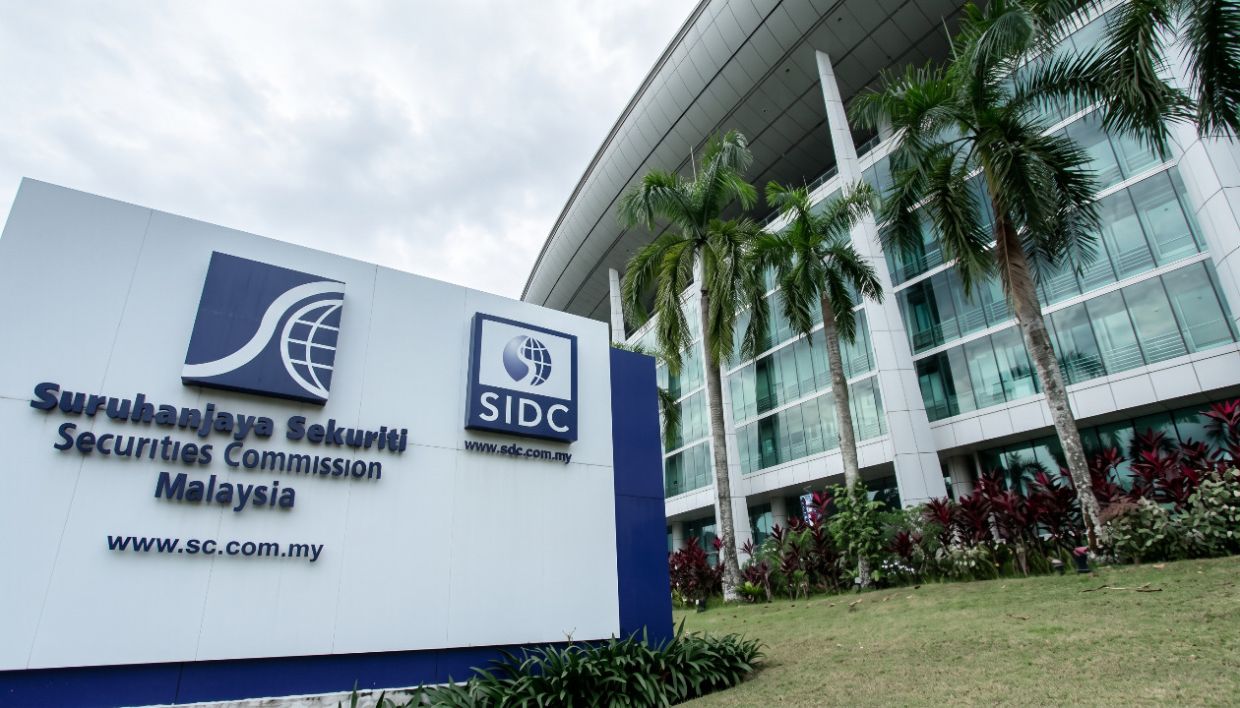
The Kuala Lumpur Sessions Court has handed down a five-year prison sentence to Muhamad Fadzli Jamaludin, former director of Kyaputen Sdn Bhd, following his conviction on multiple counts involving the unlicensed operation of fund management services and money laundering activities. Sessions Court judge Puan Hamidah Mohamed Deril delivered the conviction after finding that the accused had failed to establish reasonable doubt against the prosecution's case, despite mounting a defence that included his own testimony.
The Securities Commission Malaysia revealed that Fadzli faced a total of 12 charges across two separate but jointly tried cases. Initial charges filed on November 9, 2023, comprised three counts under section 58(1) of the Capital Markets and Services Act 2007, which specifically prohibits individuals from representing themselves as conducting fund management operations without proper regulatory authorisation. A second tranche of nine charges followed on November 29, 2023, under section 4(1)(b) of the Anti-Money Laundering, Terrorism Financing and Proceeds of Unlawful Activities 2001, targeting the laundering of proceeds derived from his unlicensed activities.
The court heard testimony from 23 prosecution witnesses throughout the trial, including six individuals who had invested funds with Fadzli's operation and suffered direct financial losses. These victims collectively lost RM1.263 million across the period when the offences occurred, spanning from August 2018 to April 2020, with criminal activity taking place primarily in Kuala Lumpur and Melaka. The evidence presented during the prosecution's case painted a picture of systematic deception, with Fadzli positioning himself as a legitimate fund manager capable of generating investment returns, when in reality he lacked the mandatory licensing and regulatory oversight required to conduct such business.
When the defence phase commenced, Fadzli chose to testify personally rather than call additional witnesses to support his position. However, his testimony proved insufficient to undermine the prosecution's evidence, with the judge determining that he had failed to introduce reasonable doubt into the case presented by authorities. This decision underscores the strength of evidence gathered by investigators and the testimony of the affected victims, who provided first-hand accounts of their dealings with the accused and the circumstances surrounding their financial losses.
The sentencing reflects the serious nature of the offences committed. Under the Capital Markets and Services Act 2007, individuals convicted of holding themselves out as fund managers without a licence face potential penalties of up to RM10 million in fines, imprisonment not exceeding 10 years, or both. Money laundering convictions carry even more severe consequences, with maximum prison terms extending to 15 years and fines calculated at either five times the value of unlawfully obtained proceeds or RM5 million, whichever proves the larger sum. The judge ordered that Fadzli's five-year sentence apply concurrently across all 12 charges, meaning he will serve the five-year term rather than facing stacked consecutive sentences.
This case highlights the continued vulnerability of Malaysian retail investors to financial fraud schemes that exploit the investment appetite of ordinary citizens seeking returns. Unlicensed fund managers operate outside the regulatory framework established precisely to protect investors, meaning victims have no recourse to compensation schemes, no oversight of how their money is managed, and no assurance that promised returns will materialise. The sophistication of such operations often belies their illegality, with perpetrators using professional-sounding names, office space, and marketing materials to present a veneer of legitimacy.
The Securities Commission has used this conviction as an opportunity to reinforce critical messaging to the investing public. The regulator emphasised that fund management remains a tightly controlled activity requiring explicit authorisation from the SC, and that any individual or entity claiming to manage investments must be able to demonstrate active licensing status. Investors are advised to verify the credentials of anyone offering investment services through the SC's official registers and databases before committing funds, a precaution that would have protected the victims in this case from substantial losses.
The enforcement action demonstrates ongoing commitment by Malaysian authorities to combat financial crime and protect retail investors. The Securities Commission, working in conjunction with law enforcement agencies, continues to investigate suspected unlicensed fund management operations and money laundering activities that threaten the integrity of the financial system and public confidence in regulated markets. These prosecutions serve as both punishment for perpetrators and deterrent messaging to others considering similar schemes.
For Malaysian investors and the broader financial community, this case reinforces fundamental principles: legitimate investment opportunities come with regulatory credentials that can be independently verified, suspicious investment schemes promising unrealistic returns should trigger immediate scepticism, and financial dealings should only occur with entities whose operations have received formal approval from the Securities Commission. The five-year sentence handed to Fadzli represents a significant judicial acknowledgement of the harm caused by unlicensed financial services and the gravity with which Malaysian courts treat breaches of capital market laws. As enforcement continues, such convictions contribute to a protective ecosystem that advantages those investors who exercise due diligence before placing their trust and capital in anyone's hands.

