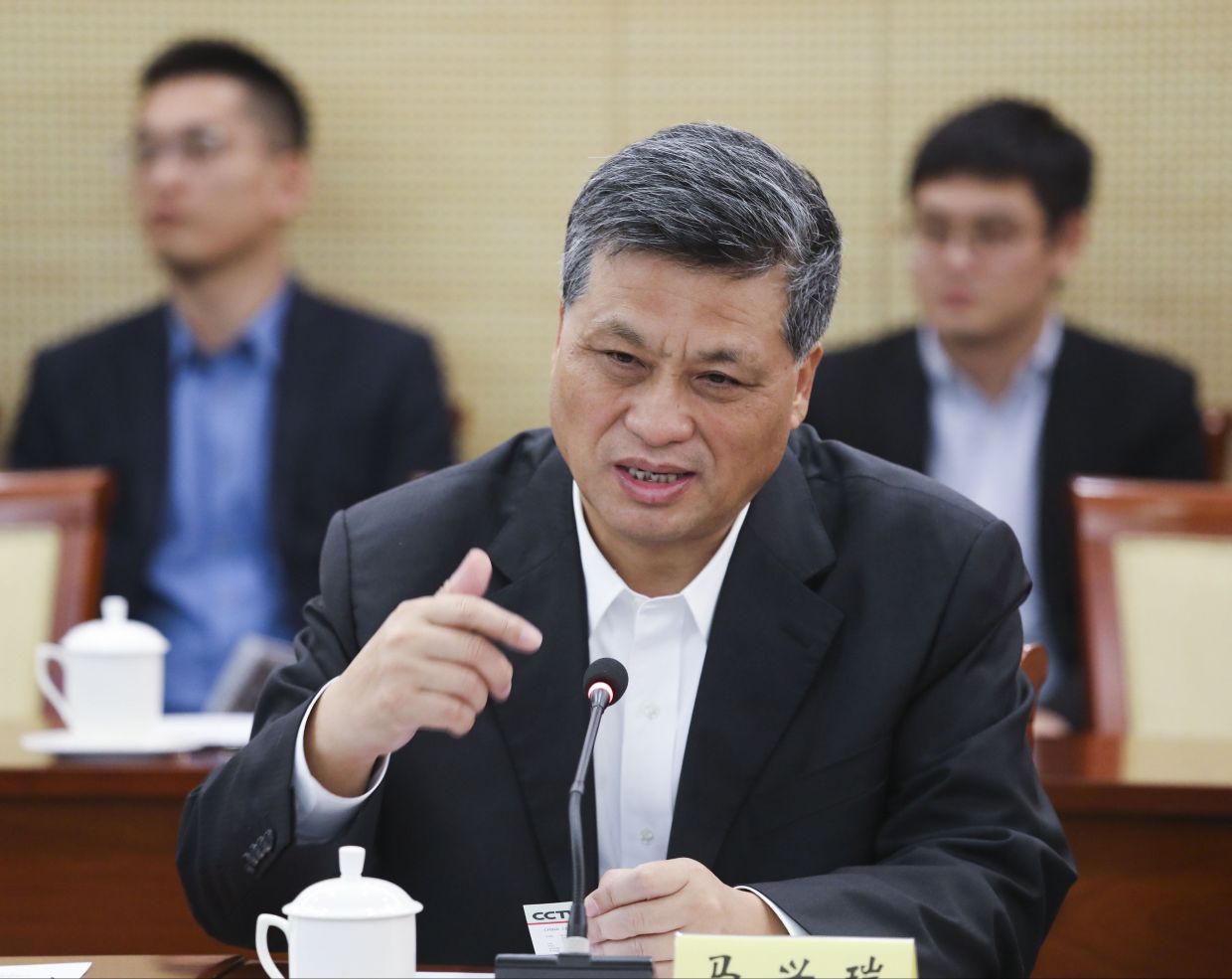
China's Communist Party has formally linked the family of Ma Xingrui, a 67-year-old former Politburo member who once oversaw the country's advanced rocket development programme, to what party investigators describe as "rampant corruption". The Central Commission for Discipline Inspection announced the findings on June 30 following a review by the Politburo, signalling how seriously the party's leadership views the transgressions and reinforcing Xi Jinping's continued focus on internal discipline within elite ranks.
Ma's case represents an extraordinarily rare development in contemporary Chinese politics. He becomes the third member of the Politburo—the party's 25-member governing body—to face investigation since the current leadership term began in 2022, a frequency not witnessed in decades. The regularity of such high-level probes underscores either genuine institutional problems or an intensified factional struggle within the party's upper echelons, with implications for political stability and decision-making at the apex of Chinese governance.
The disciplinary commission's report paints a portrait of systematic abuse of office. Ma allegedly accepted improper gifts and cash payments, manipulated property markets to secure discounted housing for relatives, and engaged in exchanges of sexual favours tied to his official position. More troublingly for party leadership, the investigation concluded that Ma deliberately tolerated and enabled his family members to exploit his influence for personal enrichment, creating what investigators characterise as a culture of corruption within his household that extended well beyond his own misconduct.
Ma's alleged misuse of power extended into the machinery of government itself. According to the commission, he weaponised his authority to reward third parties with business contracts, project awards, and career advancement in exchange for financial benefit. Whether acting directly or through intermediaries and family connections, he systematically converted the public trust vested in his office into a mechanism for private gain. The investigation also suggests that Ma failed in basic supervisory duties, either wilfully overlooking or tacitly endorsing serious breaches of discipline and law by subordinates under his command.
Particularly damning is the finding that Ma did not openly confess to his wrongdoing when initially questioned by the discipline commission. This obstruction compounded the severity of his case. The report emphasises that his misconduct persisted even after Xi Jinping launched his landmark anti-corruption drive at the 18th party congress, when strict new conduct standards were prominently announced. Such persistence suggests either brazen defiance or a belief that his seniority would shield him from consequences—a miscalculation with profound career implications.
Ma's trajectory through the Chinese political system illuminates the pathways that lead senior officials toward such vulnerability. After spending years in the aerospace sector, where he rose to lead China's primary space contractor and oversee the new-generation carrier rocket programme, he transitioned into territorial administration. He assumed the position of deputy party secretary in Guangdong in 2013, eventually becoming Shenzhen's party chief and then Xinjiang's party secretary in 2021, ascending to Politburo membership the following year at the 20th party congress. This progression from technical expertise to regional governance to national-level standing exemplifies how Chinese technocrats advance through the system.
His assignment to Xinjiang placed Ma in one of China's most sensitive and strategically important regions, where governance intersects with ethnic policy, counter-terrorism operations, and major Belt and Road infrastructure projects. By succeeding Chen Quanguo, who himself faced earlier controversies, Ma inherited a politically fraught portfolio. The region's complexity may have created opportunities for the kinds of illicit arrangements he stands accused of, or it may have exposed him to heightened scrutiny from central authorities determined to prevent regional administrators from establishing independent power bases.
The scope of investigations targeting Xinjiang officials extends well beyond Ma. The discipline commission has simultaneously pursued Chen Weijun, a former senior Xinjiang administrator whose case became public in December, and Li Xu, formerly deputy commander of the Xinjiang Production and Construction Corps, investigated in January. This clustering of cases suggests either a systematic problem with governance standards in the region or a deliberate campaign by central leadership to reassert control over local power structures. For Malaysian observers and Southeast Asian stakeholders engaged with Chinese regional initiatives, such instability among Xinjiang's leadership carries implications for project continuity and administrative reliability.
Within the aerospace and defence sectors where Ma spent formative years, the anti-corruption net has ensnared multiple former subordinates in recent years, indicating that institutional corruption may have been endemic during his tenure or that authorities have systematically pursued his former associates as part of a broader campaign. This pattern raises questions about accountability chains and whether Ma's current prosecution represents an endpoint or merely one visible node in a larger network of compromised relationships and transactions.
With Ma's removal, the Politburo has contracted to 21 members following the earlier expulsion of He Weidong, a former vice-chairman of the Central Military Commission, in October. This attrition at the highest levels of party leadership occurs against the backdrop of broader personnel changes and reflects the competitive nature of succession politics even within Xi's consolidated power structure. The visible purging of senior officials serves multiple functions: demonstrating anti-corruption commitment to the public, removing potential rivals or their associates, and reasserting centralised control over provincial and sectoral power bases.
The severity of charges and the thoroughness of the investigation suggest that Ma faces serious consequences including confiscation of all ill-gotten assets and referral to the judicial system for criminal trial. Such outcomes carry implications beyond Ma himself, affecting family members implicated in corruption and potentially reverberating through networks of officials, businesspeople, and intermediaries who may have benefited from his patronage or facilitated his corrupt transactions. For foreign investors and regional partners dealing with Chinese counterparts, the unpredictability of such investigations introduces additional risk into contractual relationships and administrative arrangements.
Ma's case exemplifies a broader tension within the Chinese political system between meritocratic advancement of talented technical specialists into leadership roles and the vulnerability such outsiders face when lacking deep factional protection. His aerospace background and administrative competence evidently could not shield him from accountability once authorities determined to pursue his alleged misconduct. This dynamic has shaped Chinese politics throughout the reform era and continues to influence which officials ultimately prosper or fall from favour.

