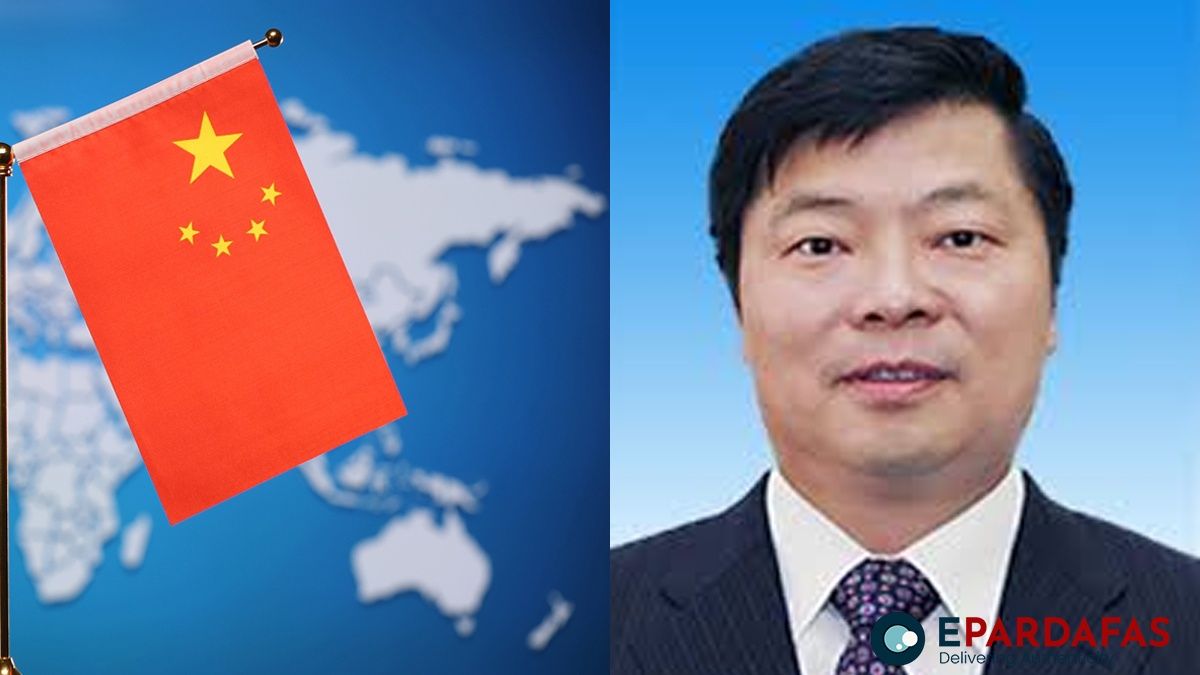
Beijing's central anti-corruption authority announced on Sunday that Ouyang Weimin, the former president of the China Development Bank, is under formal investigation for alleged serious violations of party discipline and the law. The Central Commission for Discipline Inspection made the terse announcement alongside the National Commission of Supervision, providing few details about the nature of the allegations or the scope of the inquiry. The sparse disclosure is typical of how Chinese authorities initially handle high-profile corruption cases, with fuller information usually emerging only after investigations progress.
Ouyang's career in finance and governance spans nearly four decades. He joined the Chinese Communist Party in 1986 and spent formative years working at the People's Bank of China, where he developed expertise in monetary policy and financial regulation. This background in central banking positioned him for increasingly senior roles in state financial institutions and regional administration. His rise through the ranks of China's financial bureaucracy reflected both technical competence and political approval from senior leadership.
Before heading the China Development Bank, Ouyang served as vice-governor of Guangdong, one of China's most economically significant provinces and a crucial engine of the nation's growth. Guangdong's proximity to Hong Kong and its status as a manufacturing and export hub made it a prestigious posting, and his tenure there exposed him to complex economic policy challenges and high-level political networks. In 2019, he was appointed president and deputy party secretary of the China Development Bank, positions that placed him at the apex of China's state development finance system.
The China Development Bank itself occupies a central role in Beijing's strategic economic planning. Established in 1994 as a state-owned development finance institution, it operates under direct oversight by the State Council and functions as a primary instrument for channelling capital into sectors deemed critical for national development. The bank focuses on supporting economic growth in strategic industries and economically underdeveloped regions, making it essential to Beijing's long-term infrastructure and industrialisation goals. As president, Ouyang would have wielded significant influence over the allocation of billions of dollars in development financing.
Ouyang stepped down from his position as bank president in 2023, though the circumstances surrounding his departure were not publicly detailed at the time. His exit from the top role may have been routine rotation or could have signalled the beginning of scrutiny by authorities, a pattern sometimes seen in Chinese politics where senior officials are quietly moved before formal investigations commence. The timing between his 2023 departure and the July announcement raises questions about how long authorities had been examining his conduct.
President Xi Jinping's administration has made anti-corruption efforts a defining feature of governance since taking power in 2012. The campaign has targeted thousands of officials across all levels of government and state enterprises, as well as military officers and senior military generals. While Beijing frames these investigations as necessary measures to restore party discipline and eliminate graft, international observers and critics have noted that the anti-corruption drive has frequently intersected with Xi's consolidation of power, removing potential political rivals and strengthening his control over the party apparatus.
The investigation into Ouyang fits within this broader pattern of high-profile officials facing scrutiny. Financial sector officials have been particularly vulnerable to these campaigns, with numerous banking and state-owned enterprise executives investigated in recent years. The development finance sector, given its role in deploying state resources according to party priorities, has drawn particular attention from anti-corruption authorities seeking to ensure compliance with central directives.
For Malaysia and Southeast Asia, developments within China's state financial institutions carry strategic significance. The China Development Bank is a major source of financing for infrastructure projects across the region, including initiatives under the Belt and Road Initiative. Personnel changes and corruption investigations at such institutions can affect the continuity and terms of lending to Southeast Asian governments and businesses. Understanding shifts in Beijing's financial leadership provides insight into potential policy directions for development financing and infrastructure cooperation.
The investigation also reflects broader concerns within China's leadership about financial discipline and accountability in state enterprises. As Beijing seeks to maintain economic stability amid slower growth rates and rising debt levels, tightening oversight of major financial institutions signals an effort to prevent misallocation of resources and ensure that state capital serves strategic national objectives rather than enriching individual officials or their networks.
Ouyang's case will likely proceed through China's investigation and legal system with limited public disclosure. If convicted, he could face removal from the Communist Party, loss of government positions, and criminal penalties. The speed and severity of proceedings would partly depend on factors ranging from the evidence against him to his willingness to cooperate with investigators and the political calculations of senior leadership. His outcome will send signals about expectations for accountability among China's financial elite.

