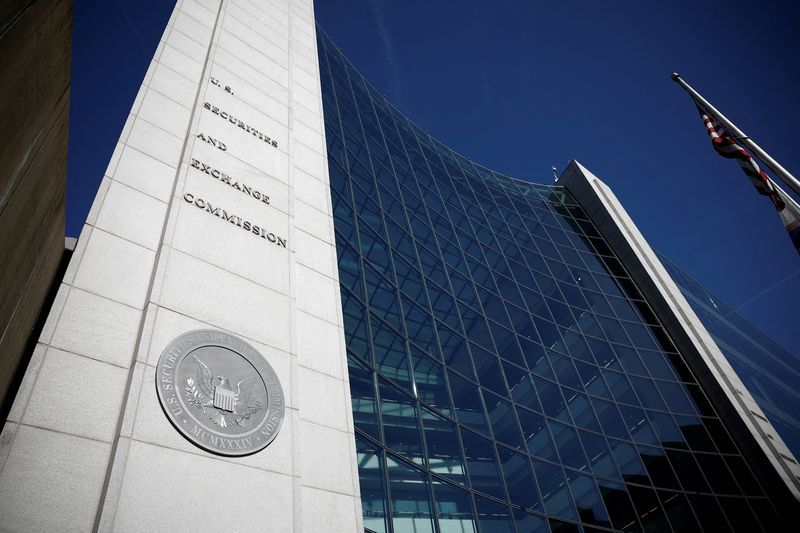
The U.S. Securities and Exchange Commission has moved against a former Bank of America investment banker in what authorities describe as a sophisticated insider trading scheme involving a pending multi-billion dollar energy sector merger. Jason Satsky, who held the position of co-head of Americas power and renewable energy banking at the institution, allegedly provided confidential information about the forthcoming acquisition of South Jersey Industries to a personal acquaintance, enabling the friend to realise substantial illegal profits from the transaction.
According to the regulatory action filed on Friday, Satsky disclosed non-public details regarding the potential takeover to Gavin Wolfe, an investment manager with whom he had maintained a personal friendship spanning more than two decades. Wolfe, who operates Evergreen Capital, subsequently deployed this information to accumulate more than 2.2 million shares of the South Jersey Industries parent company, representing an investment of approximately $53 million. When the company announced an $8.1 billion buyout on February 24, 2022, Wolfe's position generated a 36 per cent return, netting him around $18.5 million in unlawful gains.
The SEC's complaint paints a picture of a friendship leveraged for financial advantage at critical moments. The regulator alleges that Satsky and Wolfe engaged in multiple discussions about a possible acquisition, conversations that reportedly continued even during social occasions. Particularly notable was an outing the two men attended with their respective spouses to a college basketball game between Duke and Kentucky at Madison Square Garden, where Satsky had secured luxury box seating through his employer. The accessibility of such exclusive venues and the informality of social settings apparently provided cover for exchanges about material, non-public commercial information.
Bank of America's role in this matter appears peripheral to the enforcement action. The financial institution, which was advising on the South Jersey Industries transaction, faces no accusations of misconduct. The bank confirmed that it terminated Satsky's employment in March 2025, though the precise timing and circumstances surrounding his departure remain undisclosed. The institution's cooperation with regulators and swift personnel action suggest the company moved to distance itself from the alleged misconduct once the situation became apparent.
Both Satsky and Wolfe have mounted vigorous denials of the allegations. Robert Anello, representing the 59-year-old Satsky, issued a statement asserting his client's complete innocence and maintaining that the evidence will vindicate him. Anello categorically rejected the charge, declaring that Satsky did not furnish Wolfe or any other party with material non-public information regarding South Jersey Industries. The defence strategy appears centred on the notion that Satsky operated with propriety throughout the period in question.
Wolfe's legal team mounted a similarly robust counterattack, with attorney Reed Brodsky characterising the allegations as baseless and promising an aggressive defence. Brodsky contended that his client's purchase of South Jersey shares resulted from independent investment analysis rather than information gleaned from Satsky. The defence team further alleged that the SEC overlooked sworn testimony and documentary evidence supporting Wolfe's position that he had developed his own investment thesis regarding the company's prospects. This framing suggests the forthcoming litigation will centre on the origins and nature of Wolfe's investment decision-making process.
The professional history shared by Satsky and Wolfe spans more than a decade at Bank of America and underscores the insular nature of certain financial sectors. Both men had previously worked in power and renewable energy banking, with Wolfe having held a senior position at Credit Suisse before the two joined Bank of America in 2012. Their shared industry experience, sustained personal relationship, and overlapping professional networks created opportunities for information exchange that regulators now allege were improperly exploited. Wolfe's subsequent establishment of Evergreen Capital, a firm managing family assets, provided a vehicle through which to deploy any advantage derived from inside knowledge.
The SEC's enforcement action seeks comprehensive remedies beyond financial restitution. Regulators aim to recover the ill-gotten gains Wolfe accumulated through the scheme and impose civil penalties against both defendants. Additionally, the commission seeks to bar Satsky and Wolfe from serving as officers or directors of public companies, a sanction that would effectively exclude them from senior corporate governance roles. These measures reflect the seriousness with which regulators view breaches of fiduciary duty and violations of securities laws.
For Malaysian investors and financial professionals, this case illuminates the ongoing vigilance with which American regulators police insider trading across all market sectors. The energy transition and renewable energy investments have attracted substantial capital flows globally, making these sectors particularly vulnerable to information-based misconduct. The reliance on circumstantial evidence, timeline analysis, and transaction records to establish insider trading schemes demonstrates that regulators can piece together complex cases even when direct evidence of information transfer remains contested. Financial professionals operating across borders or managing cross-jurisdictional investments must remain cognisant that American enforcement authorities actively investigate securities violations involving substantial sums, and the prosecution of such cases can extend years beyond the initial transactions.

