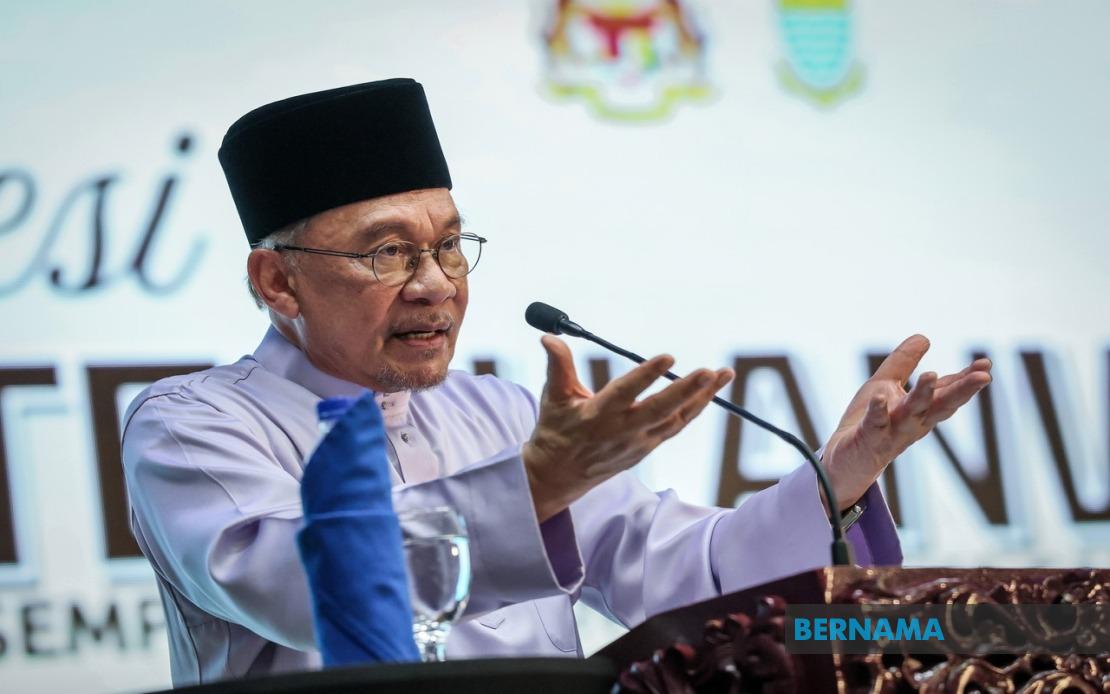
Prime Minister Datuk Seri Anwar Ibrahim announced on Wednesday that the government will introduce a financial allowance for Form Six students as part of Budget 2027, which Parliament will review in October. Speaking at the Ambang Merdeka Sahabat MADANI gathering at the Tuanku Bainun Teacher Education Institute in Bukit Mertajam, Anwar highlighted that this initiative represents a significant expansion of the nation's student support infrastructure across all educational levels.
The decision emerged from consultations between the government and pre-university students, during which Anwar identified a critical inconsistency in the existing allowance framework. Currently, Malaysia provides financial assistance to students progressing from primary school through Form Five, with additional support extended to university-level learners. However, Form Six students—who occupy a crucial transitional stage between secondary and tertiary education—have been overlooked in this support system, creating a gap that the new budget aims to rectify.
As Finance Minister alongside his Prime Ministerial duties, Anwar acknowledged that while the commitment to introduce the allowance is firm, the precise amount allocated to the scheme remains undetermined. He explained that final budget figures will depend on the government's fiscal position when the budget is formally prepared. This cautious approach reflects the delicate balance between the Cabinet's ambitions for enhanced social spending and the realities of managing Malaysia's public finances amid competing priorities.
Education Minister Datuk Seri Fadhlina Sidek, who accompanied Anwar at the event, provided additional context for the announcement. She disclosed that the allowance proposal formed one of twelve resolutions passed at the MADANI Pre-University Congress, held in Klang earlier that morning. The congress represented a formal consultation mechanism through which student representatives submitted grievances and recommendations to the education establishment, demonstrating the government's willingness to incorporate youth voices into policy formulation.
Fadhlina committed the Education Ministry to studying all twelve resolutions with the objective of implementation, signalling that the allowance is part of a broader agenda to address pre-university sector concerns. The ministry's acceptance of student-led proposals reflects a shift toward consultative governance in education policy, where stakeholder input shapes budgetary decisions rather than exclusively emanating from bureaucratic channels.
For Malaysian families, particularly those with limited financial resources, this allowance carries material significance. Form Six represents an additional two years of academic commitment beyond the compulsory secondary phase, and many students face economic pressure to enter the workforce rather than continue studies. Financial assistance at this juncture can meaningfully influence educational trajectories and university aspirations, particularly among lower-income households. The allowance therefore functions not merely as welfare but as a strategic investment in human capital accumulation.
The timing of this announcement also reflects evolving political calculations regarding education as an electoral issue. With Budget 2027 to be tabled during a period when the government will be consolidating its economic narrative ahead of potential general elections, education spending commitments serve both programmatic and political functions. By responding to student concerns articulated through structured forums like the MADANI congress, the government positions itself as responsive to youth demands whilst demonstrating fiscal prudence through phased implementation.
Form Six education in Malaysia's context occupies particular strategic importance, as it serves both A-Level and STPM pathways leading to university admission. The allowance will likely apply to students pursuing either qualification, given the broad language employed in Anwar's statement. This universality suggests the scheme aims to democratise access to pre-university education by reducing financial barriers, particularly for students whose families cannot subsidise their educational continuation beyond Form Five.
Regional comparisons underscore the distinctiveness of Malaysia's student support architecture. Several Southeast Asian neighbours operate more comprehensive allowance systems spanning entire secondary cycles, whilst others target primarily disadvantaged demographics. Malaysia's approach has historically concentrated support at primary and tertiary levels, reflecting post-independence policy prioritising foundational literacy and university-level credential acquisition. The Form Six inclusion therefore represents incremental expansion rather than systemic overhaul.
The implementation mechanics remain unclear pending October's budget presentation. Questions regarding eligibility criteria—whether all Form Six students qualify or whether means-testing applies—remain unresolved. Similarly, whether the allowance differentiates between public and private pre-university institutions remains undetermined. These technical specifications will substantially influence the scheme's reach and budgetary requirements, making the October announcement's details as consequential as the headline commitment itself.
For educators and school administrators, the allowance announcement presents both opportunities and administrative challenges. Enhanced student financial security typically correlates with improved attendance and academic performance, potentially benefiting institutional outcomes. However, schools may face responsibility for verifying eligibility or disbursing funds, requiring coordination with federal education authorities to establish streamlined processes.

