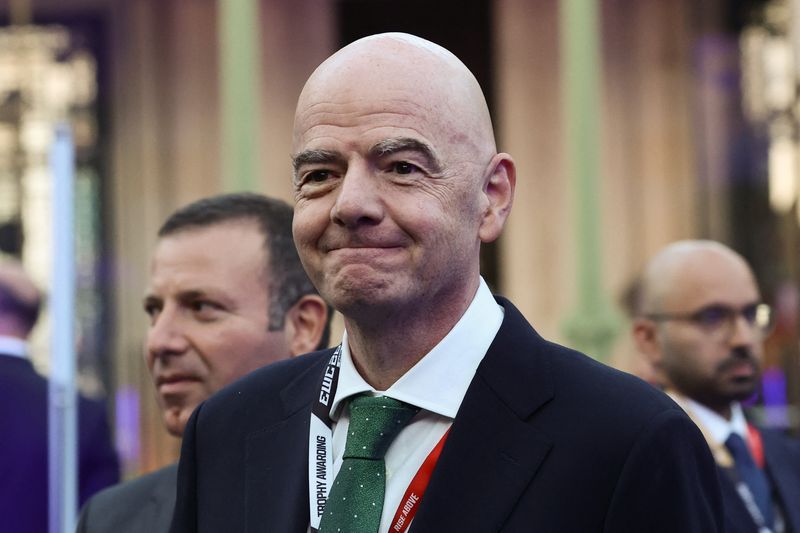
Football's most celebrated figures have united in an unprecedented call for transformation at FIFA's helm, with multiple World Cup champions and international icons declaring that the sport's governing body has lost its way under the stewardship of President Gianni Infantino. The intervention by this distinguished group of athletes represents a rare moment when the game's biggest names have collectively stepped into the political arena surrounding global football administration, signalling the depth of dissatisfaction with current leadership.
Infantino has faced escalating pressure following his controversial shelving of a proposal to establish a commercial entity controlling FIFA tournament rights, which would have handed a 20 percent stake to private investors. The proposal's abandonment came only after substantial backlash from confederations and stakeholders worldwide, yet the FIFA president has shown little indication of stepping down from the position he has occupied since 2016. Rather than retreating from his role, Infantino has weathered mounting resistance, including formal opposition from UEFA, the AFC, and CONCACAF—three of football's most influential continental bodies.
Among the former players voicing concern are Emmanuel Petit, Bixente Lizarazu, and Robert Pires, all integral members of France's triumphant 1998 World Cup squad. Their participation carries particular symbolic weight, as they represent a generation that achieved football's highest honour. Joining them are American women's football icon Briana Scurry and England international Lucy Bronze, underscoring how the criticism spans both men's and women's professional football, as well as multiple generations of players. The group further encompasses Claudio Pizarro of Peru, Juan Sebastian Veron from Argentina, Emmanuel Adebayor, the former Togo captain, and globally recognised figures Didier Drogba and David James.
The athletes articulated their position with striking directness, asserting that FIFA's current leadership has become disconnected from football's fundamental principles. In their statement, they contended that institutional power has clouded decision-making, preventing leadership from distinguishing between advancing FIFA's organisational interests and serving the sport itself—a distinction they view as foundational to legitimate governance. This observation resonates particularly in Southeast Asia, where football remains a major cultural force and where developing nations have historically held limited influence within FIFA's hierarchical structures.
The players' intervention carries implications for how smaller confederations, including those in Asia and Africa, might mobilise against FIFA's leadership. If legendary figures publicly endorse structural reform, pressure may mount on national associations to take bolder stances in forthcoming votes and discussions. The AFC, which represents Asian football, represents over 46 member nations and commands significant collective voting power—yet historically has exercised less institutional influence than UEFA. A fundamental restructuring toward greater player and fan participation could shift the balance of power within FIFA's governance framework.
Critically, the players demanded that future football governance incorporate direct representation for both athletes and supporters, positioning these constituencies as essential stakeholders deserving meaningful input rather than token consultation. This proposal fundamentally challenges FIFA's existing hierarchical model, where national associations and confederations hold primary authority. Were such changes implemented, they could reshape how decisions affecting league calendars, competition formats, and commercial arrangements are made—matters that directly impact Southeast Asian clubs and domestic leagues competing for calendar space and player availability.
Infantino remains scheduled for re-election in 2025, yet discussions are underway regarding the potential advancement of a no-confidence vote before that official ballot occurs. Should such a vote materialise, the collective voice of football's most respected former players could significantly influence how national associations cast their votes. In the context of Asian football, where many nations maintain complex relationships with European powers and where some confederations have historically aligned with FIFA leadership, this public criticism from global icons may embolden previously quiet voices to advocate for genuine governance reform.
The players' statement emphasised that stakeholders must actively participate in reshaping football's trajectory, acknowledging that reformers exist within FIFA's institutional structure who seek to rebuild public trust. However, they argued that incremental adjustments prove insufficient—that transformative structural change represents the only adequate response to current challenges. This distinction between reform and revolution carries weight, as it suggests the players view the problems as systemic rather than personalised around individual leadership figures.
From a regional perspective, the intervention of these footballing luminaries may catalyse broader conversations about how Southeast Asian nations can exercise greater agency within international football governance. The AFC's 46 member nations collectively represent substantial voting strength, yet historically have wielded less influence than their numbers might suggest. Should a governance model evolve toward greater direct player and fan participation, Asian confederations might discover pathways to amplify their collective interests regarding competition scheduling, tournament formats, and commercial benefit-sharing—areas where Asian nations have occasionally felt disadvantaged relative to European counterparts.
The athletes concluded their statement with a commitment to continue advocating for change, framing their involvement as a departure from previously remaining silent. This rhetorical positioning suggests they view their intervention not as isolated commentary but as initiation of sustained engagement with FIFA's governance trajectory. As discussions intensify regarding a potential no-confidence motion and as Infantino's re-election approaches, these voices from football's pantheon will likely prove difficult for national associations and confederations to dismiss or ignore.

