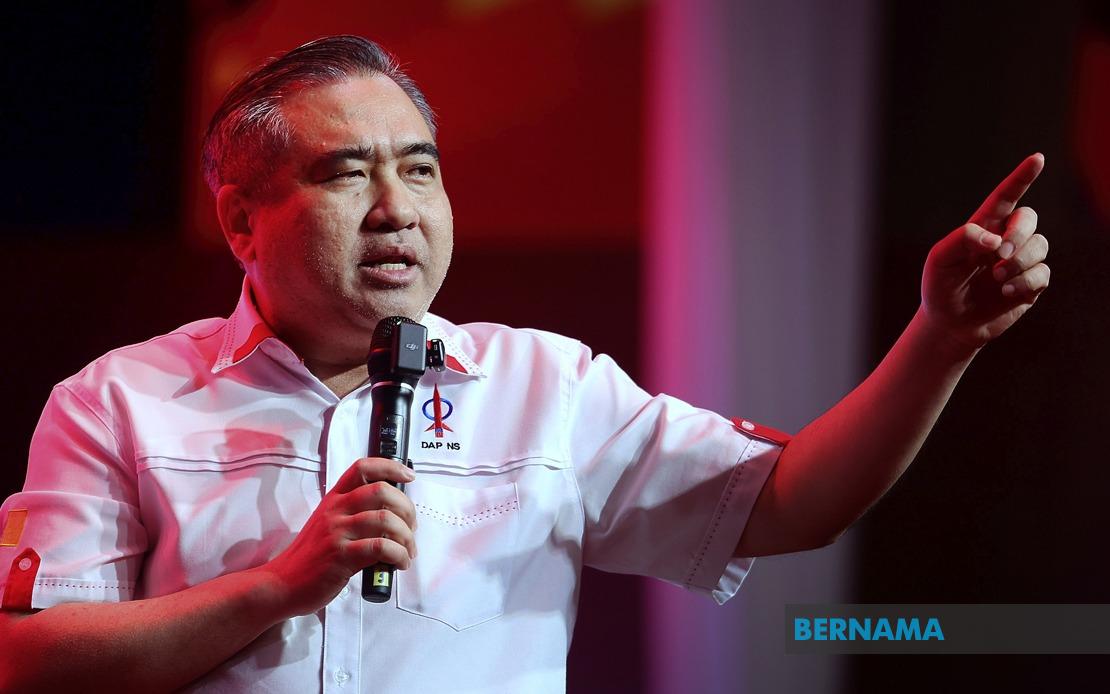
DAP secretary-general Anthony Loke has pledged to steer the ongoing Negeri Sembilan state election campaign away from personal attacks and towards substantive policy discussion, arguing that voters deserve to hear what parties can genuinely deliver rather than be subjected to character assaults on political rivals. Speaking at a Pakatan Harapan gathering in Seremban, Loke underscored his own adherence to this principle throughout the campaign period for the 16th state assembly election, emphasizing that mutual respect must underpin political competition even in highly contested races.
Loke's position reflects a broader directive from Prime Minister Datuk Seri Anwar Ibrahim, who recently counselled government-serving politicians to exercise restraint and avoid attacking the Federal Government while campaigning in state and local elections. This guidance seeks to maintain the delicate balance within the Unity Government coalition, which brings together parties from different political traditions who must continue governing together after electoral contests conclude. The Transport Minister's stance suggests an acknowledgment that excessive partisan rhetoric can undermine the collaborative framework necessary for stable administration at both federal and state levels.
Crucially, Loke has extended this disciplinary approach to his handling of high-profile opponents within his own state election theatre. Most notably, he has deliberately refrained from contesting or directly campaigning against Rantau state constituency, where Foreign Minister and Barisan Nasional deputy chairman Datuk Seri Mohamad Hasan is standing as the BN candidate. This strategic decision appears designed to insulate the Unity Government partnership from the friction that might arise if senior Cabinet figures from different coalition components engaged in intense personal electoral combat.
Instead of spreading his campaign efforts broadly across the state, Loke has concentrated his energies on two areas: the Chennah seat, which he himself is contesting, and state assembly constituencies where DAP candidates are running. Additionally, he has lent support to Menteri Besar Datuk Seri Aminuddin Harun's campaign for the Linggi seat, maintaining party solidarity without venturing into territories where his involvement might create intra-coalition tensions. This surgical approach to campaign deployment demonstrates how political actors within coalition governments must navigate the complex terrain of simultaneous competition and cooperation.
The DAP leader moved to counter suggestions that his Cabinet responsibilities have led to neglect of his Chennah constituency, arguing instead that his ministerial portfolio represents a tangible asset for constituents. Loke contended that his position in the Transport Ministry enables him to channel substantially greater resources and benefits to Chennah residents compared to what a backbench legislator might secure. He highlighted the implementation of Kampung MADANI projects funded through his ministerial allocations as concrete evidence of how his dual role translates into material advantages for the electorate.
Beyond budgetary considerations, Loke stressed that he has established a dedicated full-time constituency team to manage day-to-day constituent services and respond to residents' concerns, thereby mitigating any potential governance gaps that might arise from his demanding schedule at the federal level. This emphasis on organizational infrastructure reflects recognition among contemporary political practitioners that constituents increasingly expect seamless service delivery regardless of whether their representative holds ministerial office. The ability to demonstrate competent delegation and maintain constituent responsiveness has become a crucial electoral selling point.
The Negeri Sembilan state election has assumed particular significance within Malaysia's broader political landscape as a test of the Unity Government's viability and the Pakatan Harapan-Barisan Nasional coalition's operational coherence at the subnational level. With early voting scheduled for July 28 and polling day set for August 1, the campaign represents one of the first substantial electoral contests in which the coalition partners must simultaneously compete and cooperate. How effectively figures like Loke navigate these competing imperatives may offer insights into whether such multi-party alliances can sustain themselves beyond their initial formation.
For Malaysian voters and regional observers, the Negeri Sembilan contest provides a window into the evolving norms of electoral conduct within coalition governments. Loke's commitment to policy-focused campaigning and restraint in personal attacks suggests an emerging consensus among governing politicians that substantive platforms and administrative competence should form the basis of electoral competition. This represents a potential departure from the more combative campaign styles that characterized Malaysian electoral politics in preceding decades.
The election also illuminates broader questions about how ministerial position and constituent representation interact in contemporary Malaysian politics. Loke's argument that Cabinet office enhances rather than diminishes his ability to serve Chennah challenges conventional assumptions that high-ranking government roles necessarily distance politicians from local concerns. If voters reward such integration of ministerial responsibilities and grassroots service delivery, it could reshape expectations about career advancement for elected representatives.
Meanwhile, the deliberate avoidance of certain electoral theatres by coalition partners reflects institutional pressures within the Unity Government to maintain sufficient harmony for continued federal administration. The decision to refrain from aggressive campaigning in constituencies where senior figures from different coalition components are standing suggests that the imperative for governmental stability exercises real constraints on campaign behaviour. For Malaysian political observers, this dynamic represents either a healthy maturation of electoral norms or a potential limitation on democratic accountability depending on perspective.
Regionally, the Negeri Sembilan campaign offers Southeast Asian democracies a case study in managing coalition electoral dynamics. As multi-party governing arrangements become increasingly common across the region, the mechanisms by which partners in such coalitions balance competitive and cooperative impulses warrant close attention. Loke's approach exemplifies one possible model for sustaining functional government whilst maintaining distinct party identities and platforms.

