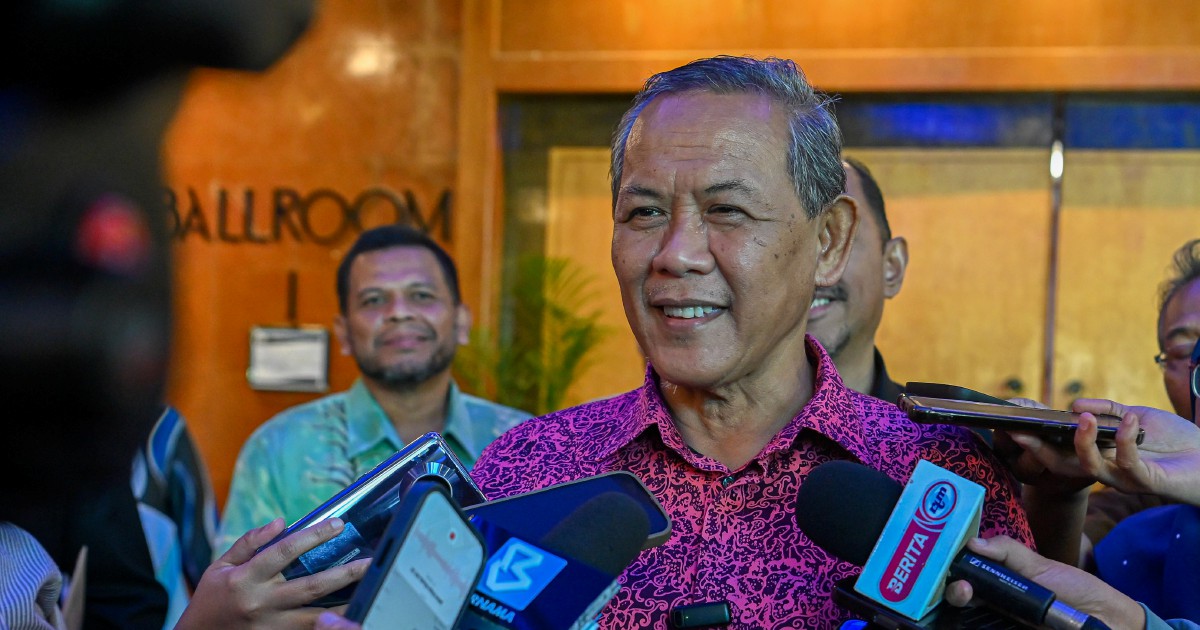
Negri Sembilan Menteri Besar Datuk Seri Aminuddin Harun has appealed to the electorate in Linggi to assess the government's concrete efforts to address the district's chronic flooding challenges rather than permit the matter to be weaponised for political advantage as the 16th Negri Sembilan state election approaches. Speaking in Seremban, Aminuddin underscored that mitigation work is actively progressing, signalling his administration's commitment to resolving what has become a persistent problem for residents throughout the Linggi constituency.
The Linggi district has endured recurrent flooding episodes that cause considerable disruption to residents and businesses, making the issue a sensitive political matter in state politics. The area's vulnerability to inundation stems from geographical and infrastructural factors that have complicated previous resolution attempts. By emphasising that substantive work is underway, Aminuddin sought to reframe the discussion away from blame and complaint towards tangible progress and forward momentum.
The Menteri Besar's intervention reflects broader tensions within Malaysian electoral politics, where longstanding community grievances frequently become electoral battlegrounds. Opposition parties and political rivals often leverage unresolved infrastructure challenges to criticise incumbent administrations, particularly when general elections or state elections draw near. Aminuddin's call to depoliticise the flood issue represents an attempt to shift public discourse towards evaluating actual government performance rather than allowing partisan actors to monopolise the narrative.
Linggi's flooding history extends back several years, with multiple episodes demonstrating that the problem requires sustained engineering solutions rather than temporary fixes. The complexity of addressing water management across interconnected drainage systems and residential areas means that meaningful mitigation requires coordinated planning, substantial investment, and often extended implementation timelines. Residents in affected areas understandably expect rapid resolution, yet the technical reality of flood prevention engineering means that comprehensive solutions inevitably take considerable time to realise.
Mitigation strategies typically involve combinations of approaches: improving drainage infrastructure, constructing or upgrading flood barriers, dredging waterways, implementing land-use planning restrictions, and coordinating water management across municipal boundaries. Each component requires careful design, environmental assessment, budgeting, and coordination between multiple government agencies. The layered complexity means that residents observing ongoing work may not immediately perceive how individual projects collectively address systemic vulnerabilities.
Aminuddin's emphasis on ongoing mitigation efforts indicates that the Negri Sembilan government has allocated resources and prioritised Linggi's flood situation within its infrastructure agenda. The visible presence of active work demonstrates responsive governance, though the Menteri Besar's intervention also suggests awareness that implementation progress may not be immediately apparent to affected residents. Demonstrating commitment through tangible action helps anchor public confidence in the administration's capability and sincerity.
The electoral cycle surrounding the 16th state election naturally creates pressure for politicians to highlight completed achievements and visible improvements. Aminuddin's strategy of focusing public attention on mitigation work currently underway represents an attempt to build credibility by emphasising process and commitment rather than claiming premature success. This approach can strengthen public perception of responsible governance when accompanied by transparent reporting on project timelines and expected outcomes.
For Malaysian voters generally, and Linggi residents specifically, evaluating government performance on infrastructure matters requires distinguishing between partisan criticism and substantive assessment of actual progress. Meaningful evaluation involves examining what specific mitigation measures have been implemented, what timelines exist for remaining work, how funding has been allocated, and whether engineering solutions actually address identified vulnerabilities. Such assessment provides more useful information than political rhetoric emphasising failure or dismissing legitimate concerns.
The Linggi situation reflects broader Southeast Asian challenges with urban and suburban flooding, particularly as climate change intensifies precipitation patterns and existing drainage infrastructure faces mounting pressure. Malaysia's tropical climate already produces substantial rainfall, and aging or inadequate drainage systems in established residential areas struggle to manage accumulating water. Linggi's experience mirrors recurring flood challenges across Peninsular Malaysia, particularly in densely populated districts with limited space for major infrastructure expansion.
Aminuddin's call for voters to consider government flood mitigation measures rather than treating the issue purely as political leverage acknowledges that resolving infrastructure problems requires sustained technical work and public patience. Building confidence in government responsiveness involves demonstrating that specific problems receive priority attention, that credible solutions are being implemented, and that timelines exist for visible improvements. Transparent communication about what mitigation work is underway, why certain approaches have been selected, and when improvements should become apparent helps shift public discourse from blame-assignment towards collaborative problem-solving.
The pre-election period naturally intensifies scrutiny of government performance across all policy domains, including flood management. Politicians across the electoral spectrum face pressure to propose solutions and criticise incumbent administration effectiveness. Aminuddin's appeal to depoliticise the Linggi flood issue essentially invites voters to evaluate whether the current government's substantive efforts deserve support despite inevitable limitations and delays inherent in large infrastructure projects. The Menteri Besar's emphasis on ongoing mitigation work frames the election choice around competent governance and commitment to problem-solving rather than around simplified narratives of failure or success.

