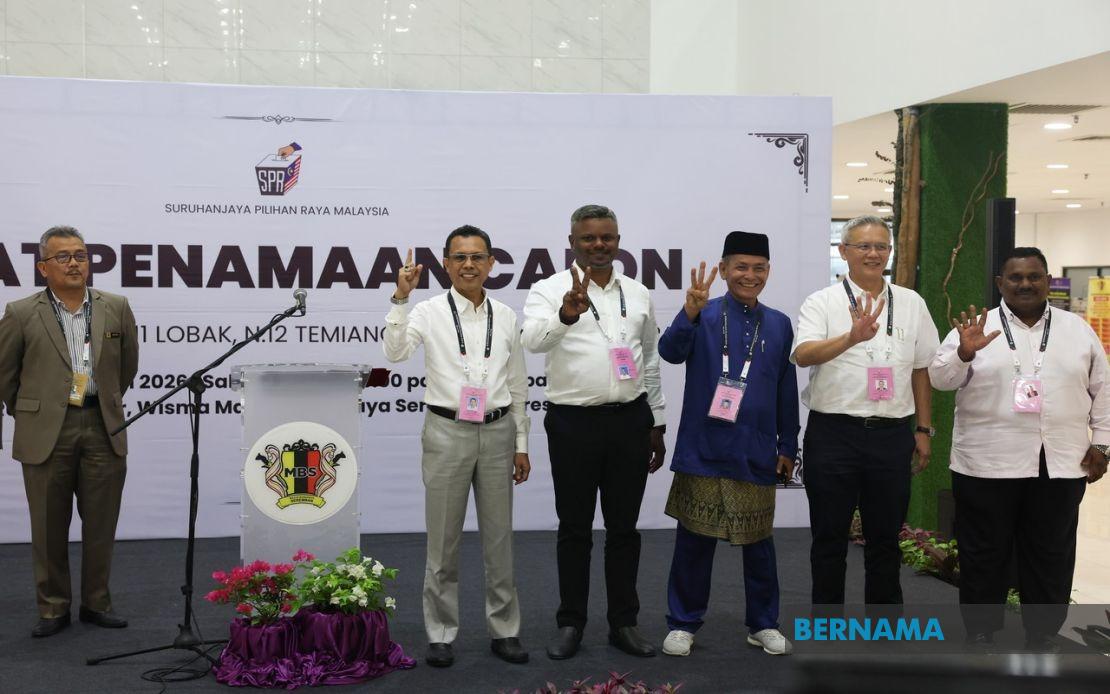
The Nilai state assemblyman seat has emerged as one of the most hotly contested races in the upcoming 16th Negeri Sembilan state election, with incumbent J. Arul Kumar facing an unexpectedly crowded field of challengers that will make his re-election bid significantly more challenging than typical contests in the state.
Arul Kumar, who holds the position of DAP National vice chairman, is competing against four other candidates in what amounts to a genuine five-cornered battle for the seat. The candidates arrayed against him represent a spectrum of political forces that have splintered Malaysia's opposition and governing coalitions. Zamani Ibrahim from Berjasa, Datuk Lai Chien Kong representing Barisan Nasional, Datuk V. Saravana Kumar flying the Bersatu flag, and independent candidate Omar Mohd Isa together represent the fractured political landscape that has increasingly characterised Malaysian state and federal politics over the past five years.
The nomination of these five candidates was officially confirmed by election returning officer Datuk Masri Baharuddin during the announcement ceremony at Wisma Bandaraya Seremban on July 18, following the close of nominations that morning. The presence of an independent candidate alongside representatives from four separate parties suggests that Nilai has become a seat where multiple political forces see viable paths to victory, rather than the more common scenario where one or two parties dominate the contest.
The Nilai result will carry particular significance for Pakatan Harapan's broader performance in Negeri Sembilan, where the coalition has maintained presence but faces persistent challenges from Bersatu, which has carved out its own political space in the state. The presence of two separate candidates claiming significant ethnic Indian support—Arul Kumar from DAP and Saravana Kumar from Bersatu—may further complicate the electoral mathematics in a constituency with substantial Indian-Malaysian voter representation.
Elsewhere across the state, the electoral landscape reflects a more familiar pattern of three-way contests and straight fights that have become standard in contemporary Malaysian state elections. In Sikamat, Nor Azman Mohamad will carry Pakatan Harapan's colours against candidates from Perikatan Nasional and Bersatu, while serving as political secretary to the Menteri Besar. An independent candidate who had initially filed nomination papers withdrew from the race before the deadline, suggesting that some prospective candidates reassessed their viability as ballot papers circulated through constituencies.
Temiang presents another three-cornered scenario, with Ho Weng Wah, a political secretary attached to the Transport Ministry under PH, contesting against Barisan Nasional's Datuk Leaw Kok Chan and Bersatu's Fazly Hamid. Similarly, Ampangan will see Muhammad Nazri Kassim, a director at Yayasan Negeri Sembilan, representing PH against Perikatan Nasional's Datuk Dr Mohamad Rafie Malek and Bersatu's Noor'azah Harun in another three-way division of votes.
The Lobak seat represents the exception to the current trend, configured as a direct two-party contest between incumbent Chew Seh Yong of Pakatan Harapan and Perikatan Nasional's Dr P. Kumar. Such straight fights have become increasingly rare in Malaysian state politics, where vote fragmentation through multiple candidates and parties has become the norm rather than exception.
In Lenggeng, PH candidate Zarinna Abu Zarin will challenge incumbent Datuk Mohd Asna Amin from Barisan Nasional, with Bersatu's Zool Amali Hussin also contesting. This three-way split reflects the pattern visible across most Negeri Sembilan constituencies, where Bersatu has consistently fielded candidates despite its turbulent political history and shifting coalitional alignments at both state and federal levels.
The Negeri Sembilan state assembly comprises 36 seats, and the state government's dissolution on June 5 triggered the election calendar that will culminate in polling on August 1. The Election Commission has scheduled early voting for July 28, providing a compressed campaign period that will test the machinery and organisational capacity of all participating parties. This tight timeline typically advantages better-funded and more established political organisations, though grassroots mobilisation in specific constituencies can occasionally compensate for broader structural disadvantages.
The fragmentation visible across multiple constituencies reflects broader patterns in Malaysian electoral politics since 2018, where the traditional two-coalition structure has given way to a more complex multi-polar contest. Bersatu's consistent presence across seats, Perikatan Nasional's regional strength, and independent candidates' continued willingness to contest alongside traditional parties all indicate that voters in Negeri Sembilan are being offered a more diverse range of political choice than existed in previous electoral cycles. Whether this proliferation of choices benefits incumbent Pakatan Harapan candidates or fragments their support base sufficiently to advantage opposition candidates remains the critical question that will be resolved when Negeri Sembilan's voters head to the polls on August 1.

