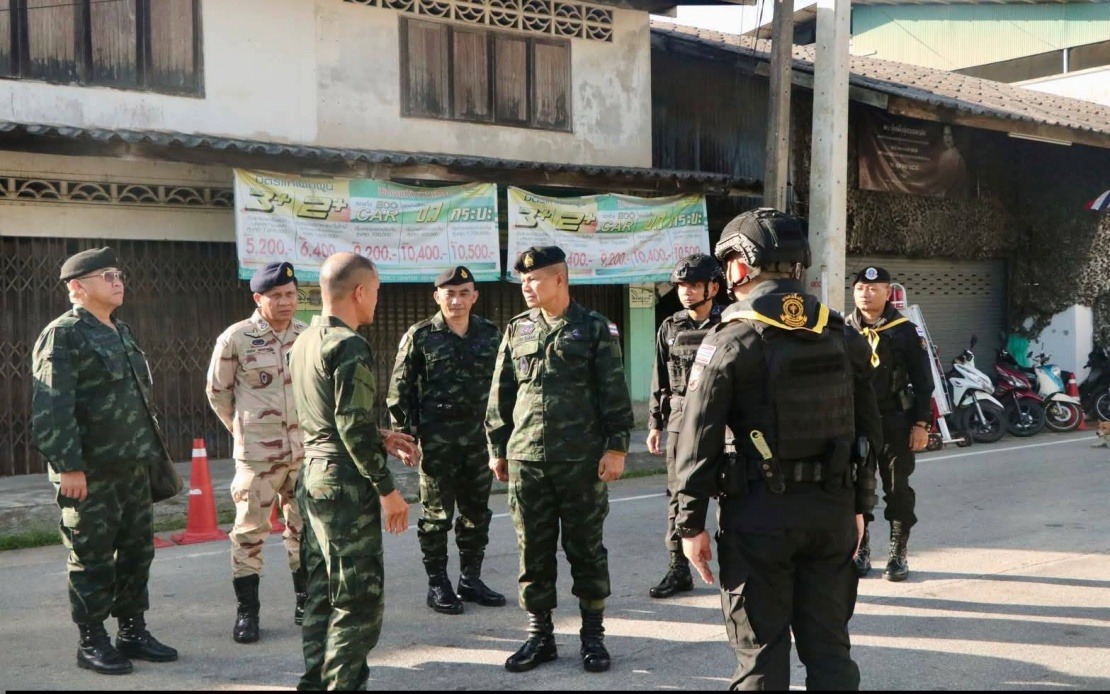
An armed assault on a security outpost in Thailand's restive southern border province has claimed five military lives and left six civilians injured, underscoring persistent instability in one of Southeast Asia's longest-running conflict zones. The attack unfolded at approximately 6.45 pm on Wednesday at the 4509 Ranger Company checkpoint located on Sami Hill in Rangae District, Narathiwat Province. The incident marks another escalation of violence in a region that has endured decades of sporadic but deadly militant activity stemming from historical grievances and separatist movements among the predominantly Muslim population.
According to Lieutenant General Norathip Phoyanok, the Fourth Army Region Commander and head of the Internal Security Operations Command Region 4, preliminary investigation indicates that more than six assailants participated in the operation. The attackers, who wore dark clothing and concealed their identities with masks, employed a combination of small arms fire and improvised explosive devices—specifically pipe bombs—in their assault on the security post. This tactical approach, combining firearms with explosives, is characteristic of attacks perpetrated by organised militant groups operating in the southern border provinces rather than opportunistic criminal activity.
The human toll extended beyond the military personnel defending the checkpoint. Six civilians sustained injuries in the violence, a detail that highlights the civilian vulnerability in this conflict environment. Among the wounded were a three-year-old girl and an elderly resident, indicating that families and non-combatants remain exposed to the dangers of insurgent operations even when living near military installations. The targeting of security checkpoints rather than purely civilian areas suggests that militant groups continue to prioritise engagement with state security apparatus, though the collateral damage to nearby populations underscores the indiscriminate nature of explosive ordnance.
Investigators believe the attack was conducted by a coordinated cell that successfully withdrew from the scene following the assault. According to initial reports, the suspects fled in a black four-wheel-drive vehicle, suggesting organisational capacity and prior planning. The departure via motor vehicle rather than on foot indicates the group had access to transportation and likely had predetermined escape routes—factors that point towards a degree of sophistication and preparation that distinguishes such incidents from spontaneous confrontations.
Narathiwat Governor Boonchuai Hormyamyen responded to the attack by ordering a comprehensive security mobilisation across the province. The governor directed police, military units, and local administrative authorities to implement enhanced protective measures along the Malaysia-Thailand border and throughout twelve districts within Narathiwat. This multi-agency approach reflects the Thai government's recognition that addressing violence in the region requires coordination across traditional institutional boundaries. The border security component is particularly significant given that militant cells and smuggling networks have historically exploited cross-border terrain to evade capture and facilitate the movement of weapons and personnel.
Forensic teams were deployed to the checkpoint to preserve and examine evidence from the scene. Thai authorities have cordoned off the area to prevent contamination of the crime scene and to allow investigators sufficient time to collect ballistics evidence, bomb fragments, and other physical traces that might establish the identity or affiliation of the perpetrators. Comprehensive forensic analysis will be essential in determining whether this attack bears characteristics consistent with known militant groups operating in the region or represents a previously unidentified operational cell.
The attack occurs within a broader context of violence that has periodically flared in Thailand's southern provinces. The region—comprising Narathiwat, Pattani, and Yala provinces, along with the four southern districts of Songkhla—has experienced cycles of relative calm interrupted by sudden violent surges over the past two decades. Hundreds of lives have been lost in this protracted conflict, and despite various government initiatives seeking political negotiation and development programmes, attacks on security forces and civilian infrastructure continue sporadically. The recurring nature of such incidents suggests that underlying grievances and organisational capacity among militant factions remain substantially unresolved.
For Malaysia, developments in Thailand's southern provinces carry direct relevance given geographical proximity and cross-border movement of persons and goods. Narathiwat lies immediately adjacent to Malaysian Kelantan, and instability in the Thai province can create ripple effects across the border region affecting trade, movement, and security. Malaysian authorities maintain awareness of developments in neighbouring southern Thailand, recognising that extremist networks sometimes operate across borders or recruit from cross-border communities. Intelligence sharing between Thai and Malaysian security agencies regarding militant activities in the border zone constitutes an important dimension of regional security cooperation.
The incident also reflects broader regional dynamics regarding insurgent violence and state counterinsurgency operations. Unlike the highly publicised conflicts occurring in other parts of Southeast Asia, Thailand's southern insurgency remains comparatively underreported internationally despite its consistent toll on life and infrastructure. The attack exemplifies challenges facing modern militaries attempting to protect dispersed security infrastructure against determined adversaries employing asymmetric tactics. Rangers and soldiers manning checkpoint positions remain vulnerable to coordinated assaults despite defensive preparations, particularly when opponents possess military experience and access to explosives.
Investigations to identify masterminds behind the operation remain ongoing, indicating that Thai authorities have not yet determined the command structure or organisational affiliation responsible for Wednesday's attack. Establishing such connections will require interrogation of any apprehended suspects, analysis of recovered equipment, and intelligence gathering from informants within militant networks. The investigation's progress will likely depend on whether survivors or bystanders can provide identifying information and whether forensic analysis yields leads linking the attack to previously known groups or individuals.

