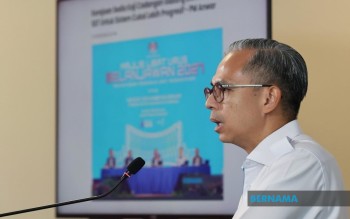
The Malaysian government has opted for a methodical examination of a proposed hybrid taxation framework that would merge selected features of the Goods and Services Tax with the existing Sales and Services Tax regime. Finance Minister II Datuk Seri Amir Hamzah Azizan has been allocated time to prepare a comprehensive follow-up report on the initiative, which will subsequently be presented to the Cabinet for consideration and decision-making, according to government spokesperson Datuk Seri Fahmi Fadzil at the weekly post-Cabinet briefing in Putrajaya.
Fahmi, who also serves as Communications Minister, emphasised that the exploration of this blended taxation approach remains in its preliminary phase and requires careful, deliberate analysis. The undertaking cannot be rushed, he stressed, as it demands thorough examination of lessons extracted from Malaysia's prior experience with the GST system and persistent challenges under the current SST framework. The Finance Ministry will conduct this rigorous assessment before submitting recommendations to Cabinet members for their evaluation and ultimate determination.
Prime Minister Datuk Seri Anwar Ibrahim had briefed the Cabinet on the necessity for the Finance Ministry, under Finance Minister II Amir Hamzah's direction, to undertake an exhaustive investigation into the viability of a combined SST-GST taxation structure. The timing and scope of this study appears flexible at present, with no firm completion deadline established during the Cabinet session. Questions about whether the topic might feature in the forthcoming budget announcement remain unanswered, with Fahmi noting that no specific timeframe had been discussed in today's meeting.
The genesis of this taxation exploration centres on Malaysia's historical challenges with broad-based consumption taxes. The GST system, implemented during the previous administration, encountered substantial public resistance and was eventually scrapped following the 2018 general election. Sentiment against the tax remained influential enough that the MADANI government, which assumed office in late 2022, prioritised reinstating the SST as the foundational consumption tax framework. Yet the government now appears cognisant that the current SST system, while politically more palatable, carries its own limitations and operational difficulties.
Anwar's public statements yesterday suggested a pragmatic middle ground: Malaysia would maintain SST as its principal taxation system but might selectively adopt specific GST mechanisms if assessment determined they would enhance the system's progressivity and equity. This signals the government's intent to learn from both prior taxation initiatives without simply reverting to either system wholesale. The philosophy appears to be extracting what functioned effectively from GST while preserving SST's structural foundation and public acceptance.
The distinction between these taxation models carries substantial implications for Malaysian commerce, consumers, and government revenue. The GST operated as a value-added tax applying across production and distribution stages, whilst SST functions as a single-stage tax on services and selected goods at the point of sale. Hybrid approaches adopted elsewhere have sought to capture GST's efficiency and coverage whilst maintaining SST's simpler compliance burden for businesses. Understanding how Malaysia might blend these mechanisms requires detailed sectoral analysis, revenue projections, and administrative feasibility assessments.
For Malaysian businesses and investors, this extended review period offers both clarity and uncertainty. The deliberate pace suggests the government recognises that taxation changes require substantial private sector preparation and adjustment. Yet prolonged uncertainty about potential changes can similarly complicate business planning and investment decisions. Regional competitors maintaining stable tax frameworks may gain comparative advantages during this study period, though improvements to Malaysia's eventual system could yield long-term competitive benefits.
The consultation process also reflects broader governance considerations about taxation in emerging economies. Southeast Asian nations observe Malaysia's approach closely, as consensus-driven policymaking on taxation remains challenging across the region. A thorough, evidence-based study of tax system harmonisation could offer instructive lessons for neighbouring countries wrestling with similar revenue and equity challenges. Malaysia's effort to learn from GST's failure whilst improving upon SST's limitations demonstrates recognition that tax systems require periodic reassessment.
International observers and credit rating agencies will likely monitor this initiative closely. The government's commitment to studying enhanced taxation mechanisms suggests fiscal responsibility, yet the indefinite timeline might signal internal disagreement about direction. Demonstrating capacity to implement coherent tax policy, even after previous setbacks, could strengthen Malaysia's macroeconomic credibility. Conversely, prolonged indecision could undermine confidence in the government's fiscal management capabilities.
The involvement of Finance Minister II Amir Hamzah indicates the Prime Minister's intent to assign substantial analytical capacity to this undertaking. Rather than delegating this to lower ministerial ranks, the Cabinet's direct engagement signals the reform's strategic importance. This positioning also distributes responsibility appropriately, as the Finance Minister II's portfolio often includes tax policy development and revenue administration oversight. The Cabinet's eventual deliberation will reflect not merely technical feasibility but political viability and broader government priorities.
Looking forward, the taxation study's conclusions could reshape Malaysia's fiscal landscape for the coming decade. The government faces competing imperatives: maintaining political support through tax policies ordinary Malaysians perceive as fair, ensuring adequate government revenue for public services and infrastructure, and promoting business competitiveness and investment. Any hybrid system must navigate these tensions whilst remaining administratively implementable across Malaysia's diverse economic sectors and regional variations. The Finance Ministry's careful approach acknowledges these complexities, suggesting that whatever recommendations eventually emerge will reflect substantive analysis rather than hasty political positioning.

